


Two Easy Ways to Start Earning Rewards!
Become a member today! Members-only pricing and offers, personalized care notifications, Vital Care points back on every purchase and more!
 Become a credit card member today!
Earn 2X Pals Rewards points at Petco
when you use Petco Pay!APPLY NOWLearn More About Petco Pay Benefits
Dog Grooming: Essential Vaccines for Your Dog's Healthy & Safe Visit
Published on October 15th, 2018
Updated on June 18th, 2026

Written by Dr. Chris Pinard
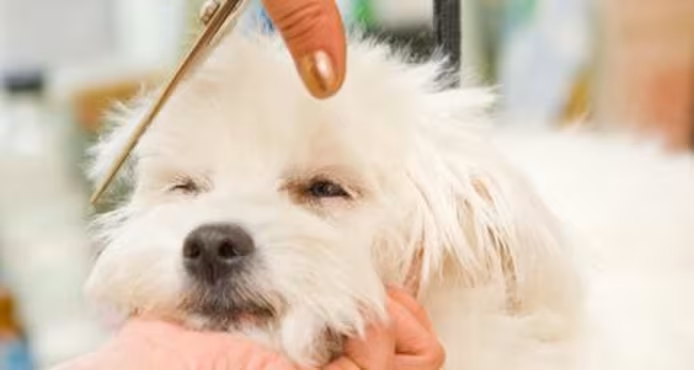
In a professional grooming environment, your pet will be exposed to many other dogs. For this reason, grooming facilities have rules regarding the vaccination status of your pet.
In a professional grooming environment, your pet will be exposed to many other dogs. For this reason, grooming facilities have rules regarding the vaccination status of your pet. The exact vaccinations your dog needs may vary based on the groomer you choose, but a reputable groomer should require the following vaccinations to reduce the risk of illness exposure:
Kennel Cough: The Most Common Vaccination Requirement
Bordetella (also known as "kennel cough") is one of the vaccines most commonly required by groomers. Kennel cough is highly contagious. Even if your pet is kept away from other dogs or in a separate cage for the duration of the grooming session, he could be at risk. Bordetella can become airborne through coughing and sneezing or can be transmitted through direct nose-to-nose contact. Even when appropriate cleaning measures are taken, viral particles may persist in the environment and transfer to your pet.
Administration of this vaccine is not fully protective, so there is still a small chance that your dog could become infected with Bordetella. However, the vaccine greatly reduces the chance of infection and also reduces the severity of disease in pets that contract kennel cough.
Additional Vaccines Required for Professional Grooming
Before visiting the groomer, your dog should be up-to-date on all core vaccines. Vaccination recommendations are dependent on your geographic location, as disease prevalence varies by area. However, core vaccines (meaning those considered mandatory for your pet's safety) typically involve a combination of vaccines against the following diseases:
2. Canine parainfluenza
3. Canine adenovirus
5. Rabies
Optional Vaccines for Professional Grooming
There are some vaccines that are not considered to be core vaccines that might be required by a professional groomer. The diseases covered by these vaccines are often considered to be location dependent, lifestyle dependent, or less severe. Therefore, your veterinarian will ask you a series of questions to determine which vaccines should be considered to keep your pet healthy. In addition to kennel cough, some commonly-discussed additional vaccines are those for Leptospirosis and Lyme disease. It is important that you discuss your pet's lifestyle with your veterinarian so he or she is able to accurately assess the risk of exposure to these infections.
Vaccine Risks
As with any administration of medications or vaccines, there are some risks associated. However, the vaccines mentioned here have been extensively tested and are considered very safe. The most commonly-observed side effects are swelling or discomfort at the injection site. Lethargy is observed after some vaccines. Some patients can have an allergic reaction and require treatment, although most pets do not have any reaction to vaccines. If you notice any changes after vaccine administration, contact your veterinarian immediately.
This article was created with assistance from AI tools and reviewed for accuracy by Petco's content team.
176Pet Parents found this article helpful
Related Articles


