


Two Easy Ways to Start Earning Rewards!
Become a member today! Members-only pricing and offers, personalized care notifications, Vital Care points back on every purchase and more!
 Become a credit card member today!
Earn 2X Pals Rewards points at Petco
when you use Petco Pay!APPLY NOWLearn More About Petco Pay Benefits
Dog Sprayed by Skunk? 10 Steps to Remove the Smell
Published on January 9th, 2024
Updated on June 18th, 2026

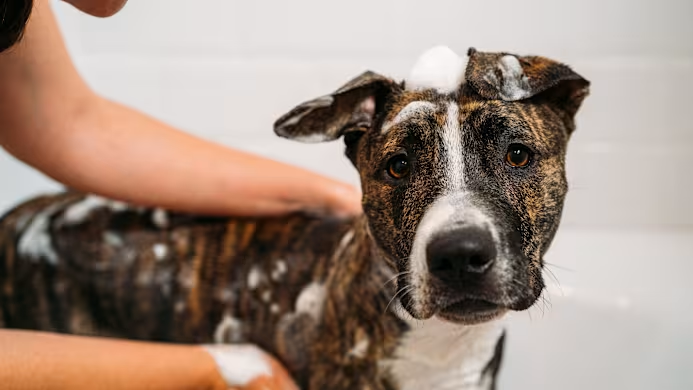
It can be stressful to deal with a dog that has been sprayed by a skunk. Find out how to get rid of the skunk smell on your dog, and how long the smell will last.
It’s one of every dog parent’s worst fear — you’re enjoying a great evening when, bam — your dog is sprayed by a skunk. While stinky and unpleasant to deal with, keep in mind that your dog is not in any danger after they’ve been sprayed, but they could be feeling a little unsettled. It can be stressful if your dog got sprayed by a skunk and you aren’t prepared so consider being ready at a moment’s notice to handle the situation with these easy steps.
How to Get Rid of Skunk Smell on Your Dog in 10 Steps
When a dog gets sprayed by a skunk, take a deep breath (away from your pup, of course) and act quickly. The faster you follow these steps, the easier it will be to break down the sulfur-based oils in skunk spray before they set deeper into your dog's coat.
Step 1: Don't Bathe Your Dog Right Away
As counterintuitive as it sounds, resist the urge to immediately throw your dog in the tub. Bathing without the right deskunking product first can actually drive the oily compounds in skunk spray deeper into your dog's coat, making removal significantly harder. Pause, gather your supplies, and then proceed.
Step 2: Keep Your Dog Outside
Even if your dog is shaken up from the encounter, do your best to keep him outside while you prepare. Bringing a freshly sprayed dog indoors allows the skunk oils to transfer to furniture, carpet, bedding and other surfaces — which means you'll be fighting the smell long after your dog is clean.
Step 3: Grab a Deskunking Product
Reach for a dedicated dog deskunking shampoo as your first choice. These shampoos are specially formulated to chemically break down the thiol compounds in skunk spray — not just mask them with a stronger fragrance.
No deskunking shampoo on hand? A widely used at-home remedy can help in a pinch:
| Ingredient | Amount |
|---|---|
| 3% hydrogen peroxide | 1 quart |
| Baking soda | ⅓ cup |
| Liquid dish soap | 1 teaspoon |
Mix these together immediately before use — never store this mixture in a sealed container, as pressure can build up. Apply it right away while it's still actively fizzing, since that chemical reaction is what helps lift the oils. Note that hydrogen peroxide can lighten dark coats with repeated use, so a commercial deskunking shampoo is the preferred option whenever possible.
Step 4: Assemble Your Bath Supplies
Before you bring your dog anywhere near water, have everything within arm's reach so you're not scrambling mid-bath. You'll need:
- Rubber or latex gloves (skunk oils transfer easily to skin and are difficult to remove)
- A dedicated deskunking shampoo or your DIY mixture
- A soft washcloth for the face area
- Several absorbent towels
- A cup or a gentle hose nozzle for rinsing
- Your dog's regular shampoo for the follow-up bath
Step 5: Identify Where Your Dog Was Sprayed
Before applying any product, take a moment to locate the sprayed area. Skunks most commonly target a dog's face and muzzle — since that's usually where a curious dog gets closest — or the chest and neck area. Knowing exactly where the spray landed lets you treat the most saturated spots first and use your product most effectively.
Important: If your dog was sprayed directly in the eyes and is showing redness, squinting or excessive tearing, rinse the eyes gently with clean water and contact your veterinarian. Skunk spray in the eyes can cause temporary irritation and should be evaluated by a professional. https://www.aspca.org/pet-care/animal-poison-control
Step 6: Apply the Deskunking Product Carefully
Put your gloves on before you begin. Saturate your dog's coat thoroughly in the sprayed area, working the product all the way down to the skin — not just the surface of the fur. The oils need to be reached at the skin level to be fully neutralized.
For the face: Never apply product directly to your dog's eyes, nose or mouth. Instead, saturate a washcloth with the deskunking shampoo and gently work it into the muzzle, cheeks and around the ears. This gives you control and keeps the product away from sensitive areas.
Once applied, let the product sit for approximately five minutes — or follow the timing on your specific product's label.
Step 7: Massage, Wait and Rinse
After the product has had time to work, massage it thoroughly through the coat to help lift and break apart any remaining oils. Then rinse completely, making sure no residue is left behind — especially around the face and ears.
If your dog gets impatient during the five-minute wait, this is a great moment to run through a few familiar cues and reward him with calm praise. Keeping his focus on you makes the process easier for both of you.
Step 8: Follow Up With a Regular Dog Shampoo Bath
Once you've rinsed out the deskunking product, your dog still needs a full bath with his regular dog shampoo. This second wash removes any remaining deskunking product residue, cleans the rest of the coat that may have picked up trace amounts of spray, and leaves your dog's skin and fur in good condition. Lather, rinse thoroughly and repeat if the shampoo instructions suggest it.
Step 9: Dry Your Dog Thoroughly
After both washes, dry your dog completely — don't let him air-dry indoors if you can help it. Towel-dry as much as possible, then consider keeping him outside in a warm, shaded spot or using a pet-safe dryer on a low setting. Residual moisture can trap any remaining odor compounds close to the skin, and a damp dog heading straight for the couch won't do your furniture any favors.
Step 10: Repeat the Process If Needed — and Check Your Home
If your dog still carries a noticeable smell the next day, a second round of deskunking may be necessary. That said, bathing your dog too frequently in a short period can strip the natural oils from his skin and coat, potentially leading to dryness and irritation — so don't over-do it.
Before repeating the bath, also check the items your dog has come into contact with since the incident:
- Pet bedding and blankets — wash in hot water with a cup of baking soda added to the cycle
- Upholstered furniture and carpet — treat with an enzymatic odor eliminator designed for pet odors
- Your dog's collar or harness — soak in the DIY mixture or a deskunking solution, then rinse well
- Your own clothing — wash separately with baking soda or a dedicated odor-removing laundry additive
The smell you're still detecting may be coming from a surface, not your dog — so rule that out before putting him through another full deskunking session.
When to call your vet: If your dog was sprayed near the face and is showing signs of nausea, vomiting, lethargy or eye irritation that doesn't resolve quickly, contact your veterinarian. While skunk spray is not typically life-threatening, it can cause temporary illness in some dogs, and a professional evaluation is always the right call when you're unsure. https://www.aspca.org/pet-care/animal-poison-control
How long does skunk smell last on a dog?
That unpleasant skunk smell on your dog can last for three weeks or more if left untreated, so it’s important to try and clean it before the spray dries. Skunk spray is perfectly formulated to stick to hair—both human and canine—which is what makes the skunk smell stick around so long. Having special deskunking shampoos and supplies on hand can be crucial to treating the skunk smell on your dog quickly and avoid prolonging how much time you and your pet have to tolerate the odor.
How to get rid of skunk smell in your house
You’ll want to make sure that your dog stays outside in a safe area after being sprayed by a skunk until you’ve treated them with the appropriate products. If, however, some of that skunk smell does make it into your house, there are some things you can do to help. Boiling vinegar in a pan is one DIY way that has been found safe and effective against removing skunk smell inside. Even just setting open containers of vinegar in the rooms that smell (out of the way of pets and kids that can tip them over or drink from them, of course) can also help, because the vinegar will absorb the odors over a couple of days.
Liquid bleach can help remove the smell from hard, outside surfaces like your deck and porch, but be sure to dilute the bleach in water first (one cup of bleach in a gallon of water works well), and try a small test area since it can cause discoloration. If the smell doesn’t disappear completely right away, have a little patience — it may take several attempts with either of these methods before it’s gone completely.
Some pet skunk shampoos also work as a deskunking product for home items and can be used on carpets, clothing, bedding, kennels and other hard surfaces. When you’re purchasing a product, read the label to see what other uses it may work for.
How to keep skunks out of your yard
One of the easiest ways to handle a skunk attack is to avoid having it happen in the first place. While it’s not possible to avoid them completely, there are some things you can do to make your yard less appealing for skunks. For example:
- Close all trash and recycling cans and remove outside food bowls. Skunks love to dig through trash for food, so remove any temptations.
- Pick up fallen fruit from trees. Skunks love fruit, so they’ll enjoy coming into your yard to eat the fruit that’s fallen from your trees or bushes.
- Avoid letting your dog outdoors unsupervised from dusk to dawn. Skunks are crepuscular, which means they choose to be out at dusk, dawn, moonlit nights and cloudy days. While accompanying your dog into the cold backyard for their last potty break before bed may seem like a hassle, it’s much better than having them come back after meeting a skunk!
- Clear out potential hiding spots. Skunks are always on the lookout for places to sleep or nest with their young, and they can get into some surprisingly small areas. Clear out any piles of wood or debris in your yard, and close up any house vents.
Being sprayed by a skunk can happen to anyone and any pet but being prepared with the proper solutions and plan of attack can help you alleviate the problem quickly. It’s also important to make sure you keep your dog leashed when out and about, and keep your yard properly fenced and gated to avoid having your dog get out or a skunk get in.
Frequently Asked Questions
Is skunk spray toxic to dogs? Skunk spray is not a poison in the traditional sense, but it is an irritant. The sulfur-containing compounds (thiols) in skunk spray can cause nausea, drooling and temporary eye irritation in dogs. In rare cases — typically when a dog is sprayed directly in the face at very close range — the spray can cause a condition called Heinz body anemia, which affects red blood cells. If your dog vomits repeatedly, seems lethargic, or shows any signs of distress beyond normal agitation after being sprayed, contact your veterinarian promptly. https://www.aspca.org/pet-care/animal-poison-control
What should I do if my dog was sprayed in the eyes? If skunk spray made direct contact with your dog's eyes, flush them gently with clean, lukewarm water immediately. Eye exposure can cause redness, excessive tearing and temporary discomfort. Do NOT use your deskunking shampoo or the hydrogen peroxide DIY mixture near the eyes — these can cause serious irritation or injury. Use a damp cloth saturated with deskunking product to carefully clean around the muzzle and cheeks instead. If redness, squinting or discharge persists for more than a few hours, call your veterinarian right away. https://www.aspca.org/pet-care/animal-poison-control
Does tomato juice actually remove skunk smell from a dog? Tomato juice is one of the most widely repeated home remedies for skunk smell — and one of the least effective. It works primarily by overwhelming your sense of smell (a phenomenon called olfactory fatigue), not by chemically neutralizing the odor-causing thiols in skunk spray. Once the tomato scent fades, the skunk odor returns. A mixture of 1 quart of 3% hydrogen peroxide, ⅓ cup baking soda and 1 teaspoon of liquid dish soap is a far more effective DIY option because it actually oxidizes and breaks down the thiol compounds. A purpose-formulated deskunking shampoo remains the most reliable solution.
How many times can I bathe my dog to remove skunk smell? Repeat baths may be necessary if the odor lingers after the first treatment, but overbathing can strip your dog's coat of natural oils, leading to dry, irritated skin. Space repeat treatments out by at least a day, and check that secondary sources — your dog's bedding, your furniture, your car upholstery — aren't re-transferring the smell. Many deskunking shampoos are safe for use on fabrics and hard surfaces as well, so treating those items simultaneously will help prevent the odor from cycling back onto your dog.
When should I call a veterinarian after a skunk encounter? Most skunk encounters are smelly but medically uneventful. However, contact your veterinarian if your dog shows any of the following: repeated vomiting, pale or yellowish gums, extreme lethargy, difficulty breathing, persistent eye redness or swelling, or signs of a bite wound (skunks can carry rabies). A bite — even a small one — requires immediate veterinary attention and a review of your dog's rabies vaccination status. When in doubt, always err on the side of calling your vet. https://www.aspca.org/pet-care/animal-poison-control
Can skunk spray carry disease, and should I worry about rabies? The spray itself does not transmit disease, but a skunk that behaves unusually — approaching your dog boldly in daylight, appearing disoriented or staggering — may be rabid. Rabies is transmitted through saliva via a bite, not through spray. If your dog was bitten or scratched during the encounter, or if the skunk was acting erratically, contact your veterinarian and your local animal control authority immediately. Keeping your dog's rabies vaccination current is the single most important preventive step you can take. https://www.aspca.org/pet-care/animal-poison-control
This article was created with assistance from AI tools and reviewed for accuracy by Petco's content team.


