


Two Easy Ways to Start Earning Rewards!
Become a member today! Members-only pricing and offers, personalized care notifications, Vital Care points back on every purchase and more!
 Become a credit card member today!
Earn 2X Pals Rewards points at Petco
when you use Petco Pay!APPLY NOWLearn More About Petco Pay Benefits
Siberian Husky
Updated on June 17th, 2025

The Siberian Husky is a medium-sized working dog famous for stamina, smarts, and a sled-pulling past in cold climates. Outgoing and people-loving, they shine in active homes where they can burn energy, stay engaged, and be right in the middle of family life.
Temperament
Energetic, Social, Playful
AKC-Recognized Colors
Black & White, Gray & White, Red & White
 Weight
35 – 60 Pounds
 Height
20 – 23.5 Inches
 LIFE EXPECTANCY
12 - 14 Years
Maintenance Level
Low Maintenance
High Maintenance
Friendliness
Reserved
Extroverted
About Breed
Siberian Huskies are medium-sized working dogs made famous by their sled-pulling exploits in Alaska and elsewhere around the world. They are a friendly, loyal breed that easily integrates into a loving human family. They are usually healthy and strong animals with some incidence of genetic disease. Siberian Huskies have almost boundless energy, so prospective owners should be able to commit to a vigorous exercise regimen.
Origin: Siberia
Other Names: Husky, Sibe
Working Group
Dogs of the AKC Working Group were bred to perform important jobs such as guarding property, pulling sleds, and conducting water rescues. Throughout history, these dogs have been invaluable partners to humans. Breeds like the Doberman Pinscher, Siberian Husky, and Great Dane are part of this group. Intelligent and quick to learn, they can be excellent companions, but their large size and strength require consistent training and may not be suitable for every household.
Breed Appearance
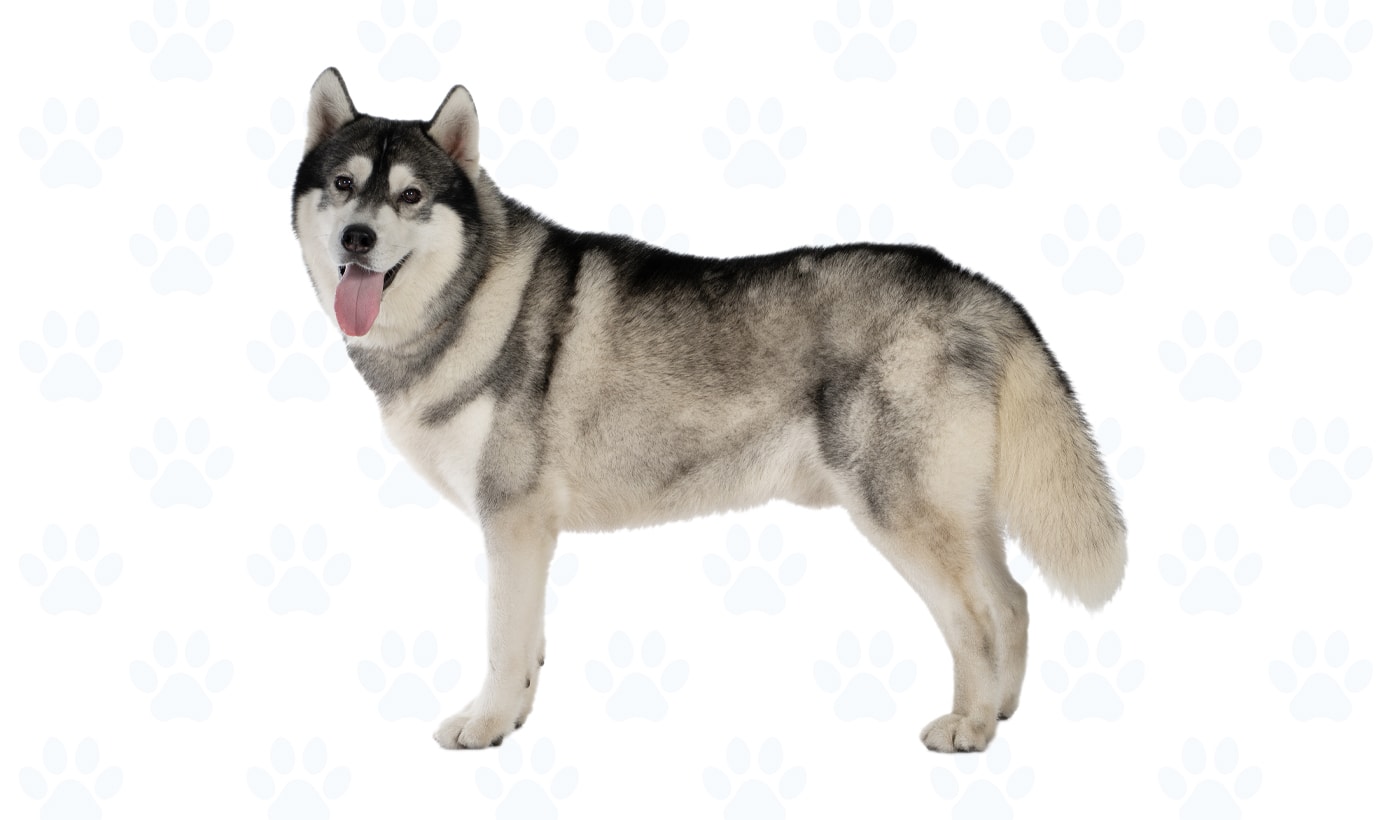
The American Kennel Club (AKC) recognizes 9 coat colors in Siberian Huskies: agouti and white, black and white, gray and white, red and white, sable and white, solid white, brown and white, black tan and white, and solid black. The coat should lay flat and smooth along their body. The general appearance of the Siberian Husky is a medium-built and furry dog. They are a natural pulling and towing animal with a strong body and a powerful stride. They have an alert and curious face with high-set ears and expressive eyes.
Use the arrow keys to switch between coat color examples.
Size & Weight
Siberian Huskies are an average or medium-sized dog. They grow to be around 35-60 pounds as adults. Males are typically 21-23.5 inches tall, whereas females are a few inches shorter on average.
Full Grown
Female
22 in. / 50 lbs.
Male
24 in. / 60 lbs.
Height is measured up to the shoulders.
Characteristics
- Size & Coat
- Lifestyle
- Training & Behavior
How to Care for a Siberian Husky
Caring for a Siberian Husky means embracing their active, social nature and giving them outlets for both physical and mental energy. With consistent training, proper nutrition, routine grooming, and plenty of exercise, these spirited dogs can thrive as happy, healthy members of an engaged household.
Cost of Owning
Savings & Rewards
Unlock exclusive rewards with Petco Perks. Plus, members get 35% off their first Autoship order and 5% off all future orders.

Enjoy exclusive rewards on expert rated and pet parent approved products, like member prices, extra points and special offers designed to help you save on what your pet needs.

Get your pet’s essentials delivered on your schedule so you never run out and save up to 35% on your first order, then 5% on every order after that.
Your love story starts here.
Find adoptable pets near you with a simple search.
Fun Facts
Siberian Huskies feature prominently in many Hollywood and TV projects. The most famous one is probably “Eight Below,” a story about a team of Huskies that save the day when they help an Antarctic scientist make it back to safety after a crippling accident.
Huskies are part of the Spitz family of dogs, who descended from wolves. Other Spitz cousins include the Malamute, Pomeranian, Chow Chow, Shar Pei, and many others.
Siberian Huskies save lives! In one famous case, a team of dogs braved a terrible winter storm to deliver medicine to a remote Alaskan town in the middle of a diphtheria outbreak in 1925. There is a bronze statue of one of these famous dogs called Balto on display in NYC’s Central Park to commemorate the event.
Do you know what heterochromia is? Siberian Huskies can often display this harmless condition where one eye is a totally different color than the other. Humans can have it, too! It’s often passed from one generation to another.
History
The Siberian Husky likely came from the Chukchi people, a northern hunter-gatherer tribe in Russian territories in the east of the country in modern times. Siberian Huskies were family pets as well as working animals for these early adopters. The name “Husky” is a corruption of Eskimo, an outdated term referring to northern aboriginal peoples. Over the centuries, Russian settlers eventually adopted the dogs, perfect for the hard living in the cold Russian climate. Siberian Huskies first came to America in 1908 on a ship from Russia alongside William Goosak, a fur trader heading to Nome, Alaska during the Gold Rush. Siberian Huskies were smaller than the traditional Malamute dogs used as working dogs at the time, but they fared very well in Alaska in the fur trade. The American Kennel Club recognized the Siberian Husky in 1930, shortly followed by the foundation of the Siberian Club of America in 1938. The Soviet Union banned exports of the breed in 1930, but the Siberian Husky was already a popular dog with breeders across Europe and North America.