


Two Easy Ways to Start Earning Rewards!
Become a member today! Members-only pricing and offers, personalized care notifications, Vital Care points back on every purchase and more!
 Become a credit card member today!
Earn 2X Pals Rewards points at Petco
when you use Petco Pay!APPLY NOWLearn More About Petco Pay Benefits
Dalmatian
Updated on June 17th, 2025



Dalmatians are energetic, devoted dogs with a world-famous spotted coat. Built for running and bred for endurance, they thrive with active owners who can match their enthusiasm and need for daily exercise.
Temperament
Energetic, Devoted, Intelligent
Colors
Black and White, Liver and White
 WEIGHT
45 – 65 Pounds
 HEIGHT
19 – 24 Inches
 LIFE EXPECTANCY
13 – 15 years
Maintenance Level
Low Maintenance
High Maintenance
Friendliness
Reserved
Extroverted
About Dalmatians
Dalmatians are a devoted breed with a distinct appearance. They have abundant energy and love to run around with their owners. If you are a couch potato, this breed isn't necessarily the best choice for you. Dalmatians are prone to genetic problems including urinary tract issues and deafness. It's important to choose a reputable breeder to avoid common problems associated with the Dalmatian. People with active lifestyles and lots of time to exercise are a good fit for this famous breed.
Origin: Croatia
Other Names: Carriage Dog, Spotted Coach Dog, Leopard Carriage Dog, Firehouse Dog
Non-Sporting Group
The breeds in the Non-Sporting Group are a varied collection in terms of size, coat, personality and overall appearance.
Breed Appearance
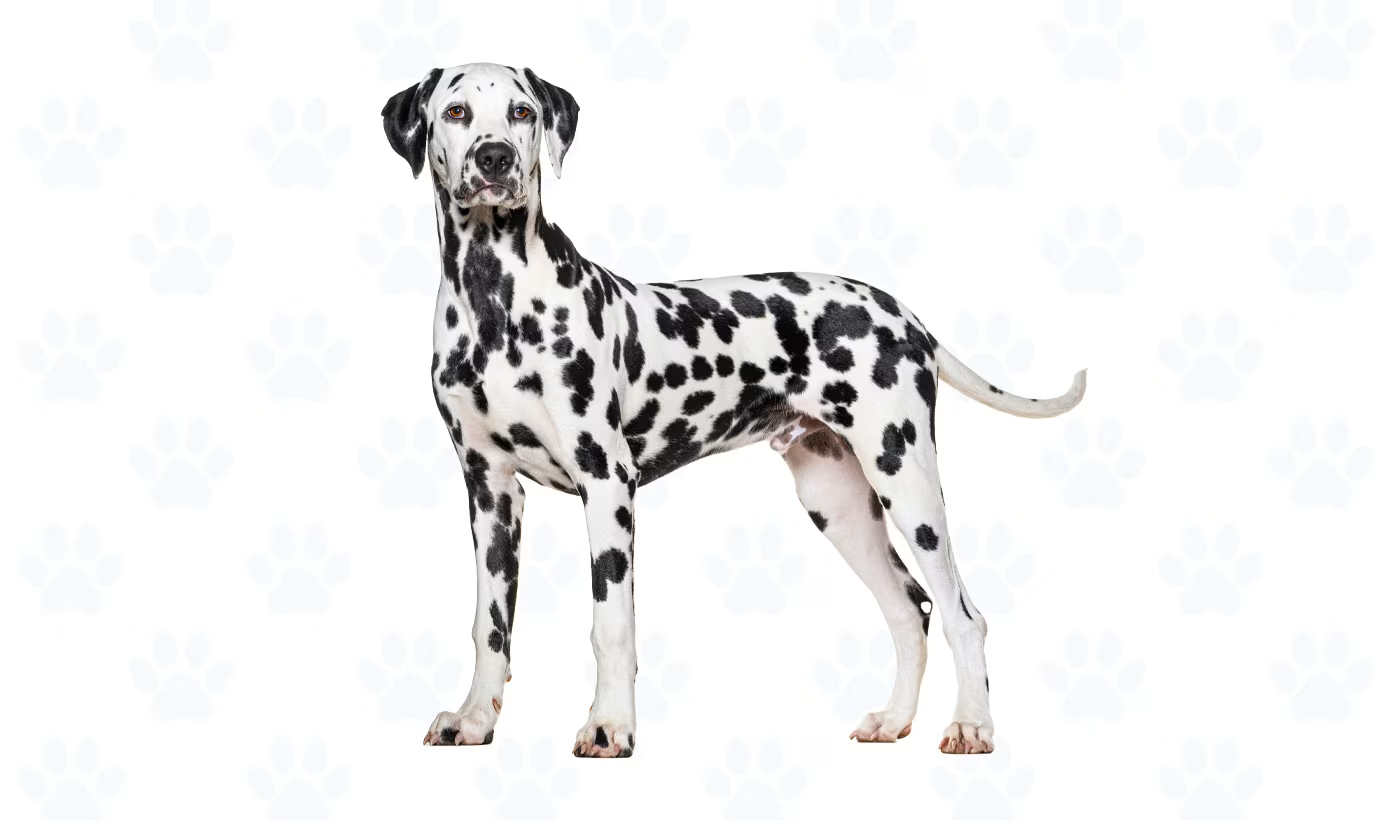
The American Kennel Club (AKC) doesn't offer much guidance on acceptable coat colors – all members of the breed share the white body with black spots. Dalmatians are iconic for their spotted coats, but they are born with plain white coloring. The spots appear over the course of the first month and continue to appear at a decreasing rate. Spots are almost always black or brown, but other colors such as brindle, red, and yellow do appear in rare cases.
The Dalmatian coat is short, fine and dense. Since their coats aren't very oily, they usually don't produce much of a "dog smell". Dalmatians have a strong and agile body, built for running long distances. Their ears are thin and tapered, and they sit high and close on the head.
Use the arrow keys to switch between coat color examples.
Size & Weight
Dalmatian are medium-sized dogs with a slender frame. They typically weigh between 45 and 65 pounds. Adult dogs are usually around 19-24 inches tall at the withers (shoulders).
Full Grown
Female
19 in. / 45 lbs.
Male
24 in. / 65 lbs.
Height is measured up to the shoulders.
Breed Characteristics
- Size & Coat
- Lifestyle
- Training & Behavior
How to Care for a Dalmatian
Caring for a Dalmatian means committing to daily grooming, consistent training, and plenty of vigorous exercise to keep this athletic breed healthy and happy. Understanding their unique nutritional needs, potential health concerns, and lifestyle requirements will help you give your Dalmatian the best possible life.
Cost of Owning
Savings & Rewards
Unlock exclusive rewards with Petco Perks. Plus, members get 35% off their first Autoship order and 5% off all future orders.

Enjoy exclusive rewards on expert rated and pet parent approved products, like member prices, extra points and special offers designed to help you save on what your pet needs.

Get your pet’s essentials delivered on your schedule so you never run out and save up to 35% on your first order, then 5% on every order after that.
Your love story starts here.
Find adoptable pets near you with a simple search.
Fun Facts
The breed had a massive jump in popularity after the 1956 novel 101 Dalmatians. Disney bought the rights to the film adaptation and released their animated version in 1961 and a live-action remake in 1996.
George Washington was an early booster of the breed, and he even dabbled in his own breeding line. His beloved carriage dog Madame Moose was a large Dalmatian that followed him everywhere.
Dalmatians are spotted, but did you know that their spots are everywhere? Even the inside of the mouth has piebald spotting. If you're brave enough to look (and smell their breath), you can find those spots on the roof of their mouth!
The popularity of the breed in Hollywood didn't do the Dalmatian any favors. Many families bought Dalmatians without doing their homework, and the breed quickly filled up shelters and foster homes. The popularity of the breed peaked in the 1990s and saw a decline in registrations of 90% between 2000 and 2010.
History
The Dalmatian comes from Croatia from the region formerly known as Dalmatia on the Mediterranean coastline. The first images of the dog appeared in Croatia painting and murals around the early 1600s. The breed had many roles including protecting carriages, war duties, and hunting. The breed saw most of its modern development and cultivation in England during the 1800s. Its unique coat and desirable qualities made it popular in the British Empire of the day. Since Dalmatians are very comfortable around horses, they were popular with fire brigades. Dalmatians would run ahead of the horse-drawn fire engines to lead the horses and clear a path through traffic. After the motorized fire engine replaced the horse carriage, the firefighters still kept Dalmatians around as their official mascot. The first breed standard came in 1890 with the formation of the Dalmatian Club of England. The AKC standard came slightly earlier in 1888.