


Two Easy Ways to Start Earning Rewards!
Become a member today! Members-only pricing and offers, personalized care notifications, Vital Care points back on every purchase and more!
 Become a credit card member today!
Earn 2X Pals Rewards points at Petco
when you use Petco Pay!APPLY NOWLearn More About Petco Pay Benefits
Why Is My Cat So Hungry? Signs & Solutions
Published on November 21st, 2016
Updated on June 18th, 2026

Written by Petco Editorial Team
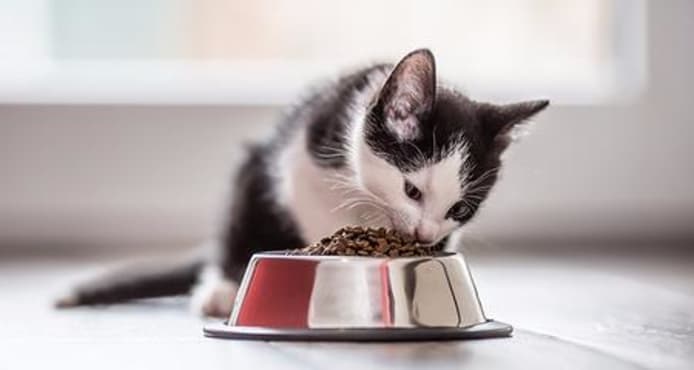
Cats can be hard to read, so how can you tell if your furry friend is hungry? Look for these signs.
Cats can be hard to read, so how can you tell if your furry friend is hungry? Providing adequate nutrition is a key component to being a successful pet parent, so you don’t want to miss the signs if your cat is telling you he’s still hungry.
Cat Vocalizations
Although cats have a reputation for being quiet roommates, they can be expressive when they want to. If you’ve had your cat for a while, you may have noticed that he has distinctive meows or cries when he wants to get your attention. When cats cry for more food, they will often meow with a higher pitch more insistently. If he is indeed using this cry because he is hungry, he will often come find you wherever you are and cry, leading you straight to his food bowl.
Cat Behavior
There are many reasons your cat clings to you and walks around your feet, but if you notice he does it more and more when you get near his food bowl, or he seems to be directing you that way, this could mean that your cat is hungry. Some cats will even sit by their food dish and bang it around with their paws to draw your attention to how empty it is.
Cat Nutrition
Why Is My Cat Always Hungry? Common Causes of Excess Hunger
If your cat seems perpetually hungry — circling the bowl, crying before meals, or acting like she hasn't eaten in days — the first question to ask isn't how much to feed her. It's why she's so hungry in the first place. Constant hunger in cats can stem from several distinct causes, and understanding them helps you respond appropriately rather than simply adding more food to the bowl.
Medical Reasons Your Cat May Be Ravenous
Sudden or persistent increases in appetite — especially when accompanied by weight loss, increased thirst, or changes in litter box habits — are worth a veterinary visit. Several health conditions are known to drive excessive hunger in cats https://www.vet.cornell.edu/departments-centers-and-institutes/cornell-feline-health-center/health-information:
- Hyperthyroidism — An overactive thyroid speeds up metabolism dramatically, leaving cats hungry even when they're eating normal or above-normal amounts. Weight loss despite a big appetite is a hallmark sign.
- Diabetes mellitus — When cells can't use glucose properly, the body signals hunger even after eating. Increased thirst and urination often accompany this condition.
- Intestinal parasites — Worms and other parasites can compete for nutrients, leaving your cat undernourished and hungry regardless of how much she eats.
- Malabsorption disorders — Conditions like inflammatory bowel disease (IBD) can prevent the gut from absorbing nutrients efficiently, triggering persistent hunger signals.
- Cognitive changes in senior cats — Older cats may forget they've eaten or experience appetite shifts related to aging.
If your cat's hunger is new, escalating, or paired with any of the above symptoms, consult your veterinarian before adjusting her diet.
Nutritional Reasons Your Cat May Feel Unsatisfied
Not all hunger signals mean a cat needs more food — sometimes they mean she needs better food. Cats are obligate carnivores, which means their bodies are built to derive nutrition from animal-based proteins and fats, not plant matter https://www.merckvetmanual.com/management-and-nutrition/nutrition-small-animals/nutritional-requirements-of-small-animals. When a food doesn't align with those biological needs, a cat may eat her full portion and still feel unsatisfied.
Key nutritional factors that can drive excess hunger:
- Low meat protein content — Cats digest animal proteins far more efficiently than plant proteins. A food that leans heavily on plant-based protein sources may leave her body signaling for more.
- Excess carbohydrates — Cats have a limited ability to metabolize carbohydrates. Foods with more than roughly 10% carbohydrates may not keep her satiated the way a meat-forward diet would https://www.merckvetmanual.com/management-and-nutrition/nutrition-small-animals/nutritional-requirements-of-small-animals.
- Insufficient caloric density — Most cats need approximately 240 calories per day, though this varies by size, age, activity level and health status. Dry food averages around 300 calories per cup; wet food averages around 250 calories per 6-ounce serving. If portions are measured without accounting for the specific food's caloric density, a cat may be consistently underfed.
- Poor food quality or formulation — Look for foods that meet AAFCO nutritional standards, which confirm the food provides complete and balanced nutrition for your cat's life stage https://www.aafco.org/consumers/understanding-pet-food/.
When evaluating your cat's food, look for a product where a named meat (chicken, salmon, turkey) appears as the first ingredient, wet food is predominantly meat-based, and plant proteins and fillers are minimal. Explore wholesome wet cat food options and a broader range of cat food formulated to meet feline nutritional needs.
Behavioral and Environmental Reasons
Sometimes hunger isn't hunger at all — it's habit, boredom, or anxiety expressing itself at the food bowl. Cats are creatures of routine, and if mealtimes have shifted, a new pet has joined the household, or she's simply learned that vocalizing gets results, she may beg persistently even when her nutritional needs are fully met.
Common behavioral drivers of apparent hunger:
- Learned begging — If vocalizing has historically produced extra food, the behavior becomes self-reinforcing.
- Boredom or understimulation — Cats with limited enrichment may redirect energy toward food-seeking.
- Multi-cat competition — In households with more than one cat, a lower-ranking cat may eat quickly and beg for more out of anxiety, even if adequate food is available.
- Free-feeding habits — Cats accustomed to food being available at all times may become anxious or vocal when portions are introduced.
A Quick Reference: Hunger Cause vs. What to Watch For
| Possible Cause | Key Signs | Next Step |
|---|---|---|
| Medical condition (hyperthyroidism, diabetes, parasites) | Weight loss, increased thirst, litter box changes | Veterinary exam |
| Nutritional mismatch | Hunger after full meals, poor coat, low energy | Review food ingredients and AAFCO statement |
| Underfeeding / miscalculated portions | Consistent hunger, lean body condition | Recalculate calories; check food's feeding guide |
| Behavioral / learned begging | Hunger seems tied to routine or attention | Structured mealtimes, enrichment, ignore vocalizing |
| Boredom or anxiety | Begging without weight loss or other symptoms | Environmental enrichment, puzzle feeders |
Checking Body Condition — Not Just the Bowl
Before adding more food, do a quick body condition check. Run your hands along your cat's sides: you should be able to feel her ribs with gentle pressure but not see them prominently. If her ribs are immediately visible through her skin, she may genuinely need more food. If you can't feel them at all beneath a layer of fat, she's likely overweight — and adding calories in response to begging would worsen that. Because cats are prone to obesity, it's important not to overfeed regardless of how persistently or loudly she vocalizes https://www.wsava.org/global-guidelines/global-nutrition-guidelines/.
Your cat's caloric needs will also shift across her lifetime. Kittens, pregnant or nursing cats, highly active cats and senior cats all have different requirements. What was the right amount at age two may not be right at age ten.
If you're unsure whether your cat's hunger is a medical issue, a nutritional gap, or a behavioral pattern, your veterinarian is the right starting point. They can rule out underlying conditions, assess body condition score and help you build a feeding plan tailored to her specific needs.
Medical Reasons for Hunger
If you know you are providing adequate food for your cat, but he is still always hungry, be sure to consult your veterinarian. There could be a medical reason why your cat is hungry all the time. He could have hyperthyroidism, diabetes or an intestinal problem. Be sure to talk to your veterinarian if your cat’s appetite suddenly increases or decreases.
If you have ruled out any medical issues with your cat and he is still crying for food, it could be a behavioral issue. Feeding your cat at exactly the same time each day creates consistency for them, and will eliminate their need to beg for food. He will know when to expect it.
Frequently Asked Questions
Why is my cat always hungry even after eating? Persistent hunger right after a meal can point to a few different causes. Your cat may not be getting enough calories for his size and life stage, his food may be low in the meat-based protein cats need as carnivores, or an underlying health condition — such as hyperthyroidism, diabetes, or an intestinal absorption problem — may be preventing him from using the nutrients he consumes. If your cat consistently acts hungry despite an appropriate portion, consult your veterinarian to rule out a medical cause. https://www.vet.cornell.edu/departments-centers-and-institutes/cornell-feline-health-center/health-information
How many calories does a typical cat need per day? Most adult cats require roughly 240 calories per day, though the right amount varies with age, weight, activity level and whether your cat is spayed or neutered. Dry food delivers approximately 300 calories per cup, while wet food provides around 250 calories per 6-ounce can. Your veterinarian can give you a precise target based on your cat's individual profile. https://www.merckvetmanual.com/management-and-nutrition/nutrition-small-animals/nutritional-requirements-of-small-animals
How often should I feed my cat? Most cat pet parents offer a combination of dry and wet food — measuring out the full day's dry food allotment each morning so it's available throughout the day, then serving wet food twice daily. Feeding on a consistent schedule at the same times every day helps reduce food-begging behavior because your cat learns exactly when to expect his next meal.
What's the difference between normal hunger and excessive hunger in cats? Normal hunger follows a predictable pattern tied to your cat's feeding schedule — a meow near mealtime, leading you toward his bowl. Excessive hunger (called polyphagia) means your cat is relentlessly vocalizing, pawing at his bowl, or acting frantic for food well outside normal mealtimes, even when portions are adequate. Sudden or dramatic increases in appetite always warrant a veterinary visit. https://www.vet.cornell.edu/departments-centers-and-institutes/cornell-feline-health-center/health-information
Is my cat overeating, or is he just begging out of habit? Run a quick body-condition check: gently feel along your cat's sides. You should be able to feel his ribs with light pressure but not see them. If his ribs are invisible under a thick layer of tissue, he is likely overweight and may be begging out of habit rather than genuine hunger. If his ribs are sharply visible, he may genuinely need more food. Either finding is worth discussing with your veterinarian. https://wsava.org/global-guidelines/global-nutrition-guidelines/
What should I look for on a cat food label to make sure my cat feels satisfied? Look for a named meat source (chicken, salmon, turkey) as the first ingredient, a high overall protein content from animal sources, and carbohydrates making up no more than 10% of the formula. Cats are carnivores and digest meat-based protein far more efficiently than plant protein, so a food that skimps on animal protein may leave your cat feeling hungry even at the right calorie level. Checking that the food meets AAFCO nutritional adequacy standards is a reliable starting point. https://www.aafco.org/consumers/understanding-pet-food/
This article was created with assistance from AI tools and reviewed for accuracy by Petco's content team.
271Pet Parents found this article helpful


