


Two Easy Ways to Start Earning Rewards!
Become a member today! Members-only pricing and offers, personalized care notifications, Vital Care points back on every purchase and more!
 Become a credit card member today!
Earn 2X Pals Rewards points at Petco
when you use Petco Pay!APPLY NOWLearn More About Petco Pay Benefits
Mastering Pet Salamander & Newt Care: Food, Habitat, Health Guide
Updated on July 18th, 2024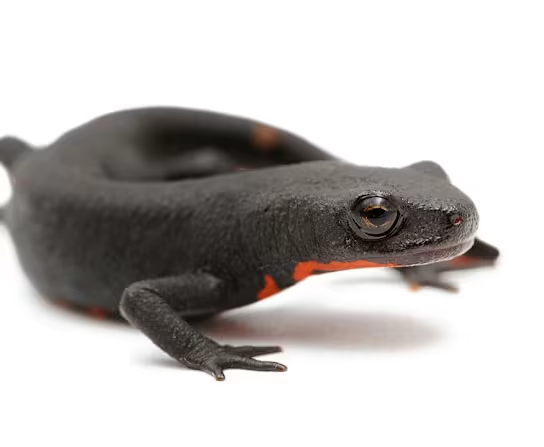
Tiger salamanders are the world’s largest land-dwelling salamanders. They are found all over the U.S. and into Mexico and Canada where they burrow underground in marshes, woodlands and meadows typically near water. Tiger salamanders are not a single species but a group of closely related subspecies that vary in color and pattern. They are hardy, interactive amphibians that, when captive bred, are typically very tame and make great pets.
Fire-bellied newts are native to Japan and China where they live in or near water. They do not like strong water currents but instead are found in gently moving bodies of water. They are typically seen swimming slowly while exploring their habitats.
Learn How to Care for a Salamander & Newts, recommended diet and habitat setup. Find the right food, supplies and equipment at your neighborhood Petco.
This care sheet covers a variety of species, including:
- Tiger salamander – Ambystoma tigrinum
- Fire-bellied newts – Cynops pyrrhogaster
Typical appearance and behavior
- Tiger salamanders come in several different colors and patterns, depending on subspecies, including light brown with black patches, black with yellow stripes and black with orange spots
- Young salamanders typically have a spotted pattern that changes as they mature
- Tiger salamanders are stout-looking with small eyes and muscular legs for digging—all adaptations for spending a lot of time underground
- Salamanders may take time to adapt to a new habitat and may stay buried in substrate at first, eventually becoming tame as they learn that food is on the surface
- Tiger salamanders make no sounds and will often move around their habitats, following their pet parents, when they are hungry and hopeful for food
- Male tiger salamanders are thinner with flatter tails and a more prominent vent than females
- Growing salamanders shed their skin (molt) every few days to every few weeks and usually eat the shed skin
- Fire-bellied newts are named for the distinctive bright reddish-orange markings on their bellies, along with varying amounts of brown, black and white
- Fire-bellied newts’ size varies, with females averaging 4-5" in length and males averaging 3-4"
- During breeding, male newts develop a blueish, broader looking tail and a swollen cloaca
- Newts breathe in oxygen and hold their breath when they dive
Characteristics
| Care Difficulty | Beginner |
|---|---|
| Average Life Span | Up to 15-25 years with proper care, depending on species |
| Average Adult Size | 11+ inches long for tiger salamanders, 3-5 inches long for newts |
| Diet | Carnivore |
| Minimum Habitat Size | 15-gallon tank for one adult |
Habitat
Habitat size
- For a salamander, provide a 15-gallon glass, acrylic or plastic tank for a terrarium
- For a newt, use a 15-gallon glass tank for a semi-aquatic terrarium
- Two newts or two salamanders may be housed together in a tank 20 gallons or larger
- Tanks should have a securely fitting screened lid to prevent escape and allow adequate ventilation, and they should be longer than they are tall to allow a larger area over which amphibians can explore
- Salamanders and newts will reach adult size in under a year, depending on species and under ideal conditions.
Building your habitat
Substrate
Salamanders can be housed in a terrarium
- Substrate should be placed in the bottom with a shallow bowl filled with dechlorinated water in which they can soak
- Salamanders prefer dampened sphagnum moss or a mulch-type substrate such as coconut husk fiber or cypress mulch
- Substrate should be 3-4" deep to allow burrowing
- Gravel and small pieces of bark are not recommended as substrate, as they are abrasive to amphibians’ delicate skin and are indigestible if eaten accidentally, potentially leading to life-threatening gastrointestinal obstruction
- A moisture gradient should be provided with one end of the tank containing moist substrate, while the other end has drier substrate, so that pets can choose where they want to stay
- Substrate should never be soggy
Newts prefer a semi-aquatic terrarium in which land and water are separated
- Ways to set up a semi-aquatic terrarium include:
- Burying a bowl of water in substrate
- Providing a platform which newts can climb to escape water. Commercially available décor, cork bark or driftwood can be used as a platform
- Large pieces of gravel substrate can be sloped in the tank bottom to allow exit to a dry area on one side of the tank
- Water should be at least 1.5 times as deep as the length of the largest newt
- Provide proper filtration to ensure optimal water quality to help maintain health. Ensure moderate, slow water circulation to mimic water currents and high oxygen levels found in the freshwater amphibian’s natural habitat. Water circulation should not be too rapid, as newts are poor swimmers in turbulent water
- Stable water quality (pH, ammonia, nitrate, nitrite) and water temperature are critical to a newt’s health. If you are unsure of the tank’s water quality, bring a sample to Petco for free testing
- Pieces of slate or large, smooth pieces of gravel, too big for newts to ingest, can be used as substrate in the water
- Dry substrate in the tank can contain decorative artificial or live plants and similar substrate as a salamander tank
- Avoid small gravel that can easily be ingested, leading to potentially life-threatening gastrointestinal tract obstruction
- Reptile carpet also is not recommended, as it is too abrasive to delicate amphibian skin
Décor -
- Salamanders like to burrow under cork bark or driftwood and hide under moss or plants but may dig under and uproot live plants
- Newts like to explore and climb on live or artificial plants, driftwood or commercially available artificial stones. Real stones are not recommended, as they may fall on and crush delicate amphibians
Temperature –
- Provide a tank temperature of 60-75°F
- Monitor temperature with a thermometer
- Most tiger salamanders’ and newts’ habitats will not need supplemental heat if the temperature does not fall below 60°F. Conversely, habitat temperature should not rise above 78°F, as higher temperatures can stress these amphibians and lead to health problems
Lighting –
- Salamanders and newts require a 10-12 hour day light cycle using a low-wattage incandescent day bulb that does not emit a great deal of heat during daylight hours only.
- Salamanders and newts benefit from low level ultraviolet (UV)B light from full spectrum bulbs for 10-12 hours a day to help ensure they make vitamin D in their skin to absorb dietary calcium
- Higher levels of UVB light may cause eye and skin damage in amphibians
- Be sure to provide hiding places so amphibians can hide from light as needed
Humidity -
- Maintain habitat humidity at 70% by misting with dechlorinated water as needed every day
- Substrate should be moist but not soggy; increase ventilation if it gets too wet
- Provide a shallow bowl of dechlorinated water in which your pet can soak to stay hydrated and to increase habitat humidity
- Monitor humidity with a humidity gauge
Cleaning your habitat
For semi-aquatic habitats:
- If using a bowl of water buried in the substrate in a semi-aquatic terrarium, remove the bowl, scrub it with a reptile-safe habitat cleaner or 3% bleach solution, rinse it thoroughly, then replace the water (dechlorinated and at the appropriate temperature) daily before returning it to the habitat
- If using a tank filled with water and décor or rocks as a dry land, change 10–25% of the total volume of water every 2–4 weeks, or as needed; change filter media monthly
- Use dechlorinated water only
For terrestrial habitats:
Thoroughly clean the habitat at least once a week:
- Place amphibian in a secure habitat
- Scrub the tank and furnishings with an amphibian-safe habitat cleaner or 3% bleach solution
- Rinse thoroughly with hot water so no residue remains; it is imperative that all traces of the habitat cleaner or bleach solution are gone
- Dry the tank and furnishings completely and add clean substrate before putting amphibians back in the habitat
What Do Salamanders and Newts Eat
A well-balanced salamander or newt diet consists of:
- A variety of insects including a base-diet of gut-loaded (recently fed) crickets, earthworms, beetles and roaches, plus superworms, waxworms, silkworms, hornworms, Phoenix worms and whiteworms
- Worms may need to be chopped into pieces for small newts
- Frozen, fresh or live bloodworms, brine shrimp and tubifex worms also can be offered in the water
- Large salamanders also can be fed frozen/thawed pinkie or fuzzy mice occasionally as treats
- Mealworms should be avoided, as their hard exoskeleton is difficult to digest
- Salamanders and newts also can be fed some portion of their diets as commercially available dry food
Things to remember when feeding your salamander or newt:
- Varying the diet is key to providing complete and balanced nutrition
- Feed juvenile salamanders every 1-2 days and adult salamanders 2-3 times a week at night; feed juvenile newts daily and adult newts every other day
- Sprinkle food with calcium supplement every other feeding and a multi-vitamin supplement once or twice a week
- Tiger salamanders commonly become obese; limit feeding them high-fat foods such as waxworms
- Be sure to remove uneaten food from aqua-terrestrial tanks if it is not eaten within 10-15 minutes; it will degrade the water quality and lead to health problems
Care
Don't handle amphibians unless necessary. Always wear moist, powder-free gloves when handling, as amphibians can absorb bacteria and oils on your hands through their delicate, porous skin, which can harm them. Plus, all amphibians have small glands in their skin that secrete irritating toxins to scare off predators. Do not allow amphibians’ secretions to contact your eyes, mouth or open wounds. Use an appropriately sized, small-mesh, soft net to move or block the amphibian while doing habitat maintenance
For semi-aquatic habitats, water care is essential:
- Maintaining great water quality with regular water changes and adequate filtration is important to help keep your amphibians healthy
- Daily: Check filter, water temperature and other equipment
- Weekly: Test water quality at least once a week
Avoid overcrowded conditions which are a major cause of stress and disease in amphibians
Where to buy salamanders and newts
Salamanders and newts are available for purchase at your local Petco Pet Care Center location. Please call ahead to check availability.
Supplies
- Appropriately sized habitat
- Commercial salamander or newt food
- Substrate
- Sphagnum moss
- Water dish
- Hideaway place
- Climbing décor
- Plants
- Water filter
- Plant mister
- UVB lighting
- Multivitamin supplement
- Calcium supplement
- Cricket keeper
- Cricket food
- Cricket quencher
- Live crickets
- Thermometer
- Humidity gauge
Habitat mates
- With a large enough habitat, several tiger salamanders or several newts can be housed together, as these amphibians are not territorial
- Do not house different amphibian species together
Health
Signs of a healthy pet
- Active and alert
- Clear eyes, nose and mouth
- Skin free of hanging shed skin, sores, wounds or discoloration
- Clear vent
- Eats food and passes stool regularly
- Crawling and swimming
- Hunts prey actively
- Maintains normal weight
Red flags (If you notice any of these signs, contact your veterinarian)
- Weight loss or decreased appetite
- Lethargy
- Bloated abdomen or other body parts
- Skin lesions or discoloration
- Distressed breathing
- Weak movements
- Sunken eyes
- Dull reactions
- Excess hanging shed skin
- Discharge or bubbles from eyes, nose or mouth
- Obesity
- Problems with balance
- Inability to swim
- Bubbles under skin
Common health issues
| Health Issue | Symptoms or Causes | Suggested Action |
|---|---|---|
| Health IssueGas bubble disease | Symptoms or CausesBloating, bubbles under skin surface, loss of balance, difficulty swimming. Due to over-saturation of water with air from aggressive filtration. | Suggested ActionConsult your veterinarian and ensure water is not over-aerated. |
| Health IssueMetabolic bone disease | Symptoms or CausesDeformed, soft or fractured bones, weakness, paralysis, decreased appetite. May be due to nutritional deficiency, lack of UVB light, inappropriate habitat temperature or humidity. | Suggested ActionConsult your veterinarian and ensure proper diet and UVB lighting, plus appropriate temperature and humidity. |
| Health IssueSkin problems | Symptoms or CausesAbrasions, wounds, discoloration or other skin lesions; may be due to bacterial, viral, parasitic or fungal infections. Often associated with unclean, poor-quality water or inappropriate temperature or humidity. May also be due to trauma when amphibian is introduced into new habitat and thrashes around. | Suggested ActionConsult your veterinarian, ensure clean water and appropriate temperature and humidity. |
FAQs
- What type of animal is a newt? A newt is a type of amphibian.
- What do newts eat? Newts eat a variety of insects including gut-loaded (recently fed) crickets, earthworms, beetles and roaches, plus superworms, waxworms, silkworms, hornworms, Phoenix worms and whiteworms. Frozen, fresh or live bloodworms, brine shrimp and tubifex worms also may be fed.
- Is a newt an amphibian? Yes, a newt is an amphibian.
- Where do newts live? Fire-bellied newts are native to Japan and China where they live in or near water.
- Is a newt a reptile? No, newts are amphibians.
- How long do newts live? Newts can live up to 15-25+ years with proper care.
- What fish do newts eat? Newts will eat small fish like guppies and minnows, as well as small shrimp and crustaceans.
- Is a salamander an amphibian? Yes, a salamander is a type of amphibian.
- Is a salamander a reptile? No, salamanders are amphibians.
- Is a salamander a lizard? No. Lizards are reptiles, and salamanders are amphibians.
Notes and resources
Ask a Pet Care Center store employee about Petco's selection of products available for the care and happiness of your new pet. All products carry a 100% money-back guarantee.
Because all amphibians are potential carriers of infectious diseases, such as salmonella bacteria, always wash your hands before and after handling your amphibian and/or habitat contents to help prevent the potential spread of diseases.
Pregnant women, children under the age of 5, senior citizens and people with weakened immune systems should contact their physicians before purchasing and/or caring for an amphibian and should consider having a pet other than an amphibian.
Go to the Centers for Disease Control at cdc.gov/healthypets for more information about amphibians and disease.
The information on this Care Sheet is not a substitute for veterinary care. If your pet is ill or if you need additional information, please contact your veterinarian as appropriate.
Related Articles


