


Two Easy Ways to Start Earning Rewards!
Become a member today! Members-only pricing and offers, personalized care notifications, Vital Care points back on every purchase and more!
 Become a credit card member today!
Earn 2X Pals Rewards points at Petco
when you use Petco Pay!APPLY NOWLearn More About Petco Pay Benefits
Master Terrestrial Frog Care: Habitat, Diet & Health Secrets
Updated on July 18th, 2024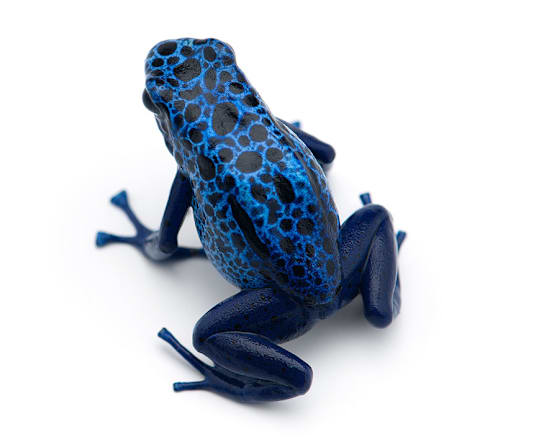
This group of small terrestrial frogs includes several different species of amphibians from different geographic locations and with very different appearances. Mantella frogs originated in Madagascar and comprise 16 different species (some of which are endangered) who live both in rainforests and in dry woodlands. Dart frogs (also called arrow frogs) are a family of frogs of different species who inhabit the tropics of South and Central America. As active climbers and jumpers, these different frog species are fun to watch. Frogs have sensitive skin that can be injured by oils and residues found on our skin, therefore, they should be handled only when necessary while wearing moistened, powder-free gloves.
Learn how to care for small Terrestrial Frogs, recommended diet and habitat setup. Find the right food, supplies and equipment at your neighborhood Petco.
Care recommendations cover a variety of species, including:
- Mantella frogs – Mantella spp.
- Dart frogs – Dendrobates spp
Typical appearance and behavior
Mantella frogs:
- These tiny, diurnal (active during the day) frogs come in a variety of vibrant colors, including emerald green, blue, yellow, orange and black. Mantellas secrete toxins from their skin to protect against predators, and their bright colors help remind predators that they are poisonous. They make these toxins from the insects that they eat
- As pets, these frogs typically eat a more limited diet than their counterparts do in nature. Consequently, pet mantellas secrete fewer toxins into their skin than their cousins in nature. Regardless, they should only be handled by pet parents when necessary
- They spend most of their time on land, although some are also found in trees
- They are small, growing to no more than 2 inches long
- Unlike other frogs who have webbed toes to help them swim, mantellas spend so much time on land that they don’t need webbed toes
- Their legs are shorter to help them climb, unlike other frogs who have long legs for hopping. Their toes also have adhesive pads to help them stick to things as they climb
- As pets, they spend most of their time exploring their habitat and hunting for food, making them fun to watch
- They can be housed together in groups of males and females, as long as they have acess to hiding places that will lessen their tendency to fight over territory
Dart/arrow frogs:
- These small frogs are popular as pets because they come in a variety of bright colors and patterns
- As diurnal frogs who spend most of their time on the ground or on low-hanging plants, these amphibians make great pets, as they are very active during pet parents’ waking hours
- While they are referred to as “poison” dart frogs, as pets, they are nontoxic. Like other species of terrestrial frogs, they get the chemicals they need to make the skin toxins they secrete from the insects they consume in nature. Captive-bred insects do not contain these chemicals
- As delicate-skinned amphibians, they should only be held when necessary and are more a pet to be watched than to be touched
- While dart frogs’ size can vary by species, from less than an inch to 2.5 inches long, they average about 1.5 inches long.
Characteristics
| Care Difficulty | Beginner |
|---|---|
| Average Life Span | Up to 3-10+ years, depending on the species |
| Average Adult Size | Up to 2 inches long, depending on the species |
| Diet | Insectivore |
| Minimum Habitat Size | 10-gallon tank for two mantella or dart frogs |
Habitat
Habitat size
The appropriate-size habitat will depend on the species and how many frogs are being housed together. A minimum 10-gallon tank is adequate for two mantella or dart frogs If keeping more than one frog in a habitat, a good rule of thumb is to add 5 to 10 gallons of space per frog. Tanks should have a tightly fitting screen top to help prevent escape and allow adequate ventilation.
These frogs reach adult size in 10 to 18 months, depending on the species and under ideal conditions.
Building your habitat
- Substrate – As terrestrial frogs typically live in moist areas, the ideal substrate for their habitats should hold moisture to maintain humidity. Moist sphagnum moss and coconut fiber work well. Substrate should be at least 2 inches deep so that species who naturally dig can do so. Some people recommend placing substrate over a sheet of mesh screen layered over large gravel to aid in drainage and help keep substrate from becoming moldy. Bedding made of small particles such as sand or small bark chips is not recommended, as it is indigestible and can lead to life-threatening gastrointestinal tract obstruction if accidentally consumed
- Décor - Provide several hiding places to help frogs feel secure and decrease territorial behavior. Live and artificial plants, commercially available branches, driftwood, leaf litter and cork bark all can be provided to help frogs feel safe and to provide stimulation. An open, shallow dish of dechlorinated water large enough for frogs to drink from and soak in should be available. Terrestrial frogs may be housed in semi-aquatic terrariums where part of the habitat has large-size gravel (too large to be consumed), pushed to one side of the tank and covered in dry substrate and sloped on an angle down to a shallow area of dechlorinated water. Semi-aquatic terrariums are best kept clean with small, submersible, low-flow water filters
- Humidity - Maintain 70 to 90% humidity, depending on the species, by misting with dechlorinated water as needed daily. Providing an open bowl of shallow water will also help maintain humidity through evaporation. Monitor humidity with a humidity gauge
- Temperature – Provide a temperature gradient from 68°F in the cool zone and at night to no higher than 80°F in the warm zone. Exposure to temperatures higher than 80°F for even short periods can be deadly to these frogs. Monitor temperatures with at least two thermometers. A low-wattage incandescent bulb, an under-tank heating pad or a ceramic heat emitter can be used as a heat source, as long as appropriate humidity is maintained. Heat sources should be attached to thermostats to regulate temperatures. Thermostats are especially important with heating pads, which can get hot and cause burns through the tank floor if not regulated properly. Hot rocks should not be used as a heat source, as they can burn amphibians’ delicate skin. Amphibians not kept at the appropriate temperature ranges are more likely to become immunosuppressed and get sick
- Lighting – Terrestrial amphibians do not require UV (ultraviolet) light to survive, but a low-level (2.0 or 5.0) UVB bulb is recommended to encourage natural behaviors and can be used with a low-wattage incandescent bulb to help establish a normal 10- to –12-hour day/night cycle. Be sure that the tank does not get too hot, and provide hiding places for frogs to avoid light as needed.
Cleaning your habitat
- Thoroughly clean and disinfect water and food bowls daily. The habitat should be spot-cleaned daily to remove droppings.
- Thoroughly clean the remainder of the habitat at least once a month:
- Place frog in a secure habitat, handling them gently so as not to damage their delicate skin
- Scrub the tank and furnishings with an amphibian-safe habitat cleaner or 3% bleach solution
- Rinse thoroughly with hot water so no residue remains. It is imperative that all traces of the habitat cleaner or bleach solution are gone
- Dry the tank and furnishings completely and add clean substrate before putting frogs back in the habitat
What Do Small Terrestrial Frogs Eat
A well-balanced small terrestrial frog diet consists of:
- A variety of insects, including gut-loaded (recently fed) crickets, flightless fruit flies, springtails and isopods
- Mantella frogs and dart frogs are so small that they should be offered smaller-sized prey (e.g., 1/8-inch pinhead crickets)
Things to remember when feeding your small terrestrial frog:
- Fresh, clean, chlorine-free water should be available all the time
- Terrestrial frogs generally enjoy hunting for prey, so only live insects and worms should be offered
- Feed juveniles daily, adults every other day
- If your frog looks like they’re getting overweight or leftover food is found in the habitat, decrease the frequency of feeding
- Sprinkle food with calcium supplement daily and a multivitamin supplement once a week
- Feed frogs as many insects as they will eat in 15 minutes
- Vary diet as much as possible to help keep frogs interested and to provide complete and balanced nutrition
- Remove uneaten insects so that they don’t chew on or injure frogs’ skin
Care
- Don't handle frogs unless necessary; always wear moistened powder-free gloves when handling frogs. Bacteria and oils on your skin can be absorbed through the frog’s delicate, porous skin and harm Also, terrestrial frogs have small glands in their skin that secrete irritating toxins to scare off predators. Do not allow frog’s secretions to contact your eyes, mouth or open wounds. Use an appropriately sized, soft, small-mesh net to move or block the frog while doing habitat maintenance
- Frogs shed their skin every few weeks and often eat it as they shed so as not to alert predators to their presence and to consume nutrients present in shed skin
Where to buy
Small terrestrial frogsare available for purchase at your local Petco Pet Care Center. Please call ahead to check availability.
Supplies
- Appropriately-sized habitat
- Substrate
- Sphagnum moss
- Water and mealworm dishes
- Hideaway place
- Climbing décor
- Plants
- Heat light
- Heat fixture
- Under-tank heater
- UVB lighting and fixture
- Multivitamin supplement
- Calcium supplement
- Cricket keeper
- Cricket Food
- Mister
- Thermometers
- Humidity gauge
Habitat mates
- Frogs of the same species can be housed together, as long as the habitat is large enough
- Do not house different amphibian species together
Health
Signs of a healthy frog
- Active and alert
- Clear eyes, nose and mouth
- Skin free of hanging shed skin, sores, wounds or discoloration
- Clear vent
- Plump, rounded body
- Eats and passes stool regularly
- Hops and moves freely
- Hunts, stalks and catches prey actively
- Maintains body weightether
Red flags (If you notice any of these signs, contact your veterinarian.)
- Weight loss or decreased appetite
- Obesity
- Lethargy
- Bloated abdomen or other body parts
- Skin lesions or discoloration
- Distressed breathing
- Imbalanced or weak movements
- Sunken or cloudy eyes
- Dull reactions
- Excess hanging shed skin
- Discharge or bubbles from eyes, nose or mouth
Common health issues
| Health Issue | Symptoms or Causes | Suggested Action |
|---|---|---|
| Health IssueChemical intoxication | Symptoms or CausesCaused by exposure to soap, detergent, pesticides, oils on human skin, etc. | Suggested ActionConsult your veterinarian and protect your amphibian from exposure. |
| Health IssueIntestinal obstruction | Symptoms or CausesLethargy, decreased appetite, bloating; caused by swallowing gravel or other indigestible substrate or by eating too many hard-shelled insects. | Suggested ActionConsult your veterinarian; surgery may be required. |
| Health IssueNutritional deficiencies/ metabolic bone disease | Symptoms or CausesWeakness, fractured bones, lethargy, decreased appetite, change in skin color. | Suggested ActionConsult your veterinarian and ensure a varied diet; use vitamin and mineral supplements. |
| Health IssueSkin problems | Symptoms or CausesLesions, sores and skin discoloration, caused by bacterial, fungal and parasitic infections. | Suggested ActionConsult your veterinarian. |
Notes and resources
Ask a Pet Care Center associate about Petco's selection of products available for the care and happiness of your new pet. All products carry a 100% money-back guarantee.
Because all frogs are potential carriers of infectious diseases such as salmonella bacteria, always wash your hands before and after handling your frog and/or habitat contents to help prevent the potential spread of diseases.
Pregnant women, children under the age of 5, senior citizens and people with weakened immune systems should contact their physicians before purchasing and/or caring for a frog and should consider having a pet other than a frog.
Go to the Centers for Disease Control at cdc.gov/healthypets for more information about frogs and disease.
The information on this Care Sheet is not a substitute for veterinary care. If your pet is sick or if you need additional information, please contact your veterinarian as appropriate.
Related Articles


FAQs
Dart frogs eat a variety of small insects, including gut-loaded (recently fed) pinhead crickets, flightless fruit flies, springtails and isopods.
Mantellas secrete toxins from their skin to protect against predators, and their bright colors help remind predators that they are poisonous. They make these toxins from the insects that they eat. As pets, these frogs typically eat a more limited diet than their counterparts do in nature. Consequently, pet mantellas secrete fewer toxins into their skin than their cousins in nature.
Mantella frogs make good pets because they are relatively easy to keep and are active during the day so you can watch them.
Once you set up their habitat properly, dart frogs are easy to keep and are relatively low maintenance.
While they are referred to as “poison” dart frogs, as pets, they are nontoxic. Like other species of terrestrial frogs, they get the chemicals they need to make the skin toxins they secrete from insects they eat in nature. These chemicals are not found in captive-bred insects.
Dart frogs eat a variety of insects, including gut-loaded (recently fed) crickets, flightless fruit flies, springtails and isopods. Dart frogs are so small that they should be offered smaller-sized prey (e.g., 1/8-inch pinhead crickets).
A paludarium is a semi-aquatic habitat that houses a range of terrestrial, aquatic and semi-aquatic plants and animals, and dart frogs do well living in them if they are set up to meet their needs.