


Two Easy Ways to Start Earning Rewards!
Become a member today! Members-only pricing and offers, personalized care notifications, Vital Care points back on every purchase and more!
 Become a credit card member today!
Earn 2X Pals Rewards points at Petco
when you use Petco Pay!APPLY NOWLearn More About Petco Pay Benefits
Lined Velvet Spider Care: Habitat, Food & Health Essentials
Published on May 21st, 2026
Updated on May 21st, 2026

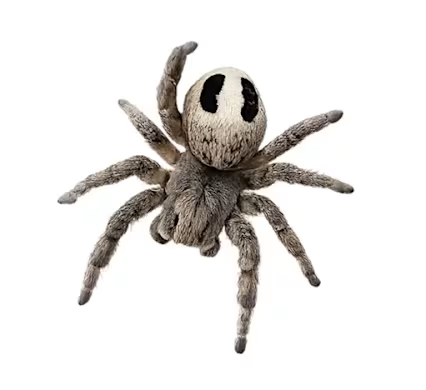
Learn all about taking care of the lined velvet spider.
Stegodyphus lineatus
The Lined Velvet Spider is known as one of the more visually striking arachnids in the hobby. It is compact, densely furred in velvety gray-brown setae, and anchored to its web retreat.
Native to the hot, dry scrublands of the Mediterranean basin and Middle East, Stegodyphus lineatus is a solitary ambush predator that lives alone in a funnel-shaped silk webbing, detecting prey through vibration-sensitive signal threads. Females are known for one of the most dramatic parental behaviors in the animal kingdom: after her eggs hatch, she undergoes matriphagy, allowing her spiderlings to consume her as their first meal.
For keepers who want a low-footprint, high-personality arachnid that rewards observation, the Lined Velvet Spider is a favorite.
Characteristics
| Average Adult Size | Females 12–15 mm body length (~1 inch legspan); males 8–10 mm |
|---|---|
| Average Lifespan | 2–4 years |
| Diet | Carnivorous/insectivorous |
| Minimum Habitat Size | 8” × 8” × 8” |
| Care Difficulty | Intermediate |
Typical Lined Velvet Spider appearance and behavior
- Dense, velvety gray-brown setae (hairs) cover the entire body — the defining characteristic that gives this spider its “velvet” name
- A distinctive rust-orange or amber chevron marking on the face (chelicerae and pedipalps region) visible at close range
- Females are noticeably larger than males — a key sexual dimorphism in this species
- Builds a characteristic funnel-shaped silk retreat attached to vegetation or enclosure walls, with signal threads radiating outward
- Subsocial: females exhibit strong maternal care, guarding the egg sac and spiderlings, but adults are solitary and do not hunt cooperatively or share webs with other adults
- Prey detection is primarily vibrational — the spider rushes from its retreat when signal threads transmit movement
- May remain motionless inside the retreat for extended periods — resting in the funnel is normal behavior, not a sign of illness
Habitat
Habitat size
An 8” × 8” × 8” enclosure for a single adult. Height matters — they need vertical anchor points for web construction. The habitat needs cross-ventilation or a mesh lid. Humidity buildup is a common cause of death in captivity; moisture sitting in a non-ventilated habitat can cause a respiratory infection.
Building your habitat
Substrate - Dry coco fiber, a dry peat/sand mix (60/40), or dry sandy soil — minimum 2–3 inches depth to allow burrowing. Substrate must remain dry between misting intervals. Avoid any moisture-retaining materials.
Décor - Cork bark flats, artificial or dried branches, and 2–3 anchor points at varying heights for web construction. A cork tube or half-log hide gives the spider a secure retreat base. Avoid live plants — they raise enclosure humidity.
Temperature - Maintain ambient temperature of 72–80°F. No basking heat required at typical room temperatures. Avoid sustained temperatures below 60°F.
Humidity - 30–40% ambient. Humidity buildup is the primary captive-husbandry risk. Lightly mist one corner of the substrate only, once every 10–14 days. Never mist the full enclosure.
Lighting - No UVB required. Ambient room light on a natural day/night cycle is sufficient. Avoid direct sunlight on the enclosure.
Cleaning your Lined Velvet Spider’s habitat
Perform a light spot-clean weekly — remove uneaten prey, molted exuvia, and substrate debris around the web entrance. A full enclosure clean every 4–6 months:
Temporarily house the spider in a secure, ventilated container before cleaning.
- Remove and replace all substrate.
- Wipe enclosure walls and decor with a reptile-safe disinfectant or 3% bleach solution; rinse thoroughly.
- Allow everything to dry completely before rebuilding. Never use household cleaners.
What Do Lined Velvet Spiders Eat
Lined Velvet Spiders are insectivores and web ambush predators that rely on vibration to detect prey. Feed live prey only — they will not strike at dead or frozen insects.
A well-balanced Lined Velvet Spider diet consists of:
- Fruit flies (Spiderlings and Juveniles)
- Appropriately sized crickets (primary staple)
- Small dubia roaches
- Mealworms (occasional treat only — high fat)
- Small waxworms (rare treat; high fat)
Water:
- No bowls; provide fine mist spray for drinking droplets
Things to remember when feeding your Lined Velvet Spider:
- Always offer prey live — S. lineatus is a web ambush predator that responds to vibration
- Size prey appropriately — no larger than the spider’s abdomen
- Juveniles: feed every 3–5 days. Adults: every 5–10 days.
- Remove uneaten prey within 24 hours to prevent stress and injury during molts
- Dust crickets and roaches lightly with calcium+D3 supplement every 2–3 feedings
- Do not feed during or within a week of molting — fasting before a molt is normal
- Adult females may fast for weeks before producing an egg sac — this is normal behavior
Lined Velvet Spider care
Things to remember:
- Keep the enclosure dry — low humidity species
- Mist lightly every day; never mist the whole enclosure
- Ensure strong ventilation — cross-ventilation or a mesh lid
- House solo — cohabitation can cause cannibalism
- Remove all prey during and for at least one week before a molt
- A fasting female near an egg sac is normal behavior; do not force-feed
- Supplement feeders with calcium+D3 every 2–3 feedings
Where to buy a Lined Velvet Spider
Lined Velvet Spiders are available for purchase at your local Petco location. Call ahead to check availability.
Supplies
- Appropriately sized enclosure
- Fine mist sprayer
- Fruit fly culture / feeder insects
- Repti Calcium with D3
- Substrate
- Hideaway place
- Climbing decor
- Plants
- Thermometer
- Humidity gauge
- Crickets
Habitat mates
Lined Velvet Spiders should be housed individually
Health
Signs of a healthy Lined Velvet Spider
- Plump, round abdomen
- Alert response to enclosure disturbance — retreats quickly to web funnel
- Regular feeding with good strike response on live prey
- Web maintained and periodically expanded
- Clear, glossy eyes (all eight)
- Regular molting on schedule with no stuck shed
Red flags
- Shriveled or sunken abdomen (dehydration or starvation)
- Lethargy — no response to stimulus at all (not simply molting or resting in retreat)
- Discoloration or lesions on the abdomen
- Legs curled inward while the spider is not molting (death curl — critical)
- Excessive moisture or condensation inside the enclosure (humidity emergency)
- Repeated failed molts or stuck shed on legs
Common Lined Velvet Spider health issues
| Health Issues | Symptoms or Causes | Suggested Actions |
|---|---|---|
| Dehydration | Shriveled abdomen, lethargy, poor feeding | Lightly mist enclosure to provide water droplets and offer appropriately sized insects |
| Humidity-Related Respiratory Infection | Labored movement, mucus at mouth, lethargy | Improve ventilation and humidity immediately; reduce all misting; consult an exotic/invertebrate vet |
| Dysecdysis (Failed Molt) | Shed stuck to legs or abdomen; spider unable to free itself | Maintain humidity, avoid disturbance during molt and do not force; consult vet if limb is trapped |
| Prey Bite Injury | Wound or abrasion on abdomen; spider avoiding food | Remove all prey immediately; keep enclosure clean and dry; monitor for infection |
Notes and sources
- Ask a Pet Care Center employee about Petco’s selection of products available for the care and happiness of your new pet. All products carry a 100% money-back guarantee.
- Stegodyphus lineatus is an arachnid, not a reptile or amphibian. Standard reptile husbandry guidelines do not apply. Care parameters reflect this species’ arid Mediterranean and Middle Eastern native range.
- Because all arachnids are potential carriers of infectious diseases such as salmonella, always wash your hands before and after handling your arachnid or habitat contents to help prevent the potential spread of disease.
- Pregnant women, children under the age of 5, senior citizens and people with weakened immune systems should contact their physicians before purchasing or caring for arachnids and should consider having a pet other than an arachnid.
- Go to the Centers for Disease Control at cdc.gov/healthypets for more information about animals and disease.
The information on this Care Sheet is not a substitute for veterinary care. If you need additional information, please contact your veterinarian as appropriate.


FAQs
Adult females reach 12–15 mm in body length, with a legspan of roughly 1 inch. Males are smaller at 8–10 mm.
Lined Velvet Spiders do have small fangs and although rare, their bite is mild, similar to a bee sting. Severe allergic reactions are possible but uncommon.
Adults eat every 5–10 days. Juveniles eat more frequently — every 3–5 days. Always remove uneaten prey within 24 hours.
No. Adults are solitary, house only one spider per enclosure.
Matriphagy is a remarkable reproductive behavior in this species. After her eggs hatch, the female undergoes autolysis — her body organs begin to break down — and her spiderlings consume her as their first meal. This is normal and not a sign of an unhealthy animal.
Fasting is common before molts and before or after an egg sac. If the abdomen remains plump and the spider is otherwise active, this is likely normal. A shriveled abdomen alongside fasting warrants concern — try offering prey and lightly mist a substrate corner.
Pre-molt signs include a darkening abdomen, reduced or stopped feeding, and increased time spent resting mostly motionless. During this period, remove all prey from the enclosure and do not disturb the spider.
Yes. They build a distinctive funnel-shaped silk retreat anchored to vegetation or enclosure walls, with signal threads extending outward to detect prey vibrations. Providing anchor points (cork bark, dried branches) encourages web building.
Lined Velvet Spiders can live 2–4 years in captivity.