


Two Easy Ways to Start Earning Rewards!
Become a member today! Members-only pricing and offers, personalized care notifications, Vital Care points back on every purchase and more!
 Become a credit card member today!
Earn 2X Pals Rewards points at Petco
when you use Petco Pay!APPLY NOWLearn More About Petco Pay Benefits
Freshwater Angelfish Care: Tank, Food, & Happy, Healthy Fish
Updated on August 16th, 2023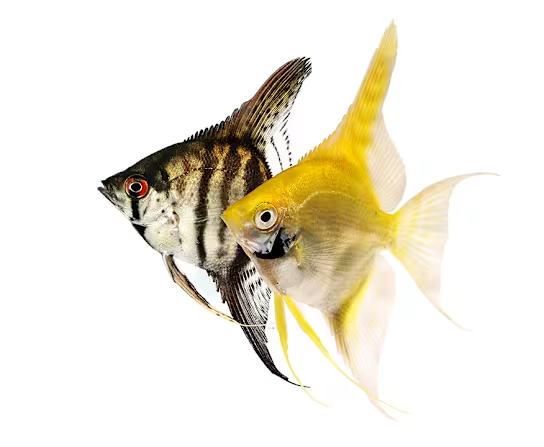
Scientific name Pterophyllum scalare, P. altum, P. leopoldi
Freshwater angelfish have long been a popular species among aquarium hobbyists. A member of the cichlid family native to South America, almost all freshwater angelfish for sale today are captive-bred. This relatively easy-to-care-for species comes in a wide variety of colors, patterns and varying fin lengths.
Learn how to care for angelfish, recommended diet and aquarium setup. Find the right food, supplies and equipment at your neighborhood Petco.
Covers a variety of angelfish, including:
Typical appearance and behavior
- Freshwater angelfish are taller than they are long
- Like a well-planted tank with some open space in the middle for swimming
- Can be territorial but not as aggressive as other cichlids
- Will form small school but may quarrel within their group to determine hierarchy
- Are slow swimmers who prefer calm, slow-moving water
Characteristics
| Care Difficulty | Easy |
|---|---|
| Average Life Span | Up to 10 years with proper care |
| Average Adult Size | Up to 6 inches long and up to 8 inches tall |
| Diet | Omnivore |
| Minimum Habitat Size | 29+ gallons |
| Water Temperature | 72-82°F |
Habitat
Habitat size
A minimum of 29 gallons is recommended to safely house an adult freshwater angelfish. A large aquarium is recommended if trying to keep a small school. Because they grow taller than longer, a taller aquarium design is preferable.
Building your habitat
- Water health:- Provide proper filtration to ensure optimal water quality to help maintain health. Slow water circulation should be provided to mimic water currents and high oxygen levels found in the angelfish's natural habitat. Stable water quality (pH, ammonia, nitrate, nitrite) and water temperature are critical to the health of aquatic life. If you are unsure of your water quality, bring a sample to Petco for free testing. An aquatic heater should be used to stabilize water temperature, ensuring it does not fluctuate more than +/-2 degrees direction in a 24-hour period.
- Décor - Angelfish prefer to have plenty of plant life and finer substrates. Providing rocks and creating hiding places is beneficial.
Feeding
What to feed your angelfish
A well-balanced freshwater angelfish diet consists of:
- Flakes, pellets, freeze-dried, frozen or live food
- Freshwater angelfish enjoy the occasional treat of bloodworms, brine shrimp or mysis shrimp
- Vary diet between vegetables and meaty foods to ensure to ensure proper nutritional balance
Things to remember when feeding your freshwater angelfish:
- Feed small amounts two to three times a day, no more than your fish can eat in 1 to 2 minutes
- Thaw frozen foods before feeding
Freshwater angelfish care
- Water care: Maintaining great water quality with regular water changes and adequate filtration is important to help keep your angelfish healthy
- Daily: Check filter, water temperature and other equipment
- Weekly: Test water quality at least once a week
- Weekly to monthly: Change 10 to 25% of the total volume of water every two to four weeks, or as needed. Change filter media monthly
- Avoid overcrowded conditions, which are a major cause of stress and disease
Where to buy
In store and online: Various angelfish are available for purchase at Petco online and in store; availability varies by location. If visiting your local location, call ahead to check availability.
Supplies
- Appropriately sized habitat
- Appropriate food, dry and frozen
- Décor
- Water conditioner
- Filter
- Water test kit
- Fullspectrum lighting
- Net
- Thermometer
- Freshwater substrate
- Heater
- Airline tubing
- Airstone
- Air pump
- Check valve
- Live plants
Tank mates
Freshwater angelfish can be territorial and may be aggressive to smaller fish such as guppies and neon tetras. Freshwater angelfish should not be kept with aggressive tank mates such as large cichlids or large barbs. Due to their territorial temperament, it is best to add angelfish as one of the last fish to the aquarium.
Health
Signs of a healthy fish
- Clear eyes
- Healthy appetite
- Bright, even coloring
- Fins completely intact and undamaged
- Free of parasites or disease
Red flags (If you notice any of these signs, contact your local aquatic specialist or veterinarian.)
- Loss of color or appetite
- Spots or fungus on body or mouth
- Listlessness
- Cloudy eyes or pop-eye
- Elevated scales
- Frayed or discolored fins
- Labored breathing
- Erratic swimming
- Weight loss
- Bloating
Common health issues
| Health Issue | Symptoms or Causes | Suggested Action |
|---|---|---|
| Health IssueFin rot | Symptoms or CausesFrayed or disintegrating fins; the base of the fins usually reddens. | Suggested ActionImprove water quality; consult your local aquatic specialist or aquatic veterinarian for treatment. |
| Health IssueFungus | Symptoms or CausesWhite cottony growth and/or discoloration of the eyes. | Suggested ActionQuarantine fish; use a commercial antifungal remedy as directed. Consult your local aquatic specialist or aquatic veterinarian. |
| Health IssueIch | Symptoms or CausesWhite spots appear on fins and body; fish rubs against hard objects or swims erratically. Rapid respiration. | Suggested ActionQuarantine fish immediately; add freshwater aquarium salt and use commercial ich remedy as directed. Consult your local aquatic specialist or aquatic veterinarian. |
| Health IssueCottonmouth or Columnaris | Symptoms or CausesCottony white growths along the body and/or gills, frayed fins and gills turn brown and necrotic in late stages; caused by bacterial infection. | Suggested ActionQuarantine fish; improve water quality; lower aquarium temperature to 72°F to deter bacteria from growing; medicate as directed; consult your local aquatic specialist or aquatic veterinarian for treatment. |
FAQs
- How long do angelfish live? Angelfish can live up to 10 years with proper care
- How big do angelfish get? Angelfish typically obtain 6 inches in size and their fins can achieve 8 inches
- What do angelfish eat? Angelfish are omnivores and should be provided a varied diet of vegetable and meat-based foods. A combination of flakes, pellets, frozen and freeze-dried foods can be offered with the occasional treat of bloodworms, brine and mysis shrimp.
- How do you sex an angelfish? Angelfish must be mature before trying to determine gender. Males will have a larger circular body with the female being smaller and more angular in shape. Looking at the belly, just behind the ventral fins, the males will have a small, pointy tube called a papilla; the female’s is rounder. Males also have a larger rounded forehead.
- How often do angelfish lay eggs? When mature, a female angelfish can lay eggs every seven to 12 days
- Where do angelfish live? Most of the angelfish offered for the aquarium hobby are captive bred, but freshwater angelfish are native to South America
- Can angelfish live with guppies? While angelfish are small, they can be housed with guppies with caution as small guppies could still be mistaken for food
- How fast do angelfish grow? Freshwater angelfish growth rates can vary by the size of the aquarium and foods being offered. Typically, it can take one year to reach full size.
- Can angelfish live alone? A freshwater angelfish is capable of living alone but does prefer to be kept in a pair
- What water temperature do angelfish like? Captive-raised freshwater angelfish will accept a wide range of temperatures and do great between 72 and 82 degrees Fahrenheit
- How many angelfish should be kept together in a tank? The number of freshwater angelfish who can be housed together will depend on the size of the aquarium. In a smaller 29-gallon aquarium no more than four adult angelfish should be housed together.
- Discus
- Gourami
- Mollies
Notes and sources
Ask a Pet Care Center associate about Petco's selection of products available for the care and happiness of your new pet. All products carry a 100% money-back guarantee.
Because all aquatic life are potential carriers of infectious diseases such as atypical mycobacterium and salmonella, always wash your hands before and after handling your aquatic life or habitat contents to help prevent the potential spread of disease.
Pregnant women, children under the age of 5, senior citizens and people with weakened immune systems should contact their physician before purchasing or caring for aquatic life and should consider not having aquatic life as a pet.
Go to cdc.gov/healthypets for more information about aquatic life and disease.
The information on this Care Sheet is not a substitute for veterinary care. If you need additional information, contact your veterinarian as appropriate.
Related Articles


