


Two Easy Ways to Start Earning Rewards!
Become a member today! Members-only pricing and offers, personalized care notifications, Vital Care points back on every purchase and more!
 Become a credit card member today!
Earn 2X Pals Rewards points at Petco
when you use Petco Pay!APPLY NOWLearn More About Petco Pay Benefits
Arid Skink Care: Your Ultimate Guide to Habitat, Food & Health Tips
Updated on January 23rd, 2024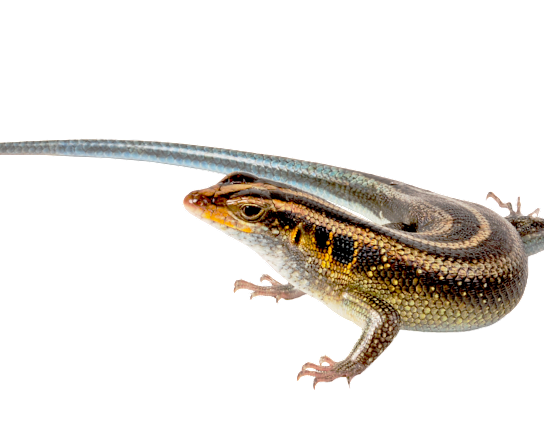
Most arid skinks are fast, agile animals. Peter’s banded skinks are native to deserts in Northern Africa, where it is hot and dry. Schneider’s skinks (also called Berber skinks) are found in dry, brushy areas and rocky steppes in Northwestern Africa and Western Asia. As pets, after acclimating to new habitats, arid skinks can be handled for short periods daily to get them used to being held.
Learn how to care for an Arid Skink, recommended diet and habitat setup. Find the right food, supplies and equipment at your neighborhood Petco.
This care sheet covers a variety of arid skink species, including:
- Peter’s banded skinks
- Schneider's skinks
Typical appearance and behavior
- Will reach adult size in one to two years, depending on the species and if housed under ideal conditions
- Arid skinks spend part of the day in a hiding area or burrowed in the substrate in their habitat
- Peter’s banded skinks are nocturnal (active at night) in nature; Schneider’s skinks are diurnal (awake during the day) in nature
- Peter’s banded skinks are small (about 8 to 10 inches long) and have white skin on their bellies, short tails and alternating yellow/orange and black transverse bands in the skin over their backs. Other Peter’s banded skinks have more black on their heads and lighter black bands on their backs. They like to bury themselves in substrate
- Schneider’s skinks have white skin on their bellies and olive brown skin speckled with orange on their backs. They have long bodies, short snouts and strong limbs to run and burrow
- Schneider’s skinks like to climb on low rocks and bask in the sun
- Arid skinks like to dig and burrow and need deep substrate in their habitat to do this
- Male arid skinks are territorial and should be housed separately
- Never grab a skink by their tail, as they may release, or drop, their tail—an instinctive behavior they have developed—to get away from predators
Characteristics
| Care Difficulty | Intermediate |
|---|---|
| Average Life Span | Up to 15+ years with proper care, depending on species |
| Average Adult Size | 8-18 inches, depending on species |
| Diet | Peter’s banded skink—insectivore; Schneider’s skink—omnivore |
| Minimum Habitat Size | Peter’s banded skink—minimum 20-gallon tank for one adult Schneider’s skink—minimum 30-gallon tank for one adult |
Habitat
Habitat size
Provide an appropriately sized habitat for adult arid skinks to roam and exercise. As skinks prefer to run more than to climb, the width of the habitat is more important than the height. Due to the varied sizes and growth rates of skinks and their differing needs by species, consult your veterinarian to determine your pet skink’s specific housing requirements. Skinks are generally active and need space in their habitat to explore and chase prey. A large enclosure must be provided if more than one skink is being housed.
Building your habitat
- Habitat - Provide a commercially available hiding area or one made from rocks that have been purchased from a pet store or boiled in water. Arrange flat rocks or cork bark to allow limited climbing. Ensure habitat has a securely fitting mesh lid to provide ventilation yet prevent escape
- Humidity - Maintain humidity at 40 to 60% and monitor with a humidity gauge. When humidity falls too low, skinks will retain shed skin. To increase humidity, mist habitat and décor as needed. To decrease humidity, improve ventilation
- Substrate - Provide commercially available substrate that moves and is 1 to 2 inches deep so that skinks can dig and burrow in it. Gravel, wood chips and walnut shells are not recommended, as they are indigestible. Pelleted, paper-based substrate is ideal, as it is digestible if eaten and skinks can dig and bury in it. If using a particulate matter bedding such as calci-sand, feed your reptile in a dish or feeding tank to reduce the ingestion of substrate, which can cause potentially life-threatening gastrointestinal tract obstructions. Reptile carpeting is not ideal for an arid skink, as it does not allow their normal digging/burying behavior
- Temperature – Provide a temperature gradient with a warm zone containing an ultraviolet (UV) light and a heat source plus a cool zone farthest from the heat source. Temperatures should range from 95 to 110°F in the warm basking end and 80 to 85°F in the cool end. Habitat temperatures should not fall lower than 75°F at night. Use an incandescent light or ceramic heater as the primary heat source. Never use a hot rock as a heat source, as many reptiles get burned when sitting on them
- Lighting - Provide UVB rays with a full-spectrum UV light for 10 to 12 hours a day so that lizards can make vitamin D in their skin to help them absorb dietary calcium. Even nocturnal species have been shown to benefit from UV light. Use an incandescent day bulb to provide light and heat in the basking area during daylight hours and a ceramic heater or nighttime heat bulb to provide just heat at night.
Cleaning your habitat
- Thoroughly clean and disinfect water and food bowls daily
- Spot-clean the habitat daily to remove droppings and discarded food
- Thoroughly clean the habitat at least once a week:
- Place the skink in a secure habitat
- Scrub the tank and furnishings with a reptile-safe habitat cleaner or 3% bleach solution
- Rinse the tank and all furnishings thoroughly with water, removing all traces of habitat cleaner or bleach smell
- Dry the tank and furnishings before putting the skink back in the habitat
Feeding
A well-balanced arid skink diet varies depending on what kind of skink you have:
- Peter’s banded skinks are predominantly insectivores but will eat small amounts of plant matter. They eat a variety of live insects, including gut-loaded (recently fed) crickets, mealworms, roaches, hornworms, superworms, calci-worms and waxworms. They will also eat small amounts of vegetables such as turnip/mustard/collard/dandelion greens, peas, carrots, squash and berries
- Schneider’s skinks also eat insects and occasional fresh frozen/thawed pinkie mice. They will also eat smaller amounts of greens and fruit
Things to remember when feeding your skink:
- Fresh, clean water should be available at all times
- Sprinkle food with calcium supplement daily and a multivitamin supplement once or twice a week
- Adult skinks can be fed two to three times per week; juveniles should be fed every day
- Vary the diet to keep skinks interested in eating
- If feeding insects, offer gut-loaded (recently fed) insects no bigger than the space between their eyes, and never offer more insects at one time than your skink can consume. Overfeeding insects can lead to obesity, and insects not consumed but left in a habitat can chew on and damage skinks’ skin
- If feeding vegetables and fruits, offer them in a dish, not on the substrate, so substrate is not accidentally ingested; produce not eaten within 10 hours should be discarded to prevent it from spoiling
- If feeding rodents, be sure to offer only frozen/thawed rodents and not live rodents, as uneaten live prey left in a habitat can bite and cause life-threatening injury to skinks
- Skinks kept as pets require supplemental calcium, vitamins and minerals. These supplements are generally provided by lightly dusting insects with them. Dust insects with calcium with vitamin D, alternating every other day with calcium without vitamin D. Dust insects lightly with a multivitamin once a week before feeding them to skinks
Care
Arid skinks regularly shed their skin; ensure humidity of habitat is at appropriate level to allow proper shedding. To facilitate shedding and increase humidity, provide warm water in a large, shallow bathe in a large container that allows the skink to immerse their entire body for soaking or for drinking
Where to buy an arid skink
Arid skinks are available for purchase at your local Petco Pet Care Center location. Please call ahead to check availability.
Supplies
- Appropriately sized habitat
- Substrate
- Water dish
- Mealworm dish
- Hideaway place
- Climbing décor
- Plants
- Heat light
- Heat fixture
- -tank heater
- UVB lighting and fixture
- Multivitamin supplement
- Calcium supplement with and without vitamin D
- Cricket keeper
- Live food
- Cricket food
- Cricket quencher
- Thermometer
- Humidity gauge
Habitat mates
- House adult arid skinks separately in smaller enclosures. If the habitat is large enough, they may be housed in small groups, as skinks are social and enjoy living with their own kind
- Males and females housed together may breed
- Do not house different reptile species together
Health
Signs of a healthy arid skink
- Active and alert
- Clear, bright eyes with no swelling or discharge
- Full, muscular tail
- Supple skin with no sores, swellings or discoloration
- Droppings are firm, not runny or bloody
- Eats and passes stool regularly
- Clear nose and vent
Red flags (If you notice any of these signs, contact your veterinarian.)
- Weight loss or decreased appetite
- Discharge or bubbles from eyes, mouth or nose
- Lesions, swelling or discoloration of skin or retained shed
- Lethargy
- Sneezing, runny nose, difficulty breathing
- Weakness or paralysis of limbs
- Runny or bloody stool or lack of stool
Common health issues
| Health Issue | Symptoms or Causes | Suggested Action |
|---|---|---|
| Health IssueGastro-intestinal disease | Symptoms or CausesRunny stools, caked or smeared stool around the vent, weight loss and loss of appetite; may be caused by bacterial, viral or parasitic infection or nutritional imbalance. | Suggested ActionConsult your veterinarian. |
| Health IssueMetabolic bone disease/vitamin deficiency | Symptoms or CausesInability to absorb calcium due to insufficient UVB light or inappropriate diet or supplementation. If untreated, can lead to skeletal deformities, soft or fractured bones, swollen limbs, decreased appetite, weight loss, lethargy, seizures and death. | Suggested ActionConsult your veterinarian and provide ample UVB lighting and the proper amount of calcium/vitamin supplements. |
| Health IssueRespiratory disease | Symptoms or CausesLabored breathing, discharge or bubbles from eyes, nose or mouth, decreased appetite and lethargy. Can be caused by inappropriate temperature, humidity or lighting in habitat, predisposing to infection. | Suggested ActionConsult your veterinarian and ensure habitat has proper temperature, humidity and lighting. |
Notes and resources
Ask a Pet Care Center associate about Petco's selection of products available for the care and happiness of your new pet. All products carry a 100% money-back guarantee.
Because all reptiles are potential carriers of infectious diseases, such as salmonellabacteria, always wash your hands before and after handling your reptile or habitat contents to help prevent the potential spread of disease.
Pregnant women, children under the age of 5, senior citizens and people with weakened immune systems should contact their physicians before purchasing or caring for reptiles and should consider having a pet other than a reptile.
Go to the Centers for Disease Control at cdc.gov/healthypets for more information about lizards and disease.
The information on this Care Sheet is not a substitute for veterinary care. If you need additional information, please contact your veterinarian as appropriate.
Related Articles


