


Two Easy Ways to Start Earning Rewards!
Become a member today! Members-only pricing and offers, personalized care notifications, Vital Care points back on every purchase and more!
 Become a credit card member today!
Earn 2X Pals Rewards points at Petco
when you use Petco Pay!APPLY NOWLearn More About Petco Pay Benefits
How to Train a Pet Parrot: Step-Up & Beyond
Published on November 1st, 2024
Updated on July 16th, 2026

Written by Petco Editorial Team
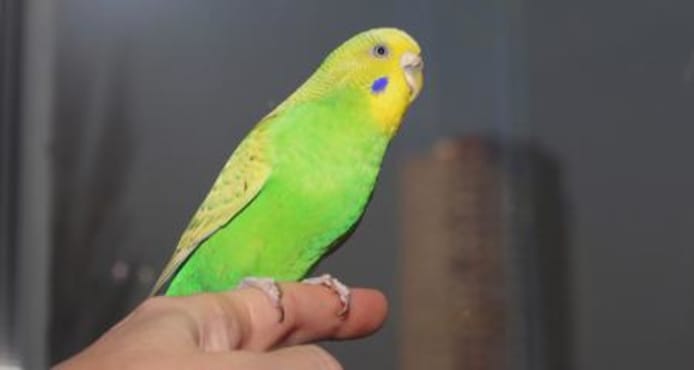
The first command to teach pet birds is 'step up.' This one command will help establish a great relationship between you and your bird from the very beginning.
Just as you train a young puppy to "sit" as one of his first cues, there is a first cue you should teach all pet psittacine birds. That first cue is "step up." It is an easy cue to teach a bird because the physical motion is something he normally does many times during the day.
By teaching your bird this cue, you will help decrease any fear the bird may have of you, help build confidence for both you and your bird, provide social, mental, and physical enrichment, and reinforce the bond between you and your bird. After your bird begins to learn the cue, he will relate it to good things happening, such as attention from you, treats, and eventually rewards such as going to the "play gym."
Bird Training Basics
As with training any animal, sessions should be short, usually around 15 minutes. Never start a session if you are agitated, tired, or impatient. Patience is always the key to good training. Make the training a positive experience for both you and your bird. Have fun. Make it into a game.
The training should take place in a quiet room without distractions. A safe environment needs to be provided, and this means you need to prepare for the possibility your bird may try to get away from you. Close windows, doors, and curtains; turn off any fans; do not have other pets in the room; and your bird should have his wings clipped. Training sessions should always end on a positive note, with praise or a reward given. Consistency in the use of verbal cues or hand signals is another key ingredient to success. Always use positive reinforcement. Do not hit, use a loud voice, or give any other type of punishment.
You will need your bird to focus on you and be comfortable. Watch your bird for signs of sleepiness, inattentiveness due to hunger, etc., fear, or aggression. Signs of fear and aggression include the bird standing upright with wings held slightly away from his body, with or without his beak open; vocalizations; flapping of the wings; the bird holding very tightly onto your finger; dilating pupils; or biting.
If it appears you will need to end the session, end on a positive note, and without your bird thinking he is the "winner" of any confrontation.
Bird Training: First Steps
If your bird is not used to you, for several sessions you may want to just slowly and quietly place your hand in the bird's habitat, away from the bird. When you approach the habitat, and work with your bird, you should always be slightly higher than the bird's eye level. Too far above, and the bird may be more afraid. Too low, and the bird may start to interpret it as submission on your part. With each session, move your hand closer to the bird, and allow the bird to perch on it of his own accord (you may want to tempt him with a treat). Once your bird is comfortable with your hand close to him in the habitat, the real training can start.
If your bird is large or quick to bite due to fear or being territorial, you may wish to use a perch or dowel in place of your finger during initial training. If so, get the bird used to the perch or dowel by placing it in the habitat and allowing him to investigate it.
Teaching Your Bird to "Step Up"
1. First, get your bird used to taking special, very tasty treats from your hand. These types of treats should be reserved for training purposes.
2. Next, by holding a treat in one hand, lure the bird to come closer to the "step up" hand, which is held in front of the bird at a higher level than the perch. At first, you will want to reward the bird for simply coming close to the "step up" hand. If your bird is receptive, gently touching their stomach area with your finger or perch may prompt them to step up.
3. When the bird starts to step onto your hand, say "Step up" or "up." Either verbal cue is fine but choose only one and say it each time the bird steps up. Consistency is the key - all family members, and you, need to do it the same way every time.
4. When the bird steps up, praise him and give him a very small treat - something he really likes, but only gets when he follows a cue. At first, you may reward the bird for only putting one foot on the "step up" hand.
Some birds may use their beaks to help them step up. Do not pull away if your bird uses his beak to climb onto your finger or he may feel it is unstable and refuse to step up. If you do not feel comfortable with your bird using its beak to climb onto your finger, use a perch until you and your bird develop more confidence and trust. As your bird becomes comfortable, take him out of the habitat and continue the training in other quiet environments. When away from his habitat, he may feel more vulnerable, and pay more attention to you.
Teaching Your Bird to "Step Down"
When you wish to have your bird step off of your finger or perch, place whatever you want him to step onto, e.g., a perch in your bird's habitat in front of him. You will need to use the same technique you use for a "step up"; with a treat, lure your bird onto the object you want him to step onto. The object should be in front of your bird and higher than your hand. Have your bird face you and step onto the object while you give the cue "step down" or "down." Again, either cue is fine, just be consistent.
When moving from your finger to the object, your bird is stepping upwards, but the cue should still be "step down," which really means, "move from my finger to what I am showing you." Again, your bird will probably use his beak to help accomplish the "step down,".
Teaching Your Bird to "Ladder"
When your bird has learned "step up," it is time to teach him to "ladder." This means having your bird step up from the finger of one hand to a finger on the other hand, which is held higher. Each step should be accompanied by the "step up" verbal cue. The bird should become accustomed to doing this repeatedly. This is an exercise which should be repeated daily.
Teaching "step ups" is key to successfully training a bird. It is a cue every bird should know. This one cue will help establish a great life-long relationship between you and your bird from the very beginning.
Frequently Asked Questions
How long does it take to train a parrot to step up? Every bird learns at his own pace, but many parrots begin responding to the "step up" cue within a few short sessions when training stays positive and consistent. Expect to practice daily in 15-minute sessions for days to weeks before the behavior feels reliable — some birds progress faster, others need more time to build trust. Patience is always the deciding factor.
What if my bird refuses to step up or flies away? End the session calmly on a positive note — never force or chase your bird. Go back a step: spend the next few sessions simply resting your hand near him in his habitat without asking anything of him. Gradual, pressure-free exposure builds the confidence he needs before he'll willingly step onto your hand. Signs of fear or aggression (wings held away from the body, dilating pupils, open beak) are your signal to slow down and give him more time.
What treats work best for parrot training? Choose something your bird finds irresistible — a small piece of his favorite fruit, a nut, or another high-value food he doesn't get at any other time. Keeping training treats exclusive to sessions is what makes them motivating. Treats should always be very small so your bird stays engaged rather than full, and they should make up no more than 10% of his total daily diet. Merck Veterinary Manual
Can I train an older parrot, or is it only for young birds? Parrots can learn new behaviors at any age. Older birds may simply need more sessions to build trust, especially if they haven't been handled much before. The same positive-reinforcement approach — short sessions, high-value treats, no punishment — works just as well for adult birds as it does for younger ones.
Is it safe to use my bare finger, or should I use a perch? Either is appropriate depending on your bird's temperament. If your bird is large, quick to bite, or still fearful, start with a dowel or handheld perch so both of you can build confidence without the risk of a bite. Once trust grows, you can transition to your finger. Never pull away if your bird uses his beak to steady himself while stepping up — sudden movement can make him feel unstable and less willing to try again. Merck Veterinary Manual
When should I involve my veterinarian in my bird's training? Training itself is a healthy, enriching activity, but consult your avian veterinarian before beginning if your bird shows persistent aggression, appears ill or lethargic, or if you have any concerns about his physical ability to step up and perch comfortably. A wellness exam is also a good starting point for any newly adopted bird. the AVMA
Common Bird Training Mistakes — and How to Fix Them
| Mistake | Why It Undermines Training | What to Do Instead |
|---|---|---|
| Sessions run too long | Birds lose focus quickly; frustration builds for both of you, ending on a negative note | Keep sessions to 15 minutes or fewer; stop while your bird is still engaged |
| Training when you're tired or impatient | Your body language and tone telegraph stress to your bird, increasing fear responses | Wait until you're calm and unhurried; a skipped session is better than a tense one |
| Inconsistent verbal cues across family members | Birds learn through repetition; hearing "up," "step up," and "come here" interchangeably stalls progress | Agree on one cue per behavior before training begins and post it somewhere visible for all household members |
| Pulling away when the bird uses his beak to climb | The bird interprets the sudden movement as instability and may refuse to step up again | Hold steady; beak-assisted climbing is normal. Switch to a perch if you're uncomfortable until trust builds |
| Punishing unwanted behavior (loud voice, tapping, pushing) | Positive-reinforcement science shows punishment erodes trust and can trigger aggression or feather-destructive behavior | Redirect with a treat lure; end the session calmly and try again next time |
| Using everyday treats as training rewards | If the reward is always available, it loses its motivational power | Reserve one high-value treat — a small piece of a favorite fruit or a species-appropriate seed — exclusively for training moments |
| Training in a busy or noisy room | Distractions compete for your bird's attention and raise his stress level | Choose a quiet room; close windows, doors and curtains; remove other pets; turn off fans |
| Skipping the "step down" and "ladder" progressions | Pet parents who only teach "step up" miss the cues that give them reliable control and daily enrichment | Build all three cues in sequence: step up → step down → ladder, reinforcing each before moving on |
| Positioning yourself too high or too low | Too far above the bird triggers fear; too far below can read as submission, encouraging dominance behavior | Keep your hand or perch slightly above the bird's eye level throughout every session |
| Ending a session after a refusal or bite | The bird learns that resistance ends the interaction — a powerful unintended reward | Back up to the last thing the bird did successfully, reward that, then close the session positively |
Frequently Asked Questions
How long does it take to train a bird to step up? Timeline varies by species, age and individual temperament — some birds respond within a few sessions, while others need several weeks of short, consistent practice. The key is ending every session on a success, however small, so your bird associates training with positive outcomes.
What treats work best for bird training? Use a tiny, high-value reward your bird doesn't get at any other time — a sliver of fruit, a single favored seed or a small piece of a species-appropriate vegetable. Treats should make up no more than 10% of your bird's total daily diet. Consult your veterinarian if you're unsure which foods are appropriate for your specific species.
Is it safe to train a bird with clipped wings? Wing trims reduce flight risk during early training sessions and help keep your bird safe in an unfamiliar environment — but the decision should be made in conversation with your avian veterinarian, who can advise based on your bird's species, health and living situation. Merck Veterinary Manual
What does it mean if my bird bites during training? Biting is usually a communication signal — fear, overstimulation or discomfort — not defiance. Watch for early warning signs like dilated pupils, feathers held tight to the body, or wings held slightly away from the body, and end or pause the session before a bite occurs. Never punish a bite; instead, review your setup and pacing.
Can older or previously neglected birds still learn to step up? Yes. Birds are intelligent and adaptable, and positive-reinforcement training can build trust even with birds that have had difficult histories. Progress may be slower, and you may need more "hand-near-the-habitat" desensitization sessions before real training begins. If your bird shows persistent fear or aggression, consult an avian veterinarian or a certified parrot behavior consultant. Merck Veterinary Manual
When should I call my veterinarian about my bird's behavior during training? Contact your veterinarian if your bird shows sudden behavioral changes, refuses food, displays prolonged aggression, or exhibits signs of illness such as fluffed feathers, labored breathing or unusual droppings. Behavior changes can sometimes signal an underlying health issue rather than a training challenge. the AVMA
This article was created with assistance from AI tools and reviewed for accuracy by Petco's content team.
174Pet Parents found this article helpful


