


Two Easy Ways to Start Earning Rewards!
Become a member today! Members-only pricing and offers, personalized care notifications, Vital Care points back on every purchase and more!
 Become a credit card member today!
Earn 2X Pals Rewards points at Petco
when you use Petco Pay!APPLY NOWLearn More About Petco Pay Benefits
Rabbit Health Tips & Exercise Guide
Published on June 6th, 2022
Updated on June 18th, 2026

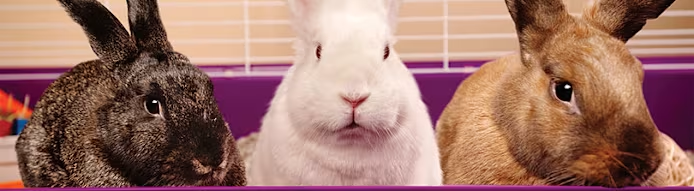
Read more about different types of play & exercise for rabbits to provide them with an active lifestyle & help prevent obesity.
Rabbits require both mental stimulation and physical exercise to stay alert and happy. Regular exercise improves your rabbit’s muscle tone, joint flexibility, digestion and cardiovascular fitness. An active lifestyle helps prevent obesity in your rabbit, which can lead to numerous health problems. Rabbits also need "mental calisthenics" to stay alert and occupied. So follow these tips to keep your rabbit’s mind and body fit.
Types of play and exercise for rabbits
Room to stretchIt’s crucial to give your rabbit plenty of space to hop around. An appropriately sized habitat should be at least four times the size of your rabbit, and it should also be escape-proof with a solid bottom. If you decide to get your rabbit a roommate, it’s important to upgrade the duo to an even larger, more appropriate habitat.
Having the right habitat is just the start. Your rabbit also needs plenty of time to explore and move freely. When spending time out of the habitat, your bunny needs your close supervision. Rabbits can’t resist chewing on exposed electrical cords, so be sure to cover your cords with protectors. Also, always remove other hazards like chemicals or medications from play rooms to ensure safe play.
Chew on thisRabbits' teeth continuously grow, and chewing is the only thing that helps wear them down. To help your rabbit keep their pearly whites nice and short, offer them some safe chew toys.
Wood serves as a great chew toy for your rabbit. However, twigs from the backyard just won’t do. So make sure to give your pet only specially prepared wooden blocks for rabbits. Other favorites include toilet paper rolls, cardboard boxes, loose straw, Timothy Hay baskets or other toys made especially for rabbits.
Mental toysRabbits enjoy mental stimulation as much as they enjoy physical activity. Plus, safe mental distractions can ward off boredom, which can lead to your little one nibbling on furniture, clawing the carpeting and devouring books.
What many pet parents don’t know is that rabbits love to play tug-of-war. If playing a game of tug doesn’t sound good to you, have your furry friend yank at a newspaper tucked under a table leg. Cardboard boxes or paper bags are also great outlets for your rabbit’s curious nature.
The great outdoorsEveryone can get a little stir crazy if they’re cooped up all day, and your bunny is no exception. By creating an outdoor grazing pen, your pal can enjoy the great outdoors alongside you. If you're handy with a hammer, constructing a wooden pyramid frame with wire mesh walls is a great idea. If that sounds like too much to handle, an easy alternative is inverting a playpen or large indoor habitat onto your yard.
Once you have your pen set up, all you have to do is move the grazing pen to a new spot each day. That way your rabbit can sample fresh greens anytime. Pesticides and weed killers can poison your bunny. So, don't let them graze if you spray your yard.
Your rabbit doesn't sweat or pant much, so it’s important to keep them out of direct sunlight to prevent heatstroke. Unless your rabbit’s pen is completely enclosed or buried deep into the ground, always supervise your bunny's outdoor recreation.
A walk in the parkRabbits can also be trained to walk on a leash. Be sure to get a properly fitting harness and allow your rabbit time to get used to walking on a leash before taking them outside. Never tether your rabbit using a leash.
"Rabbits also need "mental calisthenics" to stay alert and occupied."
Frequently Asked Questions
How much exercise do rabbits need each day? Rabbits need a minimum of 3–4 hours of free-roaming exercise outside their habitat every day to support healthy muscle tone, joint flexibility and digestion. Spreading that time across morning and evening sessions works well, since rabbits are naturally most active at dawn and dusk. Always supervise playtime and rabbit-proof the space before letting your bunny roam.
What is the best time of day to exercise a rabbit? Rabbits are crepuscular — most active around dawn and dusk — so scheduling exercise sessions in the early morning and early evening aligns with their natural rhythm and encourages the most enthusiastic play. Midday sessions are fine indoors, but avoid outdoor activity during peak afternoon heat.
Can rabbits exercise safely in hot weather? No — heat is a serious hazard for rabbits. Unlike dogs, rabbits do not pant effectively and have very limited ability to regulate body temperature through sweating, making them highly vulnerable to heatstroke. Keep outdoor exercise sessions to cooler parts of the day (before 9 a.m. or after 6 p.m. in summer), always provide shade and fresh water, and move activity indoors when temperatures climb above 80 °F. If you notice your rabbit lying flat, breathing rapidly or appearing disoriented, contact your veterinarian immediately. For a full list of environmental and household hazards to keep away from your rabbit's play area, the ASPCA Animal Poison Control Center is a reliable reference [https://www.aspca.org/pet-care/animal-poison-control].
What are the safest chew toys for a rabbit's teeth? Specially prepared wooden blocks sold for rabbits, Timothy hay baskets, cardboard boxes, toilet paper rolls and loose straw are all solid choices. Never offer twigs collected from your yard — backyard wood can carry pesticides, mold or toxic compounds depending on the tree species. Because a rabbit's teeth grow continuously throughout his life, appropriate chewing is essential to prevent painful dental overgrowth; if you notice changes in eating habits or drooling, consult your veterinarian.
How do I set up a safe outdoor grazing pen for my rabbit? Construct or purchase a pen with wire mesh walls and a solid or buried-edge base so your rabbit cannot dig out and predators cannot dig in. Move the pen to a fresh patch of grass each day so your rabbit has access to new greens — but never allow grazing on any lawn treated with pesticides, herbicides or weed killers, as these can be toxic. Always supervise outdoor time, keep the pen in shade, and bring your rabbit inside if the temperature rises or the weather changes suddenly.
Can all rabbits learn to walk on a harness and leash? Many rabbits can be trained to accept a properly fitted harness and walk calmly on a lead, though individual temperament varies. Start indoors: let your rabbit wear the harness for short periods before attaching the lead, and never force forward movement — follow your rabbit's pace. Never tether your rabbit unattended on a leash, as sudden frights can cause spinal injury if he bolts. If your rabbit shows signs of extreme stress (freezing, thumping or attempting to escape the harness repeatedly), consult a rabbit-savvy veterinarian or knowledgeable Petco associate before continuing leash training.
Rabbit Exercise Types: Quick-Reference Guide
| Exercise Type | Recommended Duration / Frequency | Key Benefits | Safety Notes |
|---|---|---|---|
| Free roaming (indoor) | Minimum 3–4 hours daily outside the habitat | Builds cardiovascular fitness, strengthens muscles, supports healthy digestion | Supervise closely; cover electrical cords; remove chemicals and medications from the room |
| Tunnel & hideaway exploration | 30–60 min daily; leave tunnels accessible in the habitat at all times | Encourages natural burrowing instincts, reduces stress, provides mental stimulation | Choose tunnels sized for your rabbit's breed; inspect regularly for chewed edges |
| Chew toys & foraging | Offer continuously throughout the day | Wears down continuously growing teeth, prevents dental overgrowth, relieves boredom | Use only specially prepared wooden blocks or Timothy hay-based toys — never backyard twigs or treated wood |
| Interactive & mental play | 15–20 min of active engagement, 2–3 times daily | Prevents boredom-driven destructive behavior (chewing furniture, clawing carpet); keeps the mind sharp | Supervise tug-of-war games; avoid small pieces that could be ingested |
| Outdoor grazing pen | 30–60 min sessions; move pen to a fresh grass patch daily | Provides enrichment, fresh air and natural foraging; supports gut motility through varied greens | Never allow grazing on pesticide- or herbicide-treated grass; keep pen shaded to prevent heatstroke; fully enclose or supervise at all times [https://www.aspca.org/pet-care/animal-poison-control] |
| Leash & harness walks | Start with 5–10 min sessions; build gradually as your rabbit adjusts | Socialization, novel sensory stimulation, light aerobic activity | Use a properly fitted harness — never a collar alone; never tether and leave unattended; acclimate indoors first |
| Bonded-pair play | Continuous companionship; supervised introductions until bonded | Reduces loneliness and stress; encourages natural social behaviors like grooming and chasing | Introduce rabbits gradually in a neutral space; upgrade to a larger habitat for two |
Petco tip: Obesity in rabbits can contribute to serious health problems including joint stress and digestive issues — consistent daily exercise across several of these categories is one of the most important things you can do for your rabbit's long-term wellbeing. [https://www.merckvetmanual.com/management-and-nutrition/nutrition-small-animals/nutritional-requirements-of-small-animals] If you notice your rabbit becoming lethargic, losing interest in play or gaining weight, consult your veterinarian.
This article was created with assistance from AI tools and reviewed for accuracy by Petco's content team.


