


Two Easy Ways to Start Earning Rewards!
Become a member today! Members-only pricing and offers, personalized care notifications, Vital Care points back on every purchase and more!
 Become a credit card member today!
Earn 2X Pals Rewards points at Petco
when you use Petco Pay!APPLY NOWLearn More About Petco Pay Benefits
Why Is My Snake's Mouth Open? Gaping Explained
Published on January 23rd, 2024
Updated on June 18th, 2026

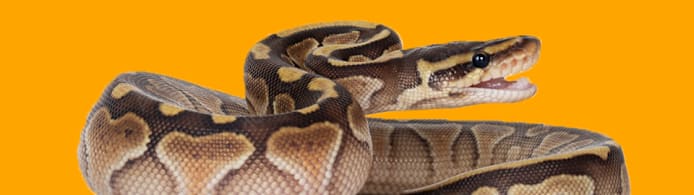
Search Petco for answers to why your pet snake keeps its mouth open for long periods. We want to help keep your pet happy & healthy.
If you’ve been a snake parent for a while, you may notice your pet occasionally rest with their mouth hanging open. This action is called gaping, and your snake may do this for various reasons. Let’s go over a few of the reasons why they exhibit this behavior and what it can mean if your snake’s mouth is hanging open.
Hunting prey or finding a mate Also called the Jacobson’s organ, the oral vomeronasal organ is only fully developed in certain animals. It detects chemical cues, which can help the animal track down prey or detect a potential mate. Sometimes snakes must hold their mouth open to improve airflow or use their tongue to capture these cues. For more information on how snakes navigate their environment, check out our guide Can My Snake Hear Me?
After feeding Since snake food is typically swallowed whole, you may notice their mouth hanging open before or during digestion.
They’re in respiratory distress Even though gaping can occur with healthy snakes, you should always consult your vet when you notice this new behavior—especially if it happens frequently or outside of feeding or digesting times. A variety of medical issues can make it hard for your pet to breathe, and gaping could be an indication of illness.
Frequently Asked Questions
Is it normal for my snake to sit with his mouth open? Yes — gaping is a recognized, natural behavior in snakes. He may be using his vomeronasal (Jacobson's) organ to detect chemical cues for hunting or finding a mate, or he may simply be repositioning his jaw after swallowing a meal whole. Occasional, brief gaping in an otherwise alert, active snake is generally not a cause for alarm.
When should I be worried about my snake's open mouth? Contact your veterinarian promptly if gaping is frequent, prolonged, or paired with any of the following: wheezing or clicking sounds while breathing, mucus or discharge around the mouth or nostrils, lethargy, loss of appetite, or visible swelling along the jaw. These signs can point to a respiratory infection, mouth rot (infectious stomatitis), or another condition that needs professional diagnosis — not home treatment.
How long does normal gaping last? Healthy gaping tied to feeding or scent-detection is typically brief — a few seconds to a few minutes at most. Gaping that persists for hours, recurs throughout the day, or happens with no clear trigger (no recent meal, no new scents in the habitat) warrants a call to your veterinarian.
Could my snake's open mouth mean he has a respiratory infection? It can. Respiratory infections are one of the more common reasons a snake gapes outside of normal feeding or scenting behavior. Husbandry factors — incorrect temperature gradients, humidity levels that are too high or too low, or an unclean habitat — can increase susceptibility. If you suspect a respiratory issue, your veterinarian can perform a proper examination and recommend appropriate care.
What is mouth rot, and can gaping be a sign of it? Mouth rot (infectious stomatitis) is a bacterial infection of the oral tissues. Early signs can include a snake holding his mouth open, redness or swelling of the gum tissue, and a cottage-cheese-like discharge inside the mouth. It requires veterinary treatment; do not attempt to treat it at home. If you notice any of these signs alongside gaping, schedule a vet visit as soon as possible.
Should I handle my snake when he is gaping? Use your judgment and err on the side of caution. If gaping follows a recent meal, avoid handling him for at least 48 hours to prevent regurgitation and unnecessary stress. If the gaping appears linked to illness — especially if he seems lethargic or is breathing audibly — minimize handling and prioritize getting him to a veterinarian. A stressed or unwell snake is also more likely to bite defensively, so always approach him calmly and read his body language first.
This article was created with assistance from AI tools and reviewed for accuracy by Petco's content team.


FAQs about snakes with mouths open
Contrary to popular belief, snakes do not dislocate their jaws to eat. Instead, their skulls are uniquely structured to separate during feeding. You can learn more about how a boa constrictor eats with our Boa Care Sheet.
The environment is the key to a snake’s temperature regulation. It’s crucial to provide your pet with a temperature gradient that includes both hot basking areas and cooler shaded areas in their habitat so they can thermoregulate. Learn more about how improper humidity, heating and lighting can adversely affect your pet snake with our guide Reptile Scale Rot.
Snakes have hundreds of small bones throughout their body that make them extremely flexible and able to stretch out their long bodies. When choosing a reptile terrarium, always make sure your pet has more than enough room to stretch out to their full size.