


Two Easy Ways to Start Earning Rewards!
Become a member today! Members-only pricing and offers, personalized care notifications, Vital Care points back on every purchase and more!
 Become a credit card member today!
Earn 2X Pals Rewards points at Petco
when you use Petco Pay!APPLY NOWLearn More About Petco Pay Benefits
What Do Bearded Dragons Like to Play With?
Published on August 16th, 2023
Updated on June 18th, 2026

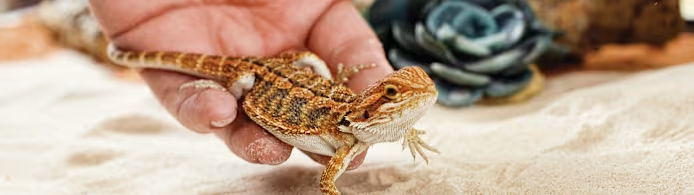
Your bearded dragon needs daily activity to stay physically and mentally fit. Petco is sharing tips for incorporating regular exercise and play into your reptile's routine.
Bearded dragons are inquisitive creatures who like to explore. In a loving home, they don't need to to hunt their own food and can't roam as freely as they would in their natural environment, and may become sedentary if they don’t have a strong exercise and play routine.
Incorporating regular activity into your bearded dragon’s daily routine helps get them up and moving and allows them to tap into their innate curiosity, all while bonding with you.
Luckily, getting your bearded dragon started on an exercise and play routine isn't difficult. To help you out, we are sharing some tips.
How to Keep Your Bearded Dragon Active in Their Habitat
Ready to start playing with your bearded dragon? Here are some ideas for adding activity into their routine while they are in their habitat:
- A small lightweight ball, like a ping-pong ball, placed in their habitat can provide mental and physical stimulation.
- Chasing insects for exercise is great for your pet's physical health. Try placing insects several inches away from your bearded dragon to encourage activity at mealtimes.
- If your bearded dragon seems bored, try rearranging items in their tank to discourage them from becoming destructive due to lack of mental exercise.
How to Keep Your Bearded Dragon Active Outside Their Habitat
Taking Your Bearded Dragon Outside Their Habitat
Getting your bearded dragon out of his habitat for some real-world exploration is one of the most enriching things you can do together — and it opens up a whole new category of play. Here's what to bring, where to go, and how to keep every outing safe.
Harness Walks: What Your Bearded Dragon Can Explore
Start by fitting your bearded dragon in a lizard-sized harness and lead designed for reptiles. Once he's comfortable wearing it indoors, you're ready to head outside. Choose hot, sunny days — your bearded dragon is cold-blooded and genuinely needs that warmth to feel good and stay active.
What to let him explore on a walk:
- Rocks — great for climbing and basking
- Grass — a novel texture most bearded dragons investigate eagerly
- Soil and sand — mimics the arid terrain he'd encounter in the wild
- Smooth wood or logs — satisfies natural climbing curiosity
Let him set the pace and lead with his nose. The goal is curiosity, not distance. Start with short sessions in your own yard before building up to longer outings, and watch his body language closely — a relaxed, alert dragon is having a good time; a flattened, dark-colored one may be stressed or cold.
One firm rule: No matter how interested he seems, don't let your bearded dragon ingest rocks, soil, grass or any outdoor material. Ingestion can cause impaction or expose him to pesticides and parasites.
Stay alert to predators. Loose dogs, cats and large birds of prey are real threats to a small reptile on a lead. Keep your eyes up and stay close enough to scoop him up instantly if needed.
Water Play: The Kiddie Pool Option
If you have outdoor space, consider filling a hard plastic kiddie pool with warm water and inviting your bearded dragon to explore it at his own pace. Many bearded dragons take to water readily and are capable swimmers — but the key word is invite, not insist.
How to set up a safe water play session:
- Fill the pool with warm (not hot) water — shallow enough that he can touch the bottom comfortably.
- Add a ramp or a flat rock so he can walk in and out on his own terms.
- Place the pool in a sunny spot so the surrounding air stays warm.
- Let him decide whether to wade, swim or simply observe from the edge.
- Never push, toss or force him into the water.
- Supervise every second — even strong swimmers can tire quickly.
The 15-Minute Rule: Why Outdoor Time Has a Hard Limit
Here's the most important safety detail for any out-of-habitat play: bearded dragons must maintain a core body temperature of approximately 100°F and require consistent UVB exposure and appropriate humidity. When those conditions aren't met — whether you're outside on a cloudy day or inside a room without a UVB lamp — your bearded dragon's body begins to struggle surprisingly fast.
As a general guideline, a bearded dragon should not be away from his recommended temperature, humidity and UVB environment for more than about 15 minutes at a time. If you're unsure whether outdoor conditions are adequate on a given day, keep the session short and watch for signs of sluggishness, gaping or color darkening, and return him to his habitat immediately.
| Outdoor Condition | Safe for Extended Play? | What to Watch For |
|---|---|---|
| Hot, sunny day (85°F+) | Yes, with supervision | Overheating; provide shade access |
| Warm but overcast | Short sessions only (≤15 min) | Sluggishness, darkening color |
| Cool or windy (below 75°F) | No | Immediate return to habitat |
| Any condition, indoors without UVB | No | Lethargy, loss of appetite |
If you have any concerns about how your bearded dragon is tolerating outdoor time — or notice changes in his behavior after outings — consult your veterinarian.
How to Incorporate Other Activities
- Your bearded dragon might not have much in common with your cat, except when it comes to toy preferences. While your bearded dragon won’t be impressed by a catnip mouse, a laser beam toy can tap into their natural hunting instincts.
- Get creative with household items such as paper towel tubes and cardboard boxes and make caves and tunnels for them to explore. Remember, bearded dragons are smart and inquisitive, so this type of exploration can help keep their mind sharp.
- Similarly, the images on your TV, computer, phone or tablet screen could attract their attention and give them the mental stimulation they crave.
- If your pet is just looking for some new ways to move around, they might like to crawl on and bask on a reptile hammock. Be sure to use a secure reptile- or bearded dragon-specific hammock, and never place it more than a few inches above the ground as a steep fall could cause injuries.
Tips for Safe Exercise and Play for Bearded Dragons
Incorporating more activity into your bearded dragon’s life can be a recipe for fun and better health as long as you keep safety at top of mind. .
Wash your hands before handling or picking up your reptile, then wash them again once your pet’s securely back inside their enclosure. If you are a new reptile parent, educate yourself on the preferred ways to approach and lift a bearded dragon. Support the belly, tail and all four feet. To establish trust, be consistent in your interactions and do not grab, chase or surprise them. Refrain from squeezing or tightly restricting them, don’t force play and never leave them unattended with children.
It is also important that you have set your bearded dragon up with a habitat that encourages optimal exercise and play. Check out our guide to setting up a bearded dragon habitat to learn more.
Related Articles


