


Two Easy Ways to Start Earning Rewards!
Become a member today! Members-only pricing and offers, personalized care notifications, Vital Care points back on every purchase and more!
 Become a credit card member today!
Earn 2X Pals Rewards points at Petco
when you use Petco Pay!APPLY NOWLearn More About Petco Pay Benefits
Fat Bearded Dragon: Weight, Health & Diet Guide
Published on July 18th, 2024
Updated on June 18th, 2026

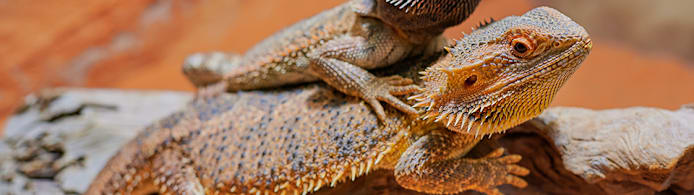
Search Petco for information about the healthy weight of bearded dragons. Use our tips to ensure that your bearded dragon is as healthy as they can be.
Unfortunately, overweight and obese bearded dragons are common in pet households. In nature, bearded dragons regularly move around searching for food and patrolling their territory. On the other hand, most pet lizards simply wait to have their food delivered and spend most of their time in their habitats with little opportunity to exercise. Additionally, many pet parents have trouble discerning how much food their lizard actually needs and they tend to overfeed.
A fat bearded dragon is not a healthy pet—being overweight can increase their risk for several health issues, including arthritis, liver disease and other serious conditions. If you have an overweight reptile, consult your veterinarian about how to help your pet slim down to a healthier weight.
What is a healthy weight for a bearded dragon?
Before you start implementing a plan to help your beardie lose weight, it is important to know what a healthy weight for a bearded dragon is. A healthy weight for a bearded dragon depends on their age, gender, overall health status and other unique traits.
Your veterinarian may refer to a bearded dragon growth chart and weight chart to determine whether your pet’s weight is appropriate. In general, a bearded dragon reaches maturity when they are around 10 to 12 months old. Once they’ve reached adulthood, their body length should be roughly 16 to 24 inches and they should weigh approximately 250 to 700 grams.
If your adult beardie weighs under 250 grams, you may have askinny bearded dragon that isn’t being fed enough—or your pet could be losing weight because of an underlying medical condition. On the other hand, if your beardie weighs more than 900 grams, your pet is almost certainly overweight. Consult your veterinarian and review our Bearded Dragon Care Sheet to help ensure you care for your pet properly.
How to tell if you have an overweight bearded dragon
Bearded dragons store their fat in specific areas of their bodies, including two large fat pads inside their abdomens. By feeling their bellies, you should be able to locate these bearded dragon fat pads and you may be able to tell if they’re overweight.
In addition to the abdominal fat pads, bearded dragons have other storage places for fat in their bodies. The most common bearded dragon fat pockets are in the following areas:
- Tail An overweight lizard’s tail will be very thick, especially around the base
- Back It is hard to feel and see the spine and ribs of an overweight beardie
- Stomach An obese bearded dragon will have a noticeably round belly, which is especially obvious when looking down at them
- Jowls A fat bearded dragon will often have thick folds of skin under their neck that look like jowls
- Head The top of an overweight bearded dragon’s head may feel squishy with fat
- Arms and Legs An obese bearded dragon often has pockets of fat behind their arms and legs
If you suspect your bearded dragon has a weight issue, schedule a wellness exam with your vet to help rule out any potential health issues that might be contributing to your pet’s condition.
What Are the Health Risks to an Overweight Bearded Dragon?
Carrying excess weight puts real strain on your bearded dragon's body — and the consequences go well beyond appearance. Extra body mass stresses bones and joints, predisposing your beardie to arthritis and making it harder for him to move around and explore his habitat. A fat bearded dragon is also at significantly higher risk for:
- Fatty liver disease
- Heart failure
- Stroke
- Cloacal prolapse
Taken together, obesity can meaningfully shorten your bearded dragon's lifespan. If your beardie is carrying too much weight, partnering with your veterinarian early is the single most important step you can take to help him live a longer, healthier life.
How to Help Your Bearded Dragon Lose Weight
Getting an overweight bearded dragon back to a healthy weight takes a two-part approach: adjusting what and how often you feed him, and increasing his daily activity. Your veterinarian can help you build the right plan for your individual pet — the guidance below gives you a strong foundation to start that conversation.
Step 1: Shift the Diet for His Life Stage
The diet of a healthy bearded dragon depends on age, weight and overall health. This matters because the ratio of insects to vegetables changes dramatically as bearded dragons grow:
| Life Stage | Insects (protein) | Vegetables & greens |
|---|---|---|
| Baby & juvenile (still growing) | 70–80% of diet | 20–30% of diet |
| Adult (fully grown) | 20–30% of diet | 70–80% of diet |
Feeding too many insects is one of the most common reasons adult bearded dragons become overweight. If your adult beardie is carrying extra weight, shifting firmly toward the higher-vegetable ratio is a logical first step.
Step 2: Choose Lower-Fat Feeder Insects
Not all insects are equal in calorie and fat content. To help promote weight loss, avoid high-fat feeders and lean toward leaner options instead:
| Avoid (high fat) | Prefer (lower fat) |
|---|---|
| Super mealworms | Crickets |
| Waxworms | Dubia cockroaches |
| Grasshoppers | |
| Mealworms (in moderation) | |
| Black soldier fly larvae | |
| Locusts | |
| Silkworms | |
| Butter worms | |
| Tomato hornworms |
Whichever feeder insects you offer, always gut-load them first (feed them a nutritious diet before offering them to your beardie) and dust them with a calcium supplement before each feeding. This keeps your beardie's nutrition balanced even as you reduce overall caloric intake.
Step 3: Fill the Plate With the Right Vegetables
For adult bearded dragons, vegetables should make up the bulk of every meal. Focus on calcium-dusted dark leafy greens, including:
- Kale
- Dandelion greens
- Collard greens
- Bok choy
- Broccoli rabe
- Spinach
You can also rotate in squash, bell peppers and edible flowers such as roses, carnations, nasturtiums and hibiscus, as well as turnip and beet greens for variety. Fruits are high in sugar and should be reserved as an occasional treat only — not a regular part of a weight-loss diet.
Step 4: Adjust Feeding Frequency
How often you feed is just as important as what you feed. Here's how frequency should shift across life stages — and what to do when weight loss is the goal:
| Situation | Insects | Vegetables |
|---|---|---|
| Baby / juvenile | 2–3 times per day | Offered daily alongside insects |
| Healthy adult | Every other day | Daily |
| Overweight adult (vet-guided) | Once every three days | Daily |
For healthy-weight bearded dragons, most pet parents leave insects in the habitat for about 15 minutes before removing them. To support weight loss, reduce that window to just five minutes — your beardie eats less without feeling the change as dramatically.
Always confirm the right feeding schedule with your veterinarian before making significant changes, especially if your beardie has an underlying health condition.
Step 5: Increase Daily Exercise
Diet alone won't do the job. Bearded dragons are naturally curious animals, but they often become sedentary when their habitat doesn't give them much reason to move. Here's how to get your beardie up and active:
Enrich the habitat. Add ramps, tunnels, branches and hammocks to his enclosure. Climbing and exploring burn calories and keep his mind engaged.
Set up supervised out-of-habitat time. An escape-proof playpen gives your beardie room to roam. Always supervise him closely and make sure he stays warm enough — bearded dragons are ectotherms and depend on external heat to regulate their body temperature.
Upgrade to a larger habitat if needed. If out-of-habitat exercise isn't practical, a more spacious enclosure gives him more room to move on his own terms.
Encourage natural foraging behavior. Clip leafy greens to the side of his habitat so he has to reach up and crop them — mimicking the way bearded dragons browse vegetation. Adding just one or two feeder insects to the enclosure at a time (rather than a full portion at once) also encourages him to actively hunt, which burns additional calories.
A note from your vet: Every bearded dragon is different. Before starting a weight-loss plan, schedule a wellness visit so your veterinarian can rule out underlying conditions, confirm a target weight and give you a feeding schedule tailored specifically to your pet.
Key Takeaways: Helping a Fat Bearded Dragon Reach a Healthy Weight
- Shift the insect-to-vegetable ratio toward 20–30% insects and 70–80% vegetables for adults.
- Swap high-fat feeders (waxworms, super mealworms) for leaner options like crickets and Dubia cockroaches.
- Reduce insect feeding frequency — your vet may recommend as little as once every three days for an overweight adult.
- Shorten feeding windows from 15 minutes to 5 minutes to naturally limit intake.
- Add habitat enrichment (ramps, tunnels, branches) and encourage foraging to increase daily movement.
- Work with your veterinarian to build a personalized plan — obesity-related health risks are serious and worth addressing promptly.
For a complete picture of bearded dragon care, explore our Bearded Dragon Care Sheet and our 10 Bearded Dragon Fun Facts to keep your pet lizard thriving at every stage of life.
Frequently Asked Questions
How often should I feed an overweight bearded dragon? Adult bearded dragons at a healthy weight typically receive vegetables daily and insects every other day. For a fat bearded dragon, many veterinarians recommend scaling back to insects only once every three days while continuing to offer calcium-dusted leafy greens daily. Always confirm the right schedule with your vet, since individual health status matters.
What foods help bearded dragons lose weight? Focus on low-calorie, high-fiber dark leafy greens — kale, collards, dandelion greens, bok choy and broccoli rabe — as the foundation of your beardie's meals. When it comes to protein, choose leaner feeder insects such as crickets, Dubia cockroaches, black soldier fly larvae and silkworms over high-fat options like waxworms and super mealworms. Gut-load all insects before feeding and dust them with a calcium supplement. Fruits are high in sugar and should be reserved as an occasional treat only.
How long does it take for a bearded dragon to lose weight? Healthy weight loss in reptiles is gradual — rapid weight loss can be just as dangerous as obesity. Most bearded dragons on a corrected diet and increased activity routine show measurable progress over several weeks to months, depending on how much weight needs to be lost. Your veterinarian can set realistic milestones and monitor your pet's progress through regular wellness exams.
How can I tell if my bearded dragon is overweight without a scale? You can do a quick at-home body-condition check by looking and gently feeling for these signs: a noticeably round, distended belly when viewed from above; a very thick tail base; fat pockets behind the arms and legs; jowl-like skin folds under the chin; and a squishy feel to the top of the head. If you notice several of these signs, schedule a vet visit to confirm and rule out any underlying conditions.
What is a healthy weight range for an adult bearded dragon? A fully grown adult bearded dragon — typically 10 to 12 months and older — should measure roughly 16 to 24 inches in body length and weigh approximately 250 to 700 grams. A beardie tipping the scale above 900 grams is very likely overweight. Because healthy weight varies by age, sex and individual health history, your veterinarian is the best person to interpret your pet's numbers against a growth and weight chart.
Can exercise alone help my bearded dragon lose weight? Exercise is an important piece of the puzzle, but diet changes typically have the greater impact. Enriching your beardie's habitat with ramps, tunnels, branches and hammocks encourages climbing and exploration. Supervised time in an escape-proof playpen, hanging leafy greens from a clip so your pet has to reach and crop them, and introducing feeder insects one or two at a time to spark natural foraging behavior all help burn extra calories. Combine these activity boosts with the dietary adjustments above — and guidance from your veterinarian — for the best results.
This article was created with assistance from AI tools and reviewed for accuracy by Petco's content team.


