


Two Easy Ways to Start Earning Rewards!
Become a member today! Members-only pricing and offers, personalized care notifications, Vital Care points back on every purchase and more!
 Become a credit card member today!
Earn 2X Pals Rewards points at Petco
when you use Petco Pay!APPLY NOWLearn More About Petco Pay Benefits
How to Play With Your Betta Fish
Published on October 23rd, 2023
Updated on July 16th, 2026

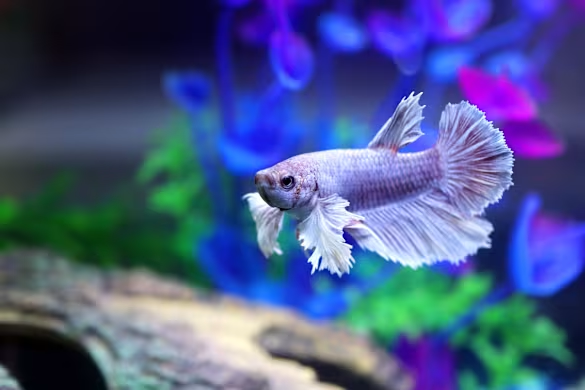
You may not take your betta fish for a walk, but this aquatic pet still needs daily activity. Petco shares how to encourage daily exercise and play into your betta fish's life.
While you might not take your betta fish for a walk or out to the park for a game of fetch, that doesn’t mean they don’t need regular exercise and play or that the two of you can’t form a unique bond.
Let’s take a look at the benefits of exercise and play for your betta, as well as creative options for engaging in activity together.
The Benefits of Exercise and Play for Bettas
Why Playing With Your Betta Fish Actually Matters
Betta fish are far more aware of their surroundings — and of you — than most people expect. These bright, curious fish can learn to recognize their pet parents over time, and that recognition is the foundation for everything that makes play worthwhile. Regular interaction and exercise sessions deliver three distinct, overlapping benefits for your betta's overall wellbeing.
Mental Wellbeing: Keeping a Sharp Mind
Betta fish are intelligent and naturally inquisitive. Without mental stimulation, they can become bored — and a bored betta often becomes a lethargic or stressed one. Play sessions give your fish something to focus on, engage their problem-solving instincts, and keep their environment feeling dynamic rather than monotonous. Think of it as enrichment: the same reason you'd rotate toys for a dog or cat applies, in its own way, to your betta.
Social Wellbeing: You Are Their Social World
Male bettas are solitary fish by nature — they cannot be housed with other male bettas, and their tank mates must be chosen with great care. That means you, their pet parent, become their primary source of social interaction. Regular play and engagement allow your betta to interact with you directly, building familiarity and confidence over time. A betta who recognizes you and associates your presence with positive experiences is typically calmer, less reactive, and visibly less stressed.
Physical Wellbeing: Movement Keeps Them Strong
Play also serves a straightforward physical purpose: it keeps your betta moving. Bettas who are regularly encouraged to swim, follow, and explore tend to stay more active overall, which supports healthy muscle tone and circulation. A fish who spends most of his time hovering in one corner isn't thriving — he's coasting. Consistent activity helps ensure your betta moves enough to stay strong and healthy. Merck Veterinary Manual
Don't Overlook the Tank Itself
Your betta's physical health is closely tied to the quality of his aquatic environment. Even the most engaging play routine can't compensate for poor water quality, an undersized fish tank, or a lack of places to explore and rest. If you're building out your betta's setup or troubleshooting his health, talk to a knowledgeable Petco aquatic specialist for guidance on water parameters, tank size, filtration, and decorations that give your fish room to truly thrive.
Quick reminder: If your betta shows signs of lethargy, loss of color, or unusual behavior even after regular enrichment, consult your veterinarian — these can be early indicators of stress or illness that deserve a professional eye.
How to Add Exercise and Play Into Your Fish's Day
How to Play With Your Betta Fish (and Keep Him Active Every Day)
Betta fish are more curious and interactive than most people expect. With the right setup and a little daily attention, you can keep your betta mentally stimulated, physically active and genuinely engaged with you — his pet parent. The key is understanding the difference between exercise and play, then offering a mix of both.
Exercise involves physical movement that keeps your betta's body strong and his fins healthy. Play focuses on social interaction and object engagement — the kind of enrichment that keeps a smart fish from getting bored. Both matter, but consistent physical exercise is the higher priority for your betta's overall wellbeing.
Exercise Activities for Betta Fish
These activities encourage your betta to swim actively throughout his aquarium, which supports healthy muscle tone and prevents the lethargy that can come from a bare, unstimulating environment.
- Rearrange or add decorations. Introducing new plants — live or artificial — gives your betta fresh territory to explore, weave through and claim as his own. Even shifting existing decorations periodically can spark a new round of curious swimming. (Note: use the term "decorations" rather than décor — it's clearer for everyday conversation.)
- Add live or silk plants. Dense plantings create natural swim-through corridors that mimic the shallow, vegetation-rich waters bettas come from. Your betta will instinctively navigate around and between them throughout the day. Merck Veterinary Manual
- Use feeding as a swimming workout. Drop a pellet or treat on the far side of the aquarium from where your betta is resting. He'll swim across the tank to reach it, turning mealtime into light exercise. Vary the drop spot each feeding to keep him guessing. Just be careful not to overfeed — excess food left in the water degrades water quality quickly and can contribute to unwanted weight gain. Treats should make up no more than 10% of your betta's total diet.
- Vary his food and treat options. Rotating between high-quality betta pellets, freeze-dried bloodworms or brine shrimp taps into your fish's instinct to hunt and pursue prey. The novelty of a new food item alone can trigger a burst of active, exploratory swimming.
Play Activities for Betta Fish
Play is about interaction and mental engagement. Bettas are territorial, visually oriented fish — they notice movement, recognize their pet parents over time and can learn simple repeated behaviors. These bonding activities take only a few minutes a day.
- Teach him to follow your finger. Place your finger just outside the aquarium glass and move it slowly once you have your betta's attention. When he swims toward or follows it, immediately reward him with a small treat dropped into the water. Repeat consistently and, over time, your betta can learn to track your finger back and forth across the tank — a simple but genuinely interactive routine.
- Try a laser pointer or small flashlight (with care). Some bettas will follow a slow-moving point of light along the glass. Keep sessions brief — a minute or two — and always end with an actual food reward so your betta isn't left in a state of frustrated pursuit.
- Use a mirror for short sessions. Briefly holding a small mirror up to the outside of the glass lets your betta see his own reflection, which he'll interpret as a rival and respond to with flared fins and active swimming. Keep mirror sessions to 30–60 seconds, no more than a few times per week. Extended exposure can cause stress. Merck Veterinary Manual
- Add hiding spots for hide-and-seek exploration. Caves, driftwood logs, PVC tubes and leafy decorations give your betta places to duck into, peek out from and investigate. Bettas in enriched aquariums with varied hiding areas are naturally more active and curious than those in sparse setups.
- Float a ping-pong ball or betta-safe toy. Some bettas will nudge or interact with a small floating object at the water's surface. Use only items specifically designed for aquarium use or confirmed fish-safe — never anything painted, treated or small enough to be swallowed.
Quick-Reference: Exercise vs. Play for Betta Fish
| Activity | Type | Frequency | Notes |
|---|---|---|---|
| Add/rearrange decorations | Exercise | Weekly or as needed | Rotate plants and hides to keep environment novel |
| Cross-tank feeding | Exercise | Daily (at mealtimes) | Vary drop location; don't overfeed |
| Varied food/treats | Exercise + enrichment | Daily; treats ≤ 10% of diet | Freeze-dried bloodworms, brine shrimp work well |
| Finger-following | Play | Daily, 2–5 minutes | Reward with a treat to reinforce the behavior |
| Mirror sessions | Play | 2–3×/week, under 60 seconds | Longer sessions cause stress; keep brief |
| Hiding spot exploration | Play | Ongoing (passive enrichment) | Caves, logs, dense planting |
| Floating toy/ball | Play | A few times per week | Aquarium-safe items only |
A note on your betta's wellbeing: If your betta seems consistently lethargic, is hiding more than usual or loses interest in food and interaction, consult your veterinarian — particularly one with experience in aquatic life. Changes in behavior can be an early sign of illness or poor water conditions.
Extra Tips for Creating an Active Lifestyle for Your Fish
Engaging in activity and playtime can be rewarding for both you and your fish. Just be sure to always wash your hands before and after touching their water.
In addition to ensuring that your aquarium is large enough to offer your fish plenty of room for swimming, you’ll need to be careful to choose décor that won’t damage fins. You might want to consider adding a betta hammock where your fish can rest after periods of activity.
Keep their aquarium clean and their water’s pH balanced to help your betta remain healthy, enjoy their environment and encourage natural activity. And remember, a single betta needs at least a one-gallon tank.
When in doubt about your fish’s care, talk to an aquatic specialist.
Want to learn more about how you can best set up your fish’s space for optimal exercise and play? Check out this helpful guide on setting up an aquatic habitat.
Frequently Asked Questions
How often should I play with my betta fish? Aim for at least one short, focused play session per day — around five to ten minutes is plenty. Consistency matters more than duration: daily interaction helps your betta recognize you, builds confidence and reduces stress-related behaviors like fin-nipping or lethargy.
What are the best toys or enrichment items for a betta fish? Betta-safe decorations such as silk or live plants, smooth driftwood, caves and purpose-built betta hammocks are among the most effective enrichment options. They encourage natural exploration and give your betta places to rest between active swims. Avoid plastic decorations with sharp edges that can snag delicate fins.
Can I teach my betta fish tricks? Yes — bettas are among the more trainable fish kept as pets. The finger-follow technique described above is a reliable starting point: move your finger slowly along the outside of the aquarium and reward your betta with a small treat when he follows. With repetition, many bettas also learn to swim through hoops or push a tiny ball. Keep training sessions short to avoid stressing your fish.
Is it safe to put my finger in my betta's aquarium during play? Always wash your hands thoroughly with fragrance-free soap and rinse completely before placing a finger near the water. Soap residue, lotions and hand sanitizers can disrupt water chemistry and harm your betta. Limit direct contact with the water as much as possible, and never tap hard on the glass — it can startle and stress your fish.
How do I know if my betta is bored or not getting enough stimulation? Signs that a betta may need more enrichment include glass-surfing (repeatedly swimming up and down the tank wall), lethargy, loss of color vibrancy or repetitive circling. If you notice these behaviors and enrichment changes don't help within a week or two, consult your veterinarian, as some symptoms can also signal illness or poor water quality.
Can female bettas benefit from play and enrichment the same way males do? Absolutely. Female bettas are equally intelligent and curious. Because females can sometimes be housed together in a larger, well-decorated aquarium (often called a sorority tank), they may have more built-in social stimulation — but individual play sessions and varied enrichment still support each fish's mental and physical wellbeing. Monitor any group closely for signs of aggression, and consult an aquatic specialist before adding fish to an existing community.
This article was created with assistance from AI tools and reviewed for accuracy by Petco's content team.


