


Two Easy Ways to Start Earning Rewards!
Become a member today! Members-only pricing and offers, personalized care notifications, Vital Care points back on every purchase and more!
 Become a credit card member today!
Earn 2X Pals Rewards points at Petco
when you use Petco Pay!APPLY NOWLearn More About Petco Pay Benefits
Dog Stomach & Digestive System: A Complete Guide
Published on November 1st, 2024
Updated on June 18th, 2026

Written by Petco Editorial Team
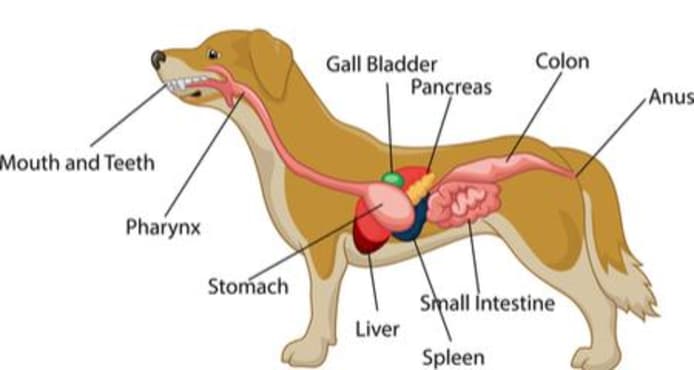
The gastrointestinal tract in dogs includes the esophagus, stomach, and intestines. Each organ plays an important role in digestion.
The gastrointestinal tract in dogs includes the esophagus, stomach, and intestines. Each organ plays an important role in digestion.
Dog Esophagus
The esophagus is a small hose-like tube, which connects the mouth to the stomach. As it leaves the mouth, the esophagus follows a straight path through the neck and chest, passing near the heart through the diaphragm muscle and finally entering the stomach. The walls of the esophagus are composed of muscles, which move in wave-like contractions to push food into the stomach. When there is no food in the esophagus, the walls of the esophagus collapse in on each other, making a closed space. Surgery on the esophagus is always difficult because of its location within the chest and its slow rate of healing. The sole function of the esophagus is to carry food from the mouth to the stomach.
Dog Stomach
The dog's stomach is a sac-like structure designed to hold large volumes of food while continuing the digestive process. The esophagus carries food to the stomach, where it enters via a valve-like structure called the cardiac sphincter. On the interior surface of the stomach is a series of folds called gastric folds. These folds function to help grind and break down food. The stomach lining secretes gastric acid and enzymes to further digest food. Once this part of the digestive process is complete, the partially digested food exits the stomach through the pyloric sphincter and enters the duodenum (the first segment of the small intestine). Once eaten, most food leaves the stomach within twelve hours after entering.
Dog Small Intestine
The small intestine is a tube-like structure which extends between the stomach and large intestine. It is the longest portion of the intestinal tract and is about two and a half times the animal's total body length. An animal twenty-four inches long would have about sixty inches of small intestine.
The small intestine in the dog has three parts. The first portion, which attaches to the stomach, is the duodenum. The middle (and longest) portion is called the jejunum. The shortest part is the ileum, which connects to the large intestine.
The duodenum attaches to the stomach and is relatively short. It does, however, have very important functions. The gallbladder and pancreas connect to the duodenum by the bile and pancreatic ducts, respectively. Enzymes and other secretions that are important for digestion are produced by the liver and pancreas and pass through these ducts to mix with the food in the duodenum.
The jejunum is the longest portion of the small intestine and is rich in small, finger-like projections called villi. Villi protrude inward into the food contents and provide a large surface area to absorb nutrients. Intestinal contents of the jejunum empty into the ileum and from there pass into the large intestine.
Diseases of the small intestine are usually not confined to just one area and are therefore simply discussed as small intestinal disorders.
Dog Large Intestine
The large intestine of the dog connects the small intestine to the anus and is larger in diameter than the small intestine. Its primary function is to absorb water from feces as needed, thus keeping the hydration level of the body constant. Its other function is to store fecal matter awaiting passage from the body.
The large intestine has several distinct parts. The cecum is a small, finger-like projection near the junction with the small intestine. Its true function is not well known in canines; however, it aids in the absorption of fluids and improves the microbiological health of the large intestine. The large intestine is comprised of three segments--the ascending colon, transverse colon, and descending colon. The descending colon terminates at the rectum where fecal matter exits the anus.
Frequently Asked Questions
How long does food stay in a dog's stomach? Most food leaves a dog's stomach within 12 hours of being eaten, after which partially digested material passes through the pyloric sphincter into the small intestine (duodenum) to continue the digestive process. Meal size, food type, and individual health can all influence that timeline — consult your veterinarian if your dog seems uncomfortable or bloated after eating. https://www.merckvetmanual.com/management-and-nutrition/nutrition-small-animals/nutritional-requirements-of-small-animals
What are common signs of dog stomach problems I should watch for? Vomiting, loss of appetite, bloating, excessive drooling, abdominal pain, or changes in stool consistency can all signal that something is off in your dog's gastrointestinal tract. Because these signs can point to conditions ranging from a mild upset to a serious emergency, contact your veterinarian promptly if symptoms persist or worsen. https://www.aspca.org/pet-care/animal-poison-control
What does the dog's stomach actually do during digestion? The stomach is a sac-like structure that holds large volumes of food while gastric acid and digestive enzymes — secreted by the stomach lining — begin breaking food down. Interior folds called gastric folds help grind food mechanically, while the cardiac sphincter controls what enters from the esophagus and the pyloric sphincter controls what exits into the small intestine. https://www.merckvetmanual.com/management-and-nutrition/nutrition-small-animals/nutritional-requirements-of-small-animals
Are dogs carnivores or omnivores, and does that affect how their stomach works? Dogs are omnivores, not carnivores. Their digestive system — including stomach acid composition and intestinal length — is adapted to process both animal protein and plant-based ingredients, which is why nutritionally complete commercial dog foods can include grains, vegetables and other plant matter alongside meat proteins. https://www.aafco.org/consumers/understanding-pet-food/
How does the small intestine absorb nutrients after food leaves the stomach? Once food passes from the stomach into the duodenum, bile from the gallbladder and enzymes from the pancreas mix with it to break down fats, proteins and carbohydrates. The food then moves into the jejunum, where tiny finger-like projections called villi dramatically increase the surface area available to absorb those nutrients into the bloodstream. https://www.merckvetmanual.com/management-and-nutrition/nutrition-small-animals/nutritional-requirements-of-small-animals
What should I feed my dog to support healthy digestion? Look for a complete and balanced dog food that meets AAFCO nutritional standards for your dog's life stage. High-quality protein, appropriate fiber levels and easily digestible ingredients all help the gastrointestinal tract function well. Treats should make up no more than 10% of your dog's daily diet. If your dog has recurring digestive issues, your veterinarian can recommend a diet tailored to his specific needs. https://www.aafco.org/consumers/understanding-pet-food/ https://www.fda.gov/animal-veterinary/animal-foods-feeds/pet-food
This article was created with assistance from AI tools and reviewed for accuracy by Petco's content team.
263Pet Parents found this article helpful
Related Articles


