


Two Easy Ways to Start Earning Rewards!
Become a member today! Members-only pricing and offers, personalized care notifications, Vital Care points back on every purchase and more!
 Become a credit card member today!
Earn 2X Pals Rewards points at Petco
when you use Petco Pay!APPLY NOWLearn More About Petco Pay Benefits
Rhodesian Ridgeback Breed Facts and Information
Updated on June 17th, 2025




Temperament
Independent, loyal, affectionate
Coat Color
Wheaten
 Weight
70 - 85 Pounds
 Height
24 - 27 Inches
 Life Expectancy
10 - 12 Years
Maintenance Level
Low Maintenance
High Maintenance
Personality
Reserved
Extroverted
About Rhodesian Ridgebacks
The Rhodesian Ridgeback is an active, courageous, and devoted large dog breed hailing from Zimbabwe and South Africa. The breed requires vigorous daily exercise and is well suited to active families able to devote plenty of time and space. They are intelligent, but independent, making them less-than-easy to train. Ridgebacks have a dense, short coat that is simple to maintain and sheds minimally. When well socialized, they can learn to cohabitate with other dogs and animals, and accept new people into their circle. If not socialized, the breed can become predatory and aggressive. Ridgebacks are not recommended for first-time dog owners, as they require confident and consistent leadership. With the right care and attention, the Ridgeback makes an admirable companion or working dog that is well adjusted to home and family life.
Hound Group
Most hounds share the common ancestral trait of being used for hunting. Some use acute scenting powers to follow a trail. Others demonstrate a phenomenal gift of stamina as they relentlessly run down quarry. Beyond this, however, generalizations about hounds are hard to come by, since the Group encompasses quite a diverse lot. Some hounds share the distinct ability to produce a unique sound known as baying.
Rhodesian Ridgeback Appearance
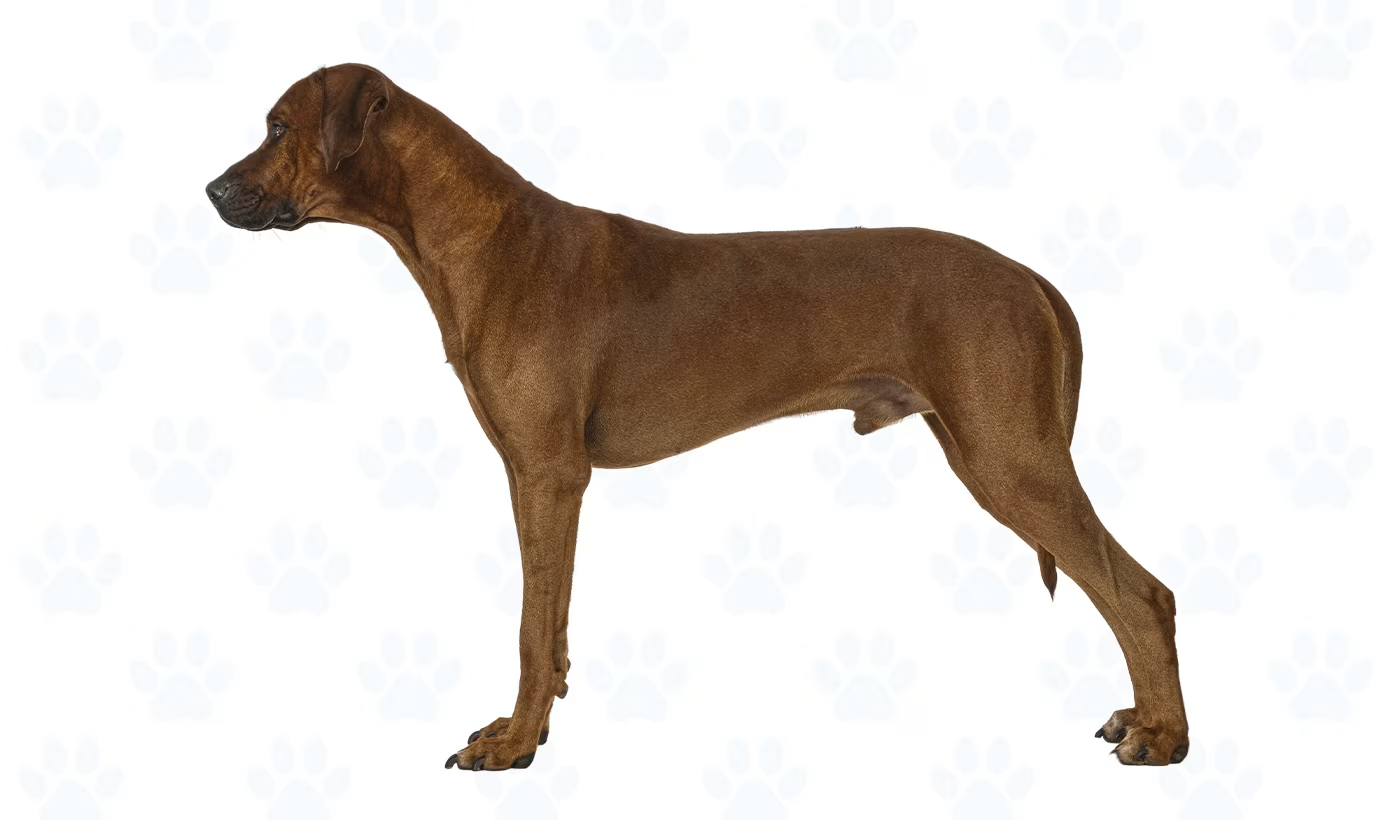
The Rhodesian Ridgeback is a large, muscular breed with a light tan or red colored coat, folded ears, and a long tail. The breed’s identifying characteristic for which it is named, is a ridge of hair that grows against the grain of the coat and runs along the spine. The ridge should be symmetrical and clearly defined from the shoulder blades to the hips.
Ridgebacks have a blocky head with wide-set eyes and a thick, long muzzle. Their expression is intelligent and steady. They are long legged and sturdily built – equipped for endurance and extreme conditions. The Ridgeback’s coloring includes many shades of tan, from light to red wheaten, with black or brown noses, and light markings. Their coat is short, sleek, and coarse.
Size & Weight
Ridgebacks are a large breed, standing 24-27 inches tall at the shoulders and weighing between 70-85 pounds. Their build is thick-boned and muscular.
Full Grown
Female
24 in. / 70 lbs.
Male
27 in. / 85 lbs.
Height is measured up to the shoulders.
Characteristics
- Size & Coat
- Lifestyle
- Training & Behavior
How to Care for a Rhodesian Ridgeback
In the house, Ridgebacks are typically calm. They need strong leadership within the family and tend to be wary of strangers and unknown animals. For this reason it’s important they are well socialized and taught to follow the leader’s example when it comes to unfamiliar people and situations.
Cost of Owning
Savings & Rewards
Unlock exclusive rewards with Petco Perks. Plus, members get 35% off their first Autoship order and 5% off all future orders.

Enjoy exclusive rewards on expert rated and pet parent approved products, like member prices, extra points and special offers designed to help you save on what your pet needs.

Get your pet’s essentials delivered on your schedule so you never run out and save up to 35% on your first order, then 5% on every order after that.
Your love story starts here.
Find adoptable pets near you with a simple search.
Fun Facts
The written breed standard for the Ridgeback is based on the Dalmatian.
It is said that Ridgebacks of yore could keep pace with a running horse for 30 miles.
LA Clipper’s player, Blake Griffin, owns a Ridgeback.
Animal friends Ruuxa and Raina demonstrate top speeds (and adorable friendship) at the San Diego Zoo Safari Park.
History
The Ridgeback is a utility hound breed developed by the Khoikhoi people native to the area of South Africa and Zimbabwe, and European settlers. The breed is a mix of a smaller, native dog with a hair-ridged back and breeds brought from Europe, such as the Mastiff, Great Dane, Bloodhound, and Greyhound. Ridgebacks were used to fell and track large game (including lions!), keeping them at bay until the hunters arrived on the scene. Cornelius von Rooyen initiated the first formal breeding program in Zimbabwe (then known as Rhodesia). The breed standard was set forth in 1922, and hasn’t changed much since then. After World War II, the breed presence expanded globally and was recognized by the AKC in 1955.