


Two Easy Ways to Start Earning Rewards!
Become a member today! Members-only pricing and offers, personalized care notifications, Vital Care points back on every purchase and more!
 Become a credit card member today!
Earn 2X Pals Rewards points at Petco
when you use Petco Pay!APPLY NOWLearn More About Petco Pay Benefits
How to Litter Train a Kitten: 7 Simple Steps
Published on January 23rd, 2024
Updated on June 18th, 2026

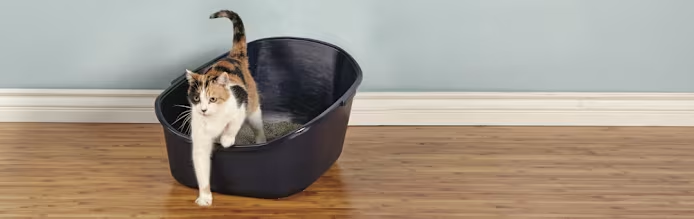
Litter training your kitten is one of the first things you'll want to prioritize when bringing home your new pet. These steps will show you how simple it can be.
Establishing good litter box behaviors early on in your cat's life is essential to the long-term health and happiness of your home. Teaching kittens to use the litter box is one of the first training exercises for new pet parents.
Luckily, using the litter box comes naturally to most kittens, and with a few tips and techniques, your young feline will establish proper litter box behaviors in no time.
"Cats are typically happy to use a litter box because they like privacy for bathroom habits and are accustomed to a sandy surface (or similar) to go to the bathroom," says Dr. Stephanie Liff, veterinarian and owner of Pure Paws Veterinary Care in New York City.
7 Steps to Litter Training Kittens
How to Litter Train a Kitten: 7 Steps to Success
Most kittens take to a litter box quickly — especially when you set them up for success from day one. Follow these seven steps to build reliable, lasting litter habits.
Step 1: Pick the Right Litter Box
The right litter box makes the whole process easier. Because kittens are small, you can start with a compact box and graduate to a larger one as your kitten grows. Whatever size you choose, your kitten should be able to stand up, turn around and squat comfortably without touching the sides.
Just as important: easy entry. A box with low sides or a cut-out entry point removes any physical barrier that might discourage a tiny kitten from climbing in. As your cat grows, you can transition to a standard or even covered box — though some cats always prefer open styles, so watch your kitten's preference.
Step 2: Choose the Right Litter
There is no single litter that works for every kitten, so a little trial and observation goes a long way. Common litter materials include:
| Litter Type | Key Characteristics | Things to Consider |
|---|---|---|
| Clay (clumping) | Absorbs moisture; forms scoopable clumps | Dusty; not ideal for kittens under 3–4 months |
| Clay (non-clumping) | Absorbs odor; budget-friendly | Requires more frequent full changes |
| Silica gel crystals | Low dust; highly absorbent | Higher upfront cost; some cats dislike texture |
| Pine | Naturally odor-neutralizing | Distinct scent; not right for all cats |
| Corn or wheat | Biodegradable; clumping | Can attract pests if stored improperly |
| Recycled newspaper | Very low dust; soft texture | Less odor control; often used post-surgery |
Litter also comes in scented and unscented varieties. Start with whatever litter your kitten was already using before coming home — familiarity reduces stress and speeds up training. If you need to switch, mix the new litter gradually into the old over one to two weeks rather than making an abrupt change.
"There is no one-size-fits-all version of this, so it largely depends on your needs," says Dr. Liff. "Cats with respiratory illnesses or allergies can be sensitive to certain types of litter, so you should just monitor and discuss with your veterinarian." If your kitten sneezes frequently around the box or avoids it after a litter change, check in with your vet [https://www.vet.cornell.edu/departments-centers-and-institutes/cornell-feline-health-center/health-information].
Step 3: Start Litter Training in a Confined Space
When you first bring your kitten home, limit her world to one room — a bedroom or bathroom works well. Place the litter box in that room and gently set your kitten inside it so she can sniff and explore. You do not need to move her paws; simply letting her investigate is usually enough.
Once she is using the box consistently and confidently, you can open up more of your home. At that point, move the box to its permanent location (see Step 4) and give her supervised access to additional rooms gradually.
Step 4: Place the Litter Box in the Right Spot
Location matters more than most pet parents expect. A poorly placed box is one of the most common reasons kittens start eliminating outside the box.
Good litter box placement:
- Quiet, low-traffic area with minimal foot traffic and noise
- Accessible but not isolated — your kitten should never have to search for it
- A bathroom is often a reliable choice
- One easily accessible box on every floor of your home
Avoid placing the box:
- Directly next to your kitten's food and water bowls — cats instinctively avoid eliminating near their food
- In a laundry room where loud washers and dryers can startle her mid-use
- In a closet or corner so tucked away that she may not reach it in time
Step 5: Have Enough Litter Boxes
The number of boxes matters, especially in multi-cat households. "Behavioral vets recommend having one box per cat, plus one," says Dr. Liff. So if you have two cats, aim for three boxes.
If you share your home with more than one cat, spread the boxes across different rooms or areas. Placing multiple boxes side by side in the same room effectively functions as one large box in a cat's mind — and can still trigger territorial tension. Giving each cat her own dedicated space to eliminate reduces stress and accidents for everyone.
Step 6: Keep the Litter Box Clean
Cats are fastidious by nature, and a dirty litter box is one of the fastest ways to derail litter training. A kitten who finds her box unpleasant will simply find somewhere else to go.
Litter box cleaning routine:
- Daily: Scoop solid waste and clumps at least once a day — twice daily is even better for kittens
- Monthly: Empty the box completely, wash it with mild unscented soap and warm water, rinse thoroughly and refill with fresh litter
- Annually: Replace the litter box itself; scratches in the plastic harbor odor-causing bacteria that cleaning cannot fully remove
Placing a litter disposal system next to the box makes daily scooping faster and more convenient. Avoid strongly scented cleaners or disinfectants — residual fragrance can deter your kitten from using the box [https://www.vet.cornell.edu/departments-centers-and-institutes/cornell-feline-health-center/health-information].
Step 7: Monitor Litter Box Behavior
Once your kitten is using the box reliably, your job shifts to observation. Changes in litter box behavior are often the first sign that something is wrong medically or behaviorally.
"Any change in litter box behavior warrants a vet visit, but the most common one we see is lack of using the box for defecation or urination," says Dr. Liff. "This behavior change can indicate underlying medical issues."
Watch for these changes and contact your veterinarian if you notice:
- Eliminating outside the box after previously being reliable
- Straining, crying or spending excessive time in the box
- Blood in urine or stool
- Urinating more or less frequently than usual
- Sudden avoidance of the box entirely
Never punish a kitten for accidents outside the box — this creates anxiety and can make the problem worse. Instead, clean the spot thoroughly with an enzymatic cleaner to remove odor, and schedule a vet visit to rule out a medical cause [https://www.aspca.org/pet-care/animal-poison-control].
Can cats be toilet trained?
There are several cat toilet training kits on the market that gradually help cats learn to use a toilet instead of a litter box. Cat toilet training is possible, but pet parents should exercise caution and talk to their veterinarians before making this decision.
Toilet training a cat may be difficult for older, adult cats who are used to using a litter box, and pet parents should never force their cats to use the toilet if it causes stress or anxiety. Additionally, senior cats may have a difficult time jumping up to use the toilet.
Liff adds that toilet training a cat can be detrimental to monitoring your cat's overall health, and she doesn't usually recommend it. "It is important to be able to confirm that your pet is using the bathroom regularly and that the urine and fecal matter appear normal," she says.
It's hard for pet parents to monitor urination and defecation behaviors when their cats use the toilet.
Frequently Asked Questions
Why won't my kitten use the litter box? The most common reasons a kitten avoids the litter box include a box that's too large or difficult to enter, a litter type she dislikes, a location that feels unsafe or noisy, or a box that isn't cleaned frequently enough. Start by ruling out these environmental factors — then consult your veterinarian, because any sudden or persistent avoidance can signal an underlying medical issue such as a urinary tract infection or gastrointestinal problem. https://www.vet.cornell.edu/departments-centers-and-institutes/cornell-feline-health-center/health-information
What should I do if my kitten has accidents outside the litter box? Clean the spot immediately with an enzymatic cleaner to eliminate odor — cats are drawn back to areas that smell like previous eliminations. Avoid punishment entirely; it creates anxiety and can make litter box avoidance worse. Instead, revisit the seven steps: confirm the box is accessible, clean and correctly placed, and that you have enough boxes for the number of cats in your home. If accidents continue beyond the first week or two of training, schedule a veterinary visit to rule out medical causes. https://www.vet.cornell.edu/departments-centers-and-institutes/cornell-feline-health-center/health-information
How often should I clean the litter box during kitten training? Scoop at least once daily — ideally twice — and do a full wash of the box with mild, unscented soap and warm water at least once a month. Kittens are especially sensitive to odor and mess; a dirty box is one of the top reasons young cats begin eliminating elsewhere. Replace the litter box itself every year, as scratches in the plastic can harbor bacteria and odor even after cleaning.
What type of litter is best for a kitten? Begin with whatever litter your kitten was using before she came home — a familiar texture reduces stress during the transition. Most kittens accept unscented, fine-grained clumping clay litter readily because the texture resembles the sandy surfaces cats instinctively seek out in the wild. Avoid strongly scented litters, which can irritate a kitten's sensitive respiratory system. If you need to switch litters, blend the new type gradually into the old over one to two weeks. Kittens with known respiratory sensitivities or allergies should be evaluated by a veterinarian before you select a litter. https://www.vet.cornell.edu/departments-centers-and-institutes/cornell-feline-health-center/health-information
How many litter boxes does a kitten need? The standard recommendation from veterinary behaviorists is one litter box per cat in the household, plus one extra. So if you have one kitten, provide two boxes; if you have two cats, provide three. Place boxes in separate, quiet locations — never side by side in the same room — to prevent territorial tension and give your kitten easy access no matter where she is in your home.
When should I call the vet about my kitten's litter box behavior? Contact your veterinarian promptly if you notice any of the following: straining or crying in the litter box, blood in the urine or stool, complete absence of urination or defecation for more than 24 hours, or a sudden change in habits after litter training was already established. As Dr. Liff notes, any change in litter box behavior warrants a vet visit, because it can indicate underlying medical issues that need prompt attention. https://www.vet.cornell.edu/departments-centers-and-institutes/cornell-feline-health-center/health-information
This article was created with assistance from AI tools and reviewed for accuracy by Petco's content team.


