


Two Easy Ways to Start Earning Rewards!
Become a member today! Members-only pricing and offers, personalized care notifications, Vital Care points back on every purchase and more!
 Become a credit card member today!
Earn 2X Pals Rewards points at Petco
when you use Petco Pay!APPLY NOWLearn More About Petco Pay Benefits
How to Check Capillary Refill Time in Dogs & Cats
Published on November 1st, 2024
Updated on June 18th, 2026

Written by Petco Editorial Team
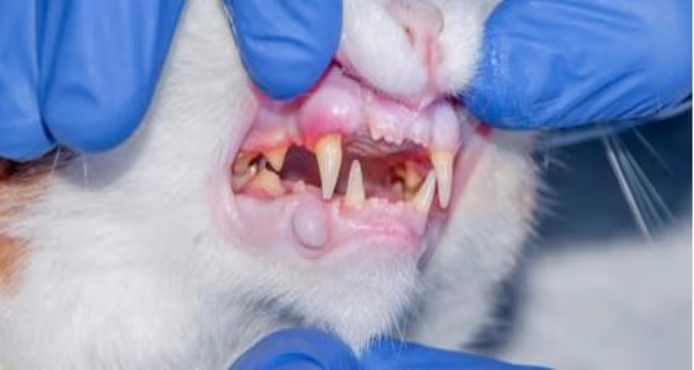
The capillary refill time (CRT) tests blood flow. CRT is evaluated by the color change seen after applying and then releasing pressure on the gums.
How to Check Capillary Refill Time (CRT) in Dogs and Cats
To check capillary refill time, gently press one finger against your pet's gum, release the pressure, then count the seconds until the pink color returns. In a healthy dog or cat, that color should come back within 1–2 seconds.
This simple technique — the same one your veterinarian uses during routine exams — gives you a real-time snapshot of how well blood is circulating through your pet's body. Here's exactly how to do it at home, and what to watch for.
Step-by-Step: How to Check Your Pet's CRT
- Calm your pet first. Sit with your dog or cat in a quiet spot. A relaxed pet gives a more accurate reading.
- Lift the upper lip. Gently curl back the lip to expose the gum tissue above the front teeth. The gums should look moist and pink.
- Press firmly but gently. Use the pad of one finger to press against the gum for about one second. You'll see a pale or white spot form where you pressed — that's blood being pushed out of the tiny blood vessels (capillaries) beneath the surface.
- Release and count. Lift your finger and immediately begin counting: one one-thousand, two one-thousand.
- Watch the color return. Note how long it takes for the gum to return to its normal pink color.
- Record what you see. If the color returns in under 2 seconds and the gums look pink and moist, that's a reassuring sign. If it takes longer — or the gums look pale, white, blue, or grayish — contact your veterinarian right away.
Tip: Good lighting makes a real difference. Use a flashlight or move near a window so you can clearly see the color change.
What's Actually Happening Under the Gum
Your pet's gums are rich with capillaries — tiny blood vessels that sit just beneath the surface of the tissue. When you press on the gum, you temporarily force blood out of those capillaries, creating that pale spot. The moment you release pressure, a healthy circulatory system pushes blood back in almost instantly. That rapid refill is what you're measuring.
What CRT Results Mean
| CRT Reading | What It May Indicate | What to Do |
|---|---|---|
| Less than 1 second | Possible early shock or fever (hyperdynamic state) | Contact your veterinarian promptly |
| 1–2 seconds | Normal circulation | Continue monitoring; no immediate concern |
| 2–3 seconds | Borderline; may suggest reduced circulation | Monitor closely; call your vet if other symptoms appear |
| More than 3 seconds | Prolonged CRT — potentially serious | Seek veterinary care immediately |
| Gums white, blue, or gray | Severe circulatory compromise | Emergency — go to a vet now |
A prolonged CRT can be a sign that blood isn't flowing adequately to the body's tissues. Possible underlying causes include dehydration, anemia, shock, or certain heart conditions. Because CRT is a fast, non-invasive measurement, it's one of the first things a veterinarian checks when assessing a pet in distress — and it's a useful skill for pet parents to know between vet visits.
A Note on Gum Color
CRT and gum color go hand in hand. While you're checking refill time, take a moment to note the baseline color of your pet's gums before you press:
- Pink and moist — normal
- Pale pink or white — may indicate anemia or poor circulation
- Bright red — may suggest overheating or early shock
- Blue or purple (cyanosis) — low oxygen; a veterinary emergency
- Yellow-tinged — possible jaundice; contact your vet
When to Call Your Veterinarian
CRT is a screening tool, not a diagnosis. If your pet's refill time is consistently over 2 seconds, if the gums look an unusual color, or if your pet is showing other signs of illness — lethargy, rapid breathing, weakness, or collapse — don't wait. Contact your veterinarian or an emergency animal hospital immediately. Any concerns about your pet's CRT should always be discussed with a veterinary professional who can perform a full physical exam and run appropriate diagnostics.
Frequently Asked Questions
How do you check capillary refill time in a dog or cat? To check CRT at home, gently lift your pet's lip to expose the gums. Press one fingertip firmly against the gum tissue for about two seconds, then release. Watch how quickly the pale or white spot returns to its normal pink color. A return to pink within 1–2 seconds is considered normal. Because this technique requires a calm, cooperative pet and a practiced eye, your veterinarian should always be your first call if you notice anything unusual.
What does a normal capillary refill time look like? Normal gums in a dog or cat are moist and bubble-gum pink. When you press and release, color floods back within 1–2 seconds — almost immediately. That rapid return tells you blood is circulating well through the tiny capillaries just beneath the gum surface.
What does an abnormal CRT look like, and why does it matter? If color takes longer than 2 seconds to return, your pet has a prolonged CRT. This can signal that blood is not moving adequately through the body and may point to serious conditions such as dehydration, anemia, shock or certain heart diseases. A CRT that is nearly instant (under 1 second) can also be abnormal and may indicate fever or very early circulatory changes. Either finding warrants a prompt call to your veterinarian.
When should I check my pet's CRT? CRT is most useful as a quick wellness check during any situation where you suspect your pet may be unwell — after an injury, during a bout of vomiting or diarrhea, if your pet seems unusually weak or lethargic, or any time the gums look pale, white, blue or grayish. It is not a substitute for a full veterinary exam, but it gives you one fast, meaningful data point to share with your veterinarian when you call.
Can I check my pet's CRT at home? Yes — and knowing how is genuinely useful for pet parents. The technique requires no equipment, takes only a few seconds and can help you communicate more clearly with your veterinarian in an emergency. That said, interpreting what you see accurately takes practice, and gum color can vary by breed (some dogs have naturally pigmented gums that make CRT harder to read). Always describe exactly what you observed — color, timing and your pet's other symptoms — so your veterinarian can guide next steps.
Are there conditions that make CRT harder to read? Yes. Pets with heavily pigmented or spotted gums — common in certain breeds such as Chow Chows or Shar-Peis — may be difficult to assess by gum color alone. In those cases, the inner eyelid (conjunctiva) or the tissue inside the lip may offer a clearer view. Your veterinarian can show you the best spot to check on your individual pet during a routine wellness visit.
This article was created with assistance from AI tools and reviewed for accuracy by Petco's content team.
58Pet Parents found this article helpful


