


Two Easy Ways to Start Earning Rewards!
Become a member today! Members-only pricing and offers, personalized care notifications, Vital Care points back on every purchase and more!
 Become a credit card member today!
Earn 2X Pals Rewards points at Petco
when you use Petco Pay!APPLY NOWLearn More About Petco Pay Benefits
DIY Cat Enrichment: 9 Ways to Stimulate Your Cat
Published on October 7th, 2016
Updated on June 18th, 2026

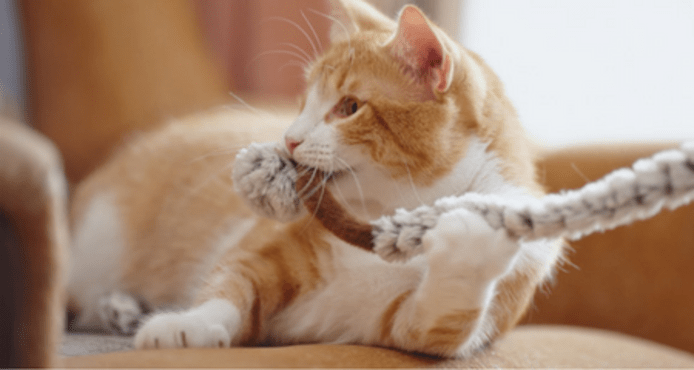
Mental stimulation is crucial for the well-being of your kitten or adult cat. Here are some of the best ways for you to stimulate your cat's brain.
As the old adage goes, “a mind is a terrible thing to waste”. This also applies to our feline friends. Cats are intelligent creatures and need to have their brains stimulated to maintain a happy and healthy life. If your cat has become "uninspired", these tips will help you turn things around!
Play With Your Cat
There are many toys on the market today that are designed to entice cats into play. Choose ones that are easy to throw, roll or swing around to get your cat's interest. Having regular play sessions each day is not only a great way to bond with your pet, but it gives your cat the opportunity to work its muscles, as well as its brain.
Interactive Toys
If you spend a lot of time away from home, then you may want to consider an interactive toy that your cat can trigger on its own. These "intuitive" cat toys are designed to work on a motion sensor, so when your cat moves, the toy will respond. Some toys can even reset themselves if they become flipped over or stuck in a corner.
Puzzle Treat Dispensers
Particularly good if your cat is a food gobbler, puzzle treat dispensers make your cat work for the reward. They are designed to mentally stimulate your feline with mazes, balls, food trees and diggers. A perfect companion for cats that tend to be alone during extended periods of time.
Another Feline Friend!
One of the best ways to mentally stimulate your cat is to bring in another feline friend. Once both cats are comfortable with each other, they will run, play, chase and mentally challenge one another.
Cardboard Boxes and Paper Bags
They are inexpensive, recyclable and cats go crazy over them...yes, we're talking about good old cardboard boxes and paper bags.
Get a large box and cut peek-a-boo holes in it or a large crinkly shopping bag and watch your cat have the time of its life. And the best thing about these mentally stimulating activities is that once they become worn out they are very easy to replace, and you won't regret having made a significant investment.
Cat videos
Bring nature indoors with specifically produced videos for cats. These films feature up-close views of birds, squirrels, fish and other active wildlife. Your cat will love to chirrup and swat at the featured wildlife from the comfort and safety of your home.
After several viewings, your cat may even learn the patterns of the nature-critters and begin to stalk and hunt these television "stars."
View From a Window
If you're into feeding birds or squirrels, attaching a feeder near a window of your home is a great way to stimulate your cat's brain. Put a tall scratching post or another sturdy object by the window so your feline friend can easily perch on it and watch nature at its best.
Homemade Agility Course
Build a DIY Agility Course at Home
Create a simple DIY agility course using cardboard boxes, kitty tunnels and your existing furniture — no special equipment required. Agility isn't just for dogs; cats thrive on the problem-solving and physical challenge that a homemade obstacle course delivers, and building one costs little to nothing.
Why it works: Navigating a course engages your cat's natural instinct to explore, jump and weave, giving her both a mental workout and light physical exercise in a single session.
What to Use as Obstacles
You likely already have everything you need:
- Cardboard boxes — Cut openings to create tunnels or "caves" your cat can dart through and hide inside
- Kitty tunnels — Collapsible fabric tunnels add a satisfying crinkle texture that keeps cats curious
- Household furniture — Chairs, ottomans and low shelves become natural jumps and weave poles
- Rolled towels or books — Line them up as a slalom your cat can zigzag between
Arrange the obstacles in a loose loop so your cat can complete a circuit without backtracking, which keeps momentum — and interest — high.
How to Run the Course
- Grab a wand toy. A dangling toy on a stick or wand is the most effective lure for guiding your cat from obstacle to obstacle. The movement mimics prey and keeps her focused on following you rather than wandering off.
- Go slow at first. Introduce one or two obstacles before adding the full course. Let her sniff and investigate each piece before you ask her to move through it.
- Guide, don't force. Use the wand to draw her attention toward each obstacle; never push or place her on a jump. Cats learn through curiosity, not pressure.
- Finish with a reward. Once she completes the course, offer a small, wholesome treat. Keep treats to no more than 10% of her daily caloric intake so the reward stays special without tipping her nutritional balance. https://www.merckvetmanual.com/management-and-nutrition/nutrition-small-animals/nutritional-requirements-of-small-animals
Tips for Keeping It Fresh
- Rearrange weekly. Cats habituate quickly, so rotating the obstacle layout gives the course a "new" feel without buying anything new.
- Raise the stakes gradually. Once your cat clears low jumps confidently, stack a second box to increase height — always keeping jumps at a level she can safely clear.
- Keep sessions short. Five to ten minutes is plenty. Ending while she's still engaged leaves her eager for the next round.
Safety note: Inspect cardboard boxes for staples, tape residue and sharp edges before each session, and ensure furniture used as jumps is stable and won't tip. If your cat shows any reluctance, limping or discomfort during or after play, consult your veterinarian before continuing.
Leash Training
Teaching your cat to walk on a leash opens up the outdoor world to them in a safe and healthy way. Manufacturers make specifically designed harnesses for cats that will keep your pet safely tethered to your hand. Allow your cat to explore the world by pouncing on bugs, climbing over objects and just being outside to sniff the fresh air. Always be sure to introduce this activity to your cat in short durations, conducting the leash training indoors to make certain your cat is comfortable on leash before venturing outside. It is also a good idea to ensure your cat is microchipped and the microchip’s information is current in addition to an ID tag attached to their harness should you become separated during your outdoor adventure.
Mentally Stimulated Means Happy and Healthy
Given that cats sleep around 15 hours per day, it's important to make sure you keep your feline companion active while awake. Mentally stimulating your cat's brain is the first step to ensure a happy, healthy and long life. So, follow the previous tips to get your feline off the sofa and in the game!
Frequently Asked Questions
What is the cheapest way to enrich my cat at home? Cardboard boxes and paper bags are among the most budget-friendly enrichment options available — they cost nothing, cats adore them, and they're easy to replace once worn out. Cut peek-a-boo holes in a large box or crinkle up a paper shopping bag for instant entertainment. Mental stimulation doesn't require a big spend; rotating simple household items regularly keeps things fresh and engaging for your cat.
How often should I rotate my cat's enrichment toys and activities? Cats are curious by nature and can lose interest in the same toy or setup within a few days. As a general rule, rotating toys and rearranging enrichment stations every three to five days helps sustain novelty and keeps your cat mentally engaged. Puzzle feeders, window perches and DIY agility setups can all be cycled in and out to prevent boredom.
Can I make DIY cat toys at home safely? Yes — many safe DIY cat toys can be made from common household materials. Cardboard tubes, crinkled paper balls and wand toys made from a stick and a strip of fabric are popular options. The key safety rule: avoid small pieces that could be swallowed, loose strings long enough to cause entanglement, and any materials treated with chemicals or dyes. If you're ever unsure whether a material is non-toxic, consult the ASPCA Animal Poison Control resource for guidance. https://www.aspca.org/pet-care/animal-poison-control
How much daily playtime does a cat actually need? Most cats benefit from at least two dedicated interactive play sessions per day, each lasting roughly 10–15 minutes. Because cats are natural hunters, short bursts of active, focused play mirror the rhythm of their instincts far better than one long session. Cats that are left alone for extended periods especially benefit from self-activating motion-sensor toys between those sessions. Consult your veterinarian if your cat seems persistently lethargic or disinterested in play, as this can sometimes signal an underlying health concern. https://www.vet.cornell.edu/departments-centers-and-institutes/cornell-feline-health-center/health-information
Are puzzle feeders and treat dispensers a good idea for all cats? Puzzle feeders can be a wonderful tool for most cats — they slow down fast eaters, provide mental stimulation and tap into a cat's instinct to work for food. However, treats used in dispensers should remain at or below 10% of your cat's total daily caloric intake to keep her diet balanced. If your cat has a specific health condition or dietary restriction, check with your veterinarian before introducing treat-based enrichment. https://www.vet.cornell.edu/departments-centers-and-institutes/cornell-feline-health-center/health-information
Is leash walking safe for indoor cats? Leash walking can be a safe and rewarding way to give your indoor cat controlled access to the outdoors, provided you use a properly fitted cat harness — never attach a lead directly to a collar. Introduce the harness and lead indoors first, in short sessions, before venturing outside. Always ensure your cat is microchipped with current registration information and wearing an ID tag on her harness before any outdoor adventure. If your cat shows signs of extreme stress during training, speak with your veterinarian about whether outdoor enrichment is the right fit for her temperament. https://www.vet.cornell.edu/departments-centers-and-institutes/cornell-feline-health-center/health-information
This article was created with assistance from AI tools and reviewed for accuracy by Petco's content team.
1091Pet Parents found this article helpful
Related Articles


