


Two Easy Ways to Start Earning Rewards!
Become a member today! Members-only pricing and offers, personalized care notifications, Vital Care points back on every purchase and more!
 Become a credit card member today!
Earn 2X Pals Rewards points at Petco
when you use Petco Pay!APPLY NOWLearn More About Petco Pay Benefits
How Much Water Should a Cat Drink a Day?
Published on March 20th, 2024
Updated on June 18th, 2026


Reviewed by Dr. Whitney Miller, DVM, MBA, DACVPM
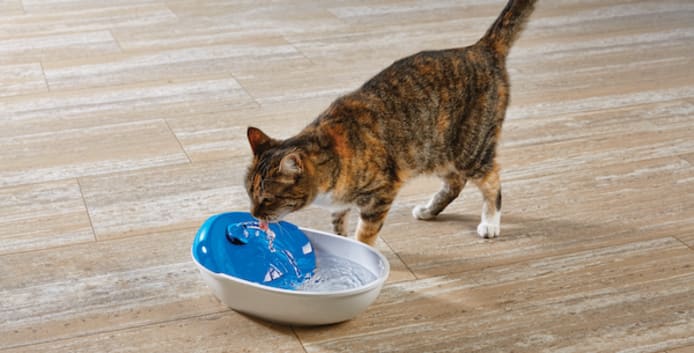
Read up on tips to keep your pet hydrated with our handy cat water guides.
As a proud cat parent, you probably do your share of research into which foods offer the right balance of nutrition and which games will keep them mentally stimulated and physically fit. You might even invest in numerous bags of kitty litter to determine which they prefer. However, many owners overlook the importance of monitoring your cat’s water intake.
As descendants of desert animals, cats get most of their hydration from food in the wild. This adaptation resulted in a low thirst drive that domestic cats still carry. But water is essential, and your cat’s inborn tendency to avoid water can lead to dehydration.
Dehydration can be severe and lead to issues including elevated heart rate, lethargy, urinary issues and more. You should follow a few key steps to ensure this doesn’t happen to your feline friend.
How Much Water Should a Cat Drink a Day?
Most adult cats need roughly 3.5–4.5 ounces (about ½ cup) of water per 5 pounds of body weight each day — so a 10-pound cat typically needs around 7–9 ounces daily https://www.merckvetmanual.com/management-and-nutrition/nutrition-small-animals/nutritional-requirements-of-small-animals. That said, your cat's actual intake depends on several factors, including her size, activity level, age and — most importantly — what she eats.
Diet makes a big difference
The single biggest variable in how much your cat drinks is whether she eats dry or wet food:
- Dry food contains roughly 10% moisture, so cats who eat primarily dry kibble must make up the difference by drinking more water throughout the day.
- Wet food is typically 70–80% moisture, meaning your cat gets a significant portion of her daily fluid needs directly from her meals https://www.merckvetmanual.com/management-and-nutrition/nutrition-small-animals/nutritional-requirements-of-small-animals.
This is worth paying attention to, because cats evolved as desert animals with a naturally low thirst drive — they were designed to get most of their hydration from prey. A cat eating only dry food may chronically fall short of her fluid needs without you ever noticing. Adding wet cat food to her routine, even just a portion of her meals, can help support healthy hydration.
Signs your cat may not be drinking enough
Mild dehydration can be easy to miss. Watch for:
- Lethargy or reduced activity
- Dry or tacky gums
- Sunken eyes
- Loss of skin elasticity (when gently pinched, the skin is slow to spring back)
- Decreased urination or very dark, concentrated urine
If you notice any of these signs, contact your veterinarian promptly. Chronic low water intake has been linked to urinary tract issues and kidney disease in cats https://www.vet.cornell.edu/departments-centers-and-institutes/cornell-feline-health-center/health-information.
What affects how much a cat drinks?
| Factor | How it influences water needs |
|---|---|
| Body size | Larger cats need more total water daily |
| Diet (dry vs. wet food) | Wet food provides significant moisture; dry food does not |
| Age | Kittens and senior cats may have different hydration needs |
| Activity level | More active cats lose more moisture and need more water |
| Health status | Conditions like kidney disease or diabetes can increase thirst |
| Hot weather or warm environments | Heat increases fluid loss |
Tips to help your cat drink more
Some cats are simply picky about water. If yours tends to ignore her bowl, try these strategies:
- Offer fresh water daily. Cats are sensitive to taste and smell — stale water gets ignored.
- Try a pet water fountain. Many cats prefer moving water, and a circulating fountain can encourage more frequent drinking.
- Place multiple water sources around your home. Cats often drink more when water is conveniently located away from their food bowl.
- Switch to or add wet food. Incorporating wet cat food is one of the most effective ways to boost daily moisture intake.
- Use a wide, shallow bowl. Cats can be sensitive to their whiskers touching bowl edges — a wider dish may be more comfortable.
- Keep water away from the litter box. Cats instinctively avoid drinking near where they eliminate. Browse cat litter and waste disposal options to help you set up separate, well-spaced areas.
When to call your veterinarian
Both extremes — drinking too little and drinking noticeably more than usual — can signal an underlying health issue. A sudden increase in thirst (called polydipsia) is a known indicator of conditions such as diabetes, hyperthyroidism or kidney disease in cats https://www.vet.cornell.edu/departments-centers-and-institutes/cornell-feline-health-center/health-information. If your cat's drinking habits change significantly in either direction, schedule a visit with your veterinarian rather than waiting to see if it resolves on its own.
Understanding how much water your cat should drink on average can help prevent dehydration. While your cat’s exact water needs will depend on several factors, including their size, activity level and health, a good rule is to aim for 3.5–4.5 ounces of water per day for every 5 pounds of weight.
The chart below is a good gauge of how much water your cat should be getting daily based on their weight:
Tips for Promoting Hydration in Your Cat
Encouraging your cat to drink more water doesn't have to be a battle. Small, consistent changes to her environment and routine can make a meaningful difference in her daily intake — and in her long-term urinary and kidney health. https://www.vet.cornell.edu/departments-centers-and-institutes/cornell-feline-health-center/health-information
Switch Up Her Water Setup
Cats are notoriously particular about where and how they drink. Try these adjustments to make water more appealing:
- Use a pet water fountain. Many cats prefer moving water over still water in a bowl. A recirculating fountain mimics a running stream and can encourage more frequent sipping. https://www.vet.cornell.edu/departments-centers-and-institutes/cornell-feline-health-center/health-information
- Place multiple water stations around your home. Offer bowls in two or three locations — especially away from her litter box and food dish, since cats instinctively avoid drinking near where they eliminate or eat. https://www.merckvetmanual.com/management-and-nutrition/nutrition-small-animals/nutritional-requirements-of-small-animals
- Try different bowl materials. Some cats dislike the smell of plastic or the sensation of their whiskers touching the sides of a deep bowl. Shallow, wide ceramic or stainless-steel bowls are often better received.
- Keep bowls scrupulously clean. Rinse and refill water bowls daily, and wash them with soap and water every few days. Cats can detect biofilm and odors that humans miss, and a dirty bowl is a skipped bowl.
- Offer fresh, cool water. Some cats prefer slightly chilled water. Dropping a few ice cubes into the bowl on warm days can spark curiosity and encourage drinking.
Add Moisture Through Her Diet
What your cat eats is just as important as what she drinks. Cats in the wild obtain a significant portion of their moisture from prey, which is roughly 70–75% water. Dry kibble, by contrast, contains only about 10% moisture. https://www.merckvetmanual.com/management-and-nutrition/nutrition-small-animals/nutritional-requirements-of-small-animals
- Incorporate wet cat food into her meals. Canned or pouch-style wet food delivers substantially more moisture per serving than dry food and can be an easy, palatable way to boost her daily fluid intake.
- Consider a mixed feeding approach. Combining dry and wet cat food gives your cat the dental benefits some pet parents associate with kibble while still increasing her overall moisture consumption.
- Add a splash of low-sodium broth. A small amount of plain, unseasoned chicken or bone broth (no onion, garlic, or added salt) stirred into her food or offered separately can make hydration more enticing. Always confirm ingredients are cat-safe, and ask your veterinarian before making this a regular habit. https://www.aspca.org/pet-care/animal-poison-control
Make the Litter Box Experience a Non-Issue
A cat who avoids her litter box due to discomfort or a dirty environment may also be showing signs of a urinary problem — one that's sometimes linked to inadequate hydration. Keeping the litter box clean and accessible encourages you to notice changes in urination frequency or volume, which are key signals of how well-hydrated your cat is.
Quick-Reference Hydration Tips
| Strategy | Why It Helps |
|---|---|
| Pet water fountain | Moving water appeals to cats' instincts and encourages more frequent drinking |
| Multiple water stations | Increases access and reduces competition in multi-cat households |
| Wide, shallow bowl | Prevents whisker fatigue and removes a common reason cats avoid their bowl |
| Wet food at one or more meals | Adds significant moisture directly through diet |
| Low-sodium broth (vet-approved) | Makes water or food more palatable for reluctant drinkers |
| Daily bowl cleaning | Eliminates biofilm and odors that deter cats from drinking |
| Chilled or fresh water | Some cats strongly prefer cool, freshly poured water |
When to Call Your Veterinarian
If you've tried several of these strategies and your cat still seems to be drinking very little — or conversely, if she's suddenly drinking far more than usual — contact your veterinarian. Both extremes can signal underlying health concerns, including kidney disease, diabetes, or urinary tract issues, that deserve professional evaluation. https://www.vet.cornell.edu/departments-centers-and-institutes/cornell-feline-health-center/health-information Never attempt to diagnose or treat a hydration problem at home without veterinary guidance.
To stay healthy, your cat should drink multiple times per day—and if you are concerned they are not, it’s time for a trip to your vet. The longer you wait, the higher risk there is of long-term damage to their internal organs.
Once you know how much your cat should be drinking and your vet gives them a clean bill of health, try creative ways to help promote hydration.
- Change their water bowl location. Sometimes something as simple as moving a water bowl can make a big difference, especially if it’s in a high-traffic, noisy area or next to their food bowl (where it’s easier to get contaminated). Consider moving it to a more secluded location. You may also want to try a new type of bowl as some cats prefer different materials and shapes.
- Increase the number of water bowls around your home, especially if your household has multiple pets.
- Try a water fountain. Most cats love moving water. Rather than leaving your sink running all day to encourage drinking, consider a water fountain.
- Offer hydration through another source. You can support your cat’s daily hydration by adding wet food to their diet. Some formulas have a water content as high as 75%. However, if your cat is partial to their dry food, you don’t have to make a total switch to wet. Instead, consider adding a wet food topper to increase their water intake while still providing the dry food they enjoy.
- Put a little broth or fish oil in your cat’s water. The added flavor can encourage them to drink more. Consult with your vet to make sure the additive is compatible with your cat’s dietary needs, and change out the water frequently to prevent spoiling. Ensure you also have a bowl of plain water without any additives so your cat can choose.
Watch for signs of dehydration in your cat
Beyond just finding ways to help your cat stay hydrated, look out for signs of dehydration. Our cats don’t always show us when they aren’t feeling well, so it can be hard for pet parents to know if a cat is dehydrated. Pay attention to any potential signs, some of which can be subtle:
- Sunken eyes
- Lethargy
- Loss of appetite
- Dry mouth
- Depression or a general change in mood
- Elevated heart rate
- Skin that stays peaked when lifted
- Panting
- Not urinating
If you notice a drastic change in your cat’s drinking habits and simple environmental adjustments don’t make a difference, contact your veterinarian right away to rule out underlying issues.
What if my cat drinks too much water?
Similar to drinking too little, drinking too much water can also be a sign of an underlying health issue. A cat who drinks too much is probably also urinating a lot, a condition called polyuria. You might notice urination outside the litter box or that you’ve been scooping a lot more litter than usual. Increased thirst can be a symptom of several underlying conditions, including anxiety, stress, diabetes mellitus, hyperthyroidism and chronic kidney disease.
If you notice your cat is taking in more than the recommended amount of water, it's a good idea to schedule a visit with your vet. They can help determine what your cat's excessive thirst might be linked to.
Raising a cat can be a true pleasure. From their playful antics to special time spent watching a movie, cats are an important part of our families. To help show them your love, monitor their water intake to support a healthy body.
How Much Water Should a Cat Drink a Day? A Weight-Based Guide
The clearest answer to this question comes down to your cat's body weight. A practical rule of thumb: cats need roughly 3.5–4.5 ounces (about 100–130 ml) of water per day for every 5 pounds of body weight — from all sources combined, including moisture in food.
Use the table below as your at-a-glance reference. If your cat consistently falls well below or above their target range, that's a conversation to have with your veterinarian.
| Cat's Body Weight | Minimum Daily Water (oz) | Maximum Daily Water (oz) | Approximate Daily Water (ml) |
|---|---|---|---|
| 5 lbs (2.3 kg) | 3.5 oz | 4.5 oz | ~100–130 ml |
| 8 lbs (3.6 kg) | 5.5 oz | 7.0 oz | ~160–210 ml |
| 10 lbs (4.5 kg) | 7.0 oz | 9.0 oz | ~205–265 ml |
| 12 lbs (5.4 kg) | 8.5 oz | 10.5 oz | ~250–310 ml |
| 15 lbs (6.8 kg) | 10.5 oz | 13.5 oz | ~310–400 ml |
| 18 lbs (8.2 kg) | 12.5 oz | 16.0 oz | ~370–475 ml |
Important: These figures represent total water intake — including moisture already present in wet food, which can be as high as 75% water by weight. A cat eating primarily wet food will drink noticeably less from her bowl than a cat on dry kibble alone, and that's completely normal. https://www.merckvetmanual.com/management-and-nutrition/nutrition-small-animals/nutritional-requirements-of-small-animals
A note on individual variation: Age, activity level, health status, climate and diet type all influence how much water your cat actually needs on any given day. Kittens, senior cats and cats managing a health condition may have different requirements — always defer to your veterinarian for personalized guidance. https://www.vet.cornell.edu/departments-centers-and-institutes/cornell-feline-health-center/health-information
Frequently Asked Questions
How much water should a cat drink in a day? Most cats need approximately 3.5–4.5 ounces of water per 5 pounds of body weight daily, sourced from both drinking water and moisture in food. A 10-pound cat, for example, typically needs 7–9 ounces (about 205–265 ml) of total water per day. https://www.merckvetmanual.com/management-and-nutrition/nutrition-small-animals/nutritional-requirements-of-small-animals
Does wet food count toward my cat's daily water intake? Yes — and it counts significantly. Wet food formulas can contain up to 75% moisture, meaning a cat eating wet food regularly may drink far less from her bowl while still meeting her hydration needs. If your cat eats primarily dry food, fresh drinking water becomes even more critical. https://www.merckvetmanual.com/management-and-nutrition/nutrition-small-animals/nutritional-requirements-of-small-animals
What are the signs that my cat is dehydrated? Watch for sunken eyes, lethargy, dry mouth, loss of appetite, a general change in mood, elevated heart rate, panting, reduced urination and skin that stays "tented" (peaked) when gently lifted. Because cats often mask discomfort, even subtle changes in behavior are worth noting. Contact your veterinarian promptly if you observe any of these signs. https://www.vet.cornell.edu/departments-centers-and-institutes/cornell-feline-health-center/health-information
What does it mean if my cat is drinking more water than usual? Increased thirst — especially when paired with more frequent urination — can signal an underlying health condition such as diabetes mellitus, hyperthyroidism or chronic kidney disease. If your cat is consistently drinking beyond her normal range, schedule a veterinary visit to rule out these concerns. https://www.vet.cornell.edu/departments-centers-and-institutes/cornell-feline-health-center/health-information
Why won't my cat drink from her water bowl? Cats are descended from desert-dwelling ancestors and have a naturally low thirst drive — they're wired to obtain most moisture from food rather than standing water. Many cats also instinctively prefer moving water, dislike bowls placed near their food (where water is more easily contaminated) or are sensitive to bowl material. Try relocating the bowl, switching to a ceramic or stainless-steel option, or introducing a cat water fountain.
Is it safe to add broth or fish oil to my cat's water to encourage drinking? Small amounts of low-sodium, onion-free and garlic-free broth or a vet-approved fish oil can make water more appealing to some cats. Always consult your veterinarian before adding anything to your cat's water to confirm it's appropriate for her individual dietary needs, and always provide a separate bowl of plain water alongside any flavored option. Note that onion and garlic in any form are toxic to cats. https://www.aspca.org/pet-care/animal-poison-control
This article was created with assistance from AI tools and reviewed for accuracy by Petco's content team.


