


Two Easy Ways to Start Earning Rewards!
Become a member today! Members-only pricing and offers, personalized care notifications, Vital Care points back on every purchase and more!
 Become a credit card member today!
Earn 2X Pals Rewards points at Petco
when you use Petco Pay!APPLY NOWLearn More About Petco Pay Benefits
Boa Constrictor Care: The Ultimate Food, Habitat & Health Guide
Updated on January 23rd, 2024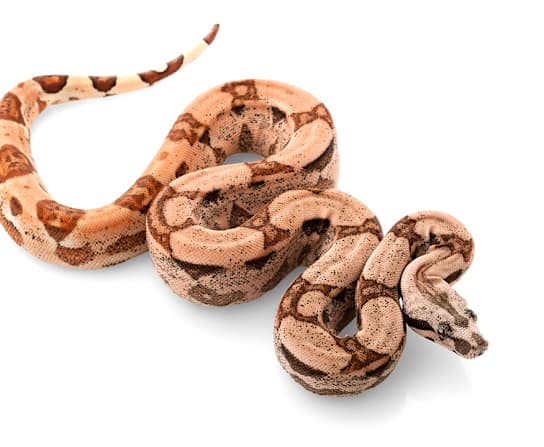
Boa constrictor imperator
Boas are members of the snake family Boidae, which is comprised of over 40 species of nonvenomous constrictors (they constrict and suffocate their prey before eating them). Boas are found in South America, Central America and the West Indies in a variety of habitats. The common boa constrictor subspecies includes both Columbian and Central American boas. Also called the common boa or dwarf boa, Central American boas are native to rain forests in Costa Rica, Belize, Panama, Nicaragua and other areas and tend to be much smaller than other boas. In nature, these snakes tend to be solitary and are generally calm unless they feel threatened. They are most active at dawn and dusk (crepuscular) and may be found slithering on the ground as well as climbing up trees. As pets, they require a large habitat and need consistent interaction with humans to remain tame.
Learn how to care for Boas, recommended diet & habitat setup. Find the right food, supplies & equipment at your neighborhood Petco.
Typical appearance and behavior
- These snakes are nocturnal (more active at night)
- Males are smaller than females, averaging only 4 feet long, versus females, who average 5 feet
- The thick-bodied snakes have arrow-shaped heads with distinct stripes running from their snouts to the back of their heads, from their snouts to their eyes, and from their eyes to their jaws
- They generally have cream-colored to gray bodies patterned with varying shapes (ovals, circles or diamonds) that are typically red, green or yellow and outlined in black. This pattern is meant to camouflage them in their native environments and varies depending on where they are found
- They have small heat-sensing pits on the sides of their faces that help them detect prey, as well as small, hook-shaped teeth that hold onto prey as they constrict around them
- They will hiss loudly when threatened and to ward off predators
- As boas get ready to shed, their eyes will turn a milky bluish gray over the course of a few days, and their body color will start to dull and develop a whitish sheen. They may become irritable and shouldn’t be handled during this period if possible
Characteristics
| Care Difficulty | Intermediate |
|---|---|
| Average Life Span | Up to 30 years with proper care |
| Average Adult Size | Up to 6 feet long, depending on species |
| Diet | Carnivore |
| Minimum Habitat Size | Minimum 75-gallon tank for one adult |
Habitat
Habitat size
Provide an appropriately sized and shaped habitat to accommodate normal behavior and exercise. Minimum habitat size is 20L for a single juvenile and 75 gallons for an adult boa. Tanks should have a securely fitting screened lid to help prevent escape and allow adequate ventilation. Habitats should be long enough to allow a fully grown adult to stretch out completely and should be upgraded as the snake reaches full length.
These snakes will reach adult size in three to five years, depending on their species and under ideal conditions.
Building your habitat
- Substrate - Commercially available paper-based bedding is ideal, as it is digestible if accidentally consumed. Aspen shavings are also acceptable. Pine and cedar chips should be avoided, as they have oils on them that can irritate your snake’s skin and respiratory tract. As boas like to bury into substrate, reptile carpet is too abrasive for them and does not allow them to dig and bury. Substrate should be deep enough for a snake to bury and hide in
- Décor - Boas like to have hides where they can feel secure. Commercially available resin hides are available, or they can be constructed from commercially sold rocks or logs that are arranged securely so as not to fall. Provide a hiding area just large enough for the snake to fit inside, as well as a branch or other décor to climb on. Ideally there should be a hide at both the warm and cool ends of the tank. Décor is important for snakes to rub on when shedding
- Temperature - Snakes are ectothermic reptiles, which means they rely on their environmental temperature to control their body temperature. To help them regulate their body temperature, provide a temperature gradient (90 to 95°F for the warm end and 75 to 80°F for the cool end/nighttime) in the tank. Monitor temperature with at least two thermometers—one in the cool zone and the other in the hot (basking) zone. Heat may be provided by a heat bulb, ceramic heat bulb or an under-tank heating pad. Heat sources should be attached to thermostats to regulate temperatures. Thermostats are especially important with heating pads, which can get hot and cause burns through the tank floor if not regulated properly. Hot rocks should not be used as a heat source, as they can burn reptiles. Reptiles not kept at the appropriate temperature ranges are more likely to become immunosuppressed and get sick
- Lighting - While boas do not require ultraviolet (UV)B light to survive, some studies suggest that UVB light may increase snakes’ activity levels and aid in their overall health. Using a low-level UVB light helps provide the clear day/night cycle (with 10 to 12 hours of daylight) that boas need to perform their normal daily activities. UV bulbs should be replaced every six months, as their potency wanes
- Humidity - The habitat should contain an untippable water dish that is large enough for the snake to soak in. This will help sustain humidity levels, keep the snake hydrated and aid in shedding. Maintain the habitat between 40 and 60% humidity; monitor humidity level with a humidity gauge. Humidity should be higher during shedding. Humidity may be increased during shedding by creating a humid hide containing moist sphagnum moss. Moss should be changed frequently to prevent mold growth
Cleaning your habitat
Spot-clean the habitat daily to remove droppings
Thoroughly clean and disinfect the habitat at least once a week:
- Place snake in a secure habitat
- Remove all substrate and habitat décor
- Scrub the tank and furnishings with a reptile habitat cleaner or 3% bleach solution
- Rinse tank and furnishings thoroughly with water, removing all traces of habitat cleaner or bleach smell
- Dry the tank and furnishings completely
- Add clean substrate and put furnishings back into the tank
- Put snake back into their clean, dry habitat
Feeding
A well-balanced boa diet consists of:
- Appropriately sized frozen rodents that have been properly thawed and warmed
- Hoppers or small mice may be fed to juveniles; rats are typically fed to adults
- Live rodents should not be fed, as live rodents may bite snakes who are not hungry and can cause life-threatening injuries. If, under any circumstances, you must offer live rodents to a snake, never leave them unattended in the tank with the snake because of the potential risk for injury to your pet
Things to remember when feeding your boa:
- Do not use a microwave to defrost frozen rodents, as microwaved rodents can have hot spots that can burn snakes’ mouths when they eat them
- Do not prepare frozen rodents for feeding in the same area that you prepare human food. If it is unavoidable, be sure to thoroughly disinfect the area. See the Feeding Frozen/Thawed Foods Care Sheet for more information
- Feed juveniles once a week, adults every one to two weeks
- Feed in an empty tank, separate from the habitat, so that the snake doesn’t associate your hand or the habitat lid opening with feeding and doesn’t accidentally ingest bedding off the habitat floor when eating
- Fresh, clean water should be available at all times in an untippable bowl that is large enough for the snake to soak in. The bowl should be placed in the cool end of the habitat so that the water doesn’t evaporate too quickly
- As snakes will not typically eat while shedding, avoid feeding when snakes are in shed
Care
- Snakes will regularly shed their skin and the covering over their eyes (called the “eye cap” or spectacle); ensure the humidity of the habitat is at the appropriate level to allow your snake to shed properly. Skin should be shed in a single long piece
- Never try to remove retained eye caps by yourself, as you can easily cause damage. Seek veterinary care if eye caps are retained
Where to buy a boa
Central American boas are available for purchase at your local Petco Pet Care Center location. Please call ahead to check availability.
Supplies
- Appropriately sized habitat
- Substrate
- Sphagnum moss
- Water dish
- Hideaway place
- Climbing décor
- Plants
- Heat light/emitter
- heat fixture
- Under-tank heater
- Thermometers
- Humidity gauge
- Low-level UV bulb
- UV bulb fixture
- Separate feeding tank
Habitat mates
- House Central American boas singly
- Do not house different snake species together
Health
Signs of a healthy boa
- Active and alert
- Clear eyes (except when shedding)
- No discharge or bubbles from eyes, nose or mouth
- Eats and passes stool regularly
- Supple skin without lesions, swellings, scabs, parasites (mites, ticks) or discoloration
- Regularly sheds skin in one complete piece
Red flags (If you notice any of these signs, contact your veterinarian.)
- Unusually frequent or infrequent shedding
- Vomiting
- Lethargy or reluctance to eat
- Abnormal feces or lack of feces
- Lesions, swellings, scabs, discoloration or parasites (mites, ticks) on skin
- Labored breathing/breathing with open mouth
- Difficulty shedding/shedding in numerous pieces/retained skin after shed
- White, cheesy discharge or redness or scabs in mouth
- Lying on back, unable to turn right side up, or prolonged staring (“star-gazing”)
Common health issues
| Health Issue | Symptoms or Causes | Suggested Action |
|---|---|---|
| Health IssueDermatitis | Symptoms or CausesBlisters, rapid shedding caused by skin infections from viruses, bacteria, fungus or parasites, or an unclean habitat or one that has inappropriate temperature or humidity. | Suggested ActionConsult your veterinarian and ensure proper temperature and humidity. |
| Health IssueRespiratory tract disease | Symptoms or CausesLabored breathing/open-mouth breathing, stretching neck out, mucus or bubbles in mouth, eyes or nostrils. Can be caused by infection with bacteria, viruses, fungus or parasites, or a habitat that has inappropriate temperature or humidity. | Suggested ActionConsult your veterinarian and ensure proper temperature and humidity. |
| Health IssueStomatitis | Symptoms or CausesRed, swollen or scabbed gums and/or white, cheesy discharge in the mouth, loss of teeth, decreased appetite, weight loss. May be caused by bacterial, viral or fungal infections, or inappropriate temperature or humidity. If untreated, may be fatal. | Suggested ActionImmediately consult your veterinarian and ensure proper temperature and humidity. |
| Health IssueTicks and mites | Symptoms or CausesParasites on skin can cause itchiness, inflammation and hyperactivity and can transmit disease. | Suggested ActionConsult your veterinarian. Empty habitat and thoroughly disinfect it. |
FAQs
- Is a boa constrictor a python? Boas are not pythons but belong to a different family of snakes, the Boidae. Pythons are native to Australia, Africa and Asia, while boas are mainly from South and North America.
- What does a boa snake eat? Boas should be offered appropriately sized frozen rodents that have been properly thawed and warmed. Hoppers or small mice may be fed to juveniles; rats are typically fed to adults. Live rodents should not be fed, as they may bite snakes who are not hungry and can cause life-threatening injuries.
- How long do boas live? Boas can live up to 30 years with proper care.
- Where can I buy boa snake? Boas can be purchased at Petco, but always call ahead for availability.
- Is a boa snake poisonous? Boas are not poisonous or venomous.
Notes and resources
Ask a Pet Care Center associate about Petco's selection of products available for the care and happiness of your new pet. All products carry a 100% money-back guarantee.
Because all reptiles are potential carriers of infectious diseases, such as salmonella bacteria, always wash your hands before and after handling your reptile or habitat contents to help prevent the potential spread of disease.
Pregnant women, children under the age of 5, senior citizens and people with weakened immune systems should contact their physicians before purchasing or caring for reptiles and should consider having a pet other than a reptile.
Go to the Centers for Disease Control at cdc.gov/healthypets for more information about reptiles and disease.
The information on this Care Sheet is not a substitute for veterinary care. If your pet is ill or if you need additional information, please contact your veterinarian as appropriate.
Related Articles


