


Two Easy Ways to Start Earning Rewards!
Become a member today! Members-only pricing and offers, personalized care notifications, Vital Care points back on every purchase and more!
 Become a credit card member today!
Earn 2X Pals Rewards points at Petco
when you use Petco Pay!APPLY NOWLearn More About Petco Pay Benefits
Cat Arthritis (OA): Symptoms, Causes, and Treatment Options
Published on September 1st, 2026
Updated on September 1st, 2026


Written by Petco Editorial Team
Reviewed By Dr. Shelly Ferris
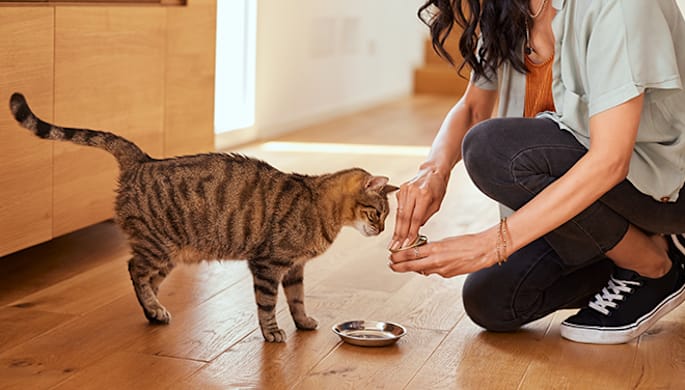
Learn about the treatment options for cat arthritis.
If your cat has been jumping less than usual, struggling to step into the litter box, or seems generally stiff and uncomfortable, joint pain could be a contributing factor. The good news is that feline osteoarthritis (OA) is well understood and very manageable with the right diagnosis and care plan. Our Petco Chief Veterinarians, Dr. Angela Silva DVM and Dr. Shelly Ferris DVM, break down what you need to know.
What Is Feline Osteoarthritis (OA)?
Osteoarthritis (OA) is a chronic, progressive condition affecting joint cartilage, the protective cushion that prevents bones from rubbing directly against one another. Over time, as joint cartilage deteriorates, bone-on-bone contact leads to a gradual increase in painful inflammation, swelling, stiffness, and/or ongoing discomfort.
While OA can occur in cats of any age due to prior injuries or joint abnormalities, it is especially common in mature and senior cats. Research indicates that over 90% of cats aged 10 and older show radiographic signs of joint degeneration1. Because pain develops gradually, many pet parents mistake early symptoms for normal signs of aging.
What Are Signs Your Cat May Have Arthritis?
Cats are naturally inclined to hide pain, making arthritis symptoms far more subtle than a noticeable limp. Common signs include:
- Hesitancy or difficulty jumping: Taking extra time to measure distances, using intermediate furniture as steps, or avoiding perches they used to love.
- Changes in overall mobility: Stiff movements after resting, difficulty going up or down stairs, or walking with a rigid posture.
- Litter box challenges: Accidentally missing the box or avoiding it altogether due to high entry walls.
- Altered grooming routines: An unkempt coat from an inability to flex comfortably, or excessive grooming around specific joints.
- Behavioral shifts: Irritability when petted or handled near the lower back, hiding, or reduced social interaction.
How Is Feline Arthritis Diagnosed?
Because symptoms can mirror other conditions, a professional veterinary evaluation is the best way to get clarity. Your Vetco Total Care veterinarian may recommend:
- Physical and orthopedic examination: Gently flexing joints to check for swelling, range of motion, and pain response.
- Mobility observation: Reviewing home video clips of your cat jumping or walking in their natural environment.
- Digital radiography (X-rays): Confirming joint space narrowing, bone spur formation, or structural changes.
What Can You Give Your Cat for Arthritis (OA)?
Managing feline OA often involves a combination of targeted biological therapies, prescription medications, joint supplements, and dietary adjustments as recommended by your veterinarian after a thorough evaluation is done.
Treatment
Best for
Notes
Solensia® (frunevetmab injection)
Feline osteoarthritis (OA) joint pain management
Once-monthly injection given by your vet; targets Nerve Growth Factor (NGF) to block pain signals naturally (veterinarian prescription required)
NSAIDs (e.g. robenacoxib)
Acute joint inflammation and severe pain flare-ups
Daily oral liquid or tablet; used short-term under strict veterinary oversight (veterinarian prescription required)
Joint Supplements (Glucosamine, Chondroitin, Omega-3s)
General cartilage health and joint lubrication
Daily chewable treat or oil additive; supports joint fluid viscosity and helps soothe tissue inflammation
Prescription Joint Diets
Long-term mobility support & weight management
Formulated with optimal levels of EPA/DHA fatty acids and antioxidants; guided by your vet
What Are Helpful Things You Can Do at Home?
In addition to medical treatment, simple environmental modifications can dramatically improve your cat's comfort:
- Provide ramps or pet stairs: Place steps near high perches, sofas, or favorite beds to eliminate the need for high-impact jumps.
- Switch to low-entry litter boxes: Ensure litter boxes have lowered sides so your cat can enter and exit without straining.
- Set up orthopedic bedding: Place supportive, cushioned cat beds in warm, draft-free areas on the main floor.
- Lay non-slip rug runners: Add mats or runners over hardwood or tile floors to prevent slipping and joint strain.
- Maintain a healthy body weight: Gentle weight management reduces pressure on aging joints.
When to Check In With Your Veterinarian?
If your cat's stiffness seems to be getting in the way of their normal routine—enjoying sunny perches, playing, sleeping comfortably, or just being themselves—it's a great time to schedule a visit. Getting the right diagnosis early makes management much simpler, and your Petco veterinarian can build a care plan tailored to your cat's exact needs.
Your Petco veterinarian can prescribe Solensia® and other therapeutics for joint wellness plans during your appointment. Fill prescriptions in-store or online through Petco.com with Autoship, so keeping up with monthly care is one less thing to worry about. Prescriptions from Vetco Total Care hospital visits automatically transfer to your Petco profile for effortless online fulfillment. If you're not already a Petco veterinary customer, it's still easy to order online—simply select Contact My Vet at checkout or mail in your prescription for validation.
The information provided in this article is for educational and informational purposes only and is not intended as medical or veterinary advice. It should not be used to diagnose, treat, cure, or prevent any health condition in your pet. Always seek the direct advice of a qualified veterinarian or veterinary specialist with any questions regarding your pet's specific medical condition or health needs.
1 Lascelles BD, Dong YH, Marcellin-Little DJ, et al. Relationship of orthopedic examination, goniometric measurements, and radiographic signs of degenerative joint disease in cats. BM C Vet Res. 2012;8:10.