Get It Today
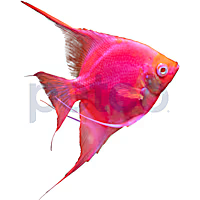
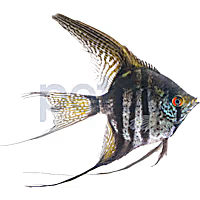
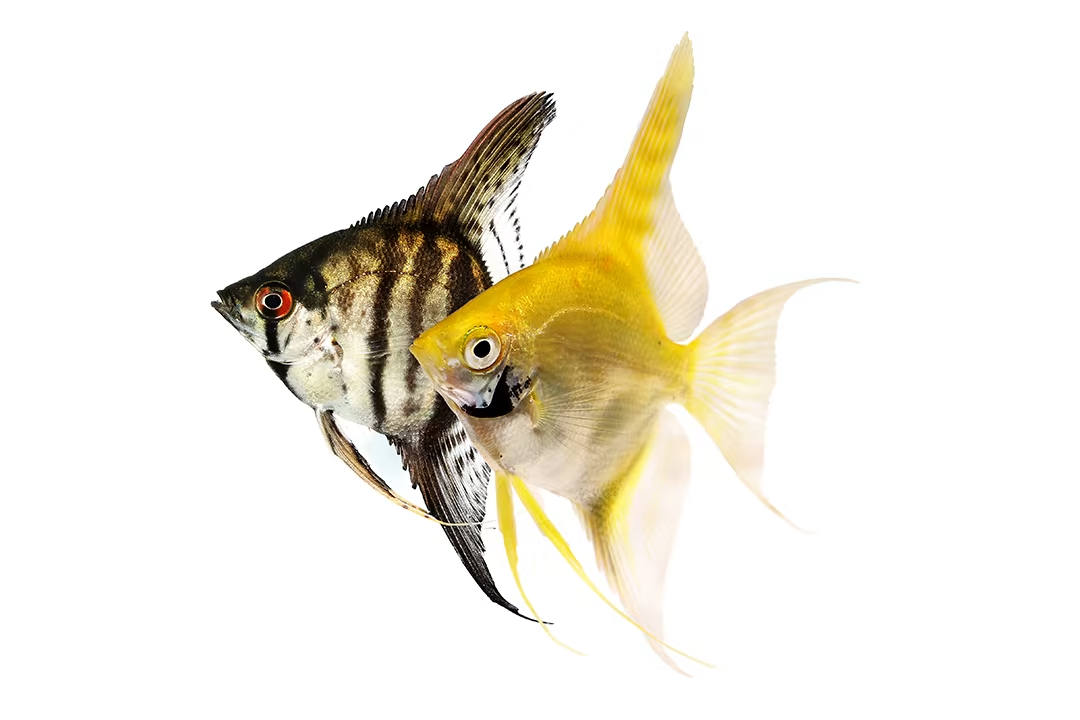
Learn how to care for angelfish, recommended diet and aquarium setup. Find the right food, supplies and equipment at your neighborhood Petco.
Updated on April 9th, 2026
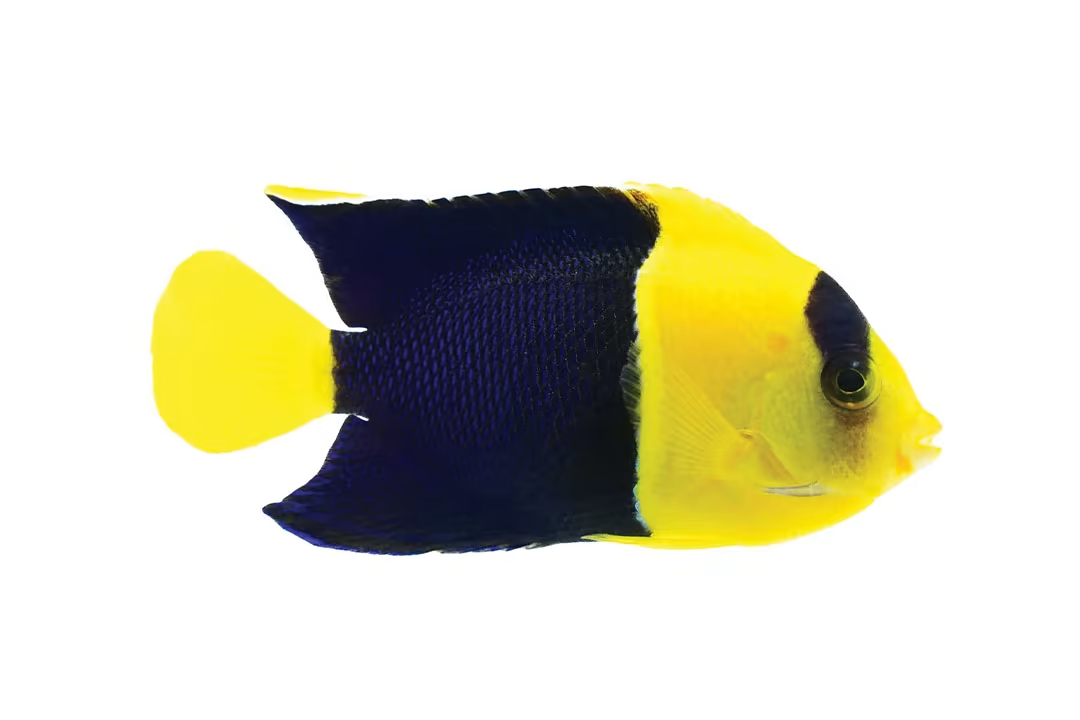
Learn how to take care of Large Marine Angelfish, recommended diet and tank setup. Find the right food, supplies and equipment at your neighborhood Petco.
Updated on April 9th, 2026
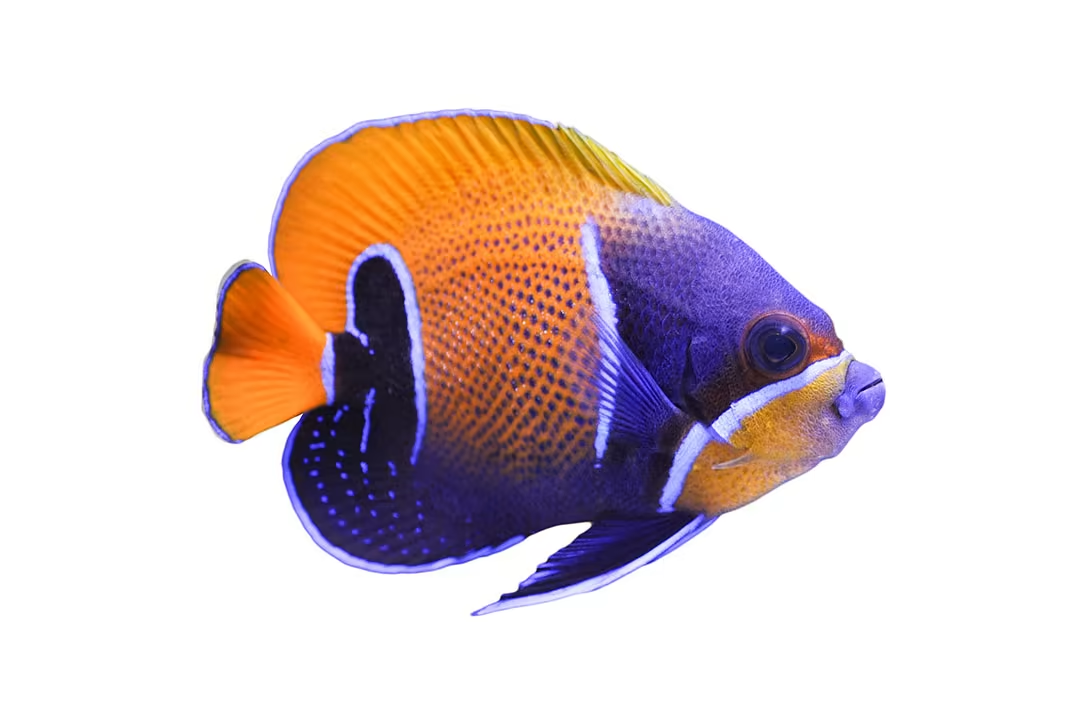
Learn how to take care of Dwarf Marine Angelfish, recommended diet and tank setup. Find the right food, supplies and equipment at your neighborhood Petco.
Updated on April 9th, 2026
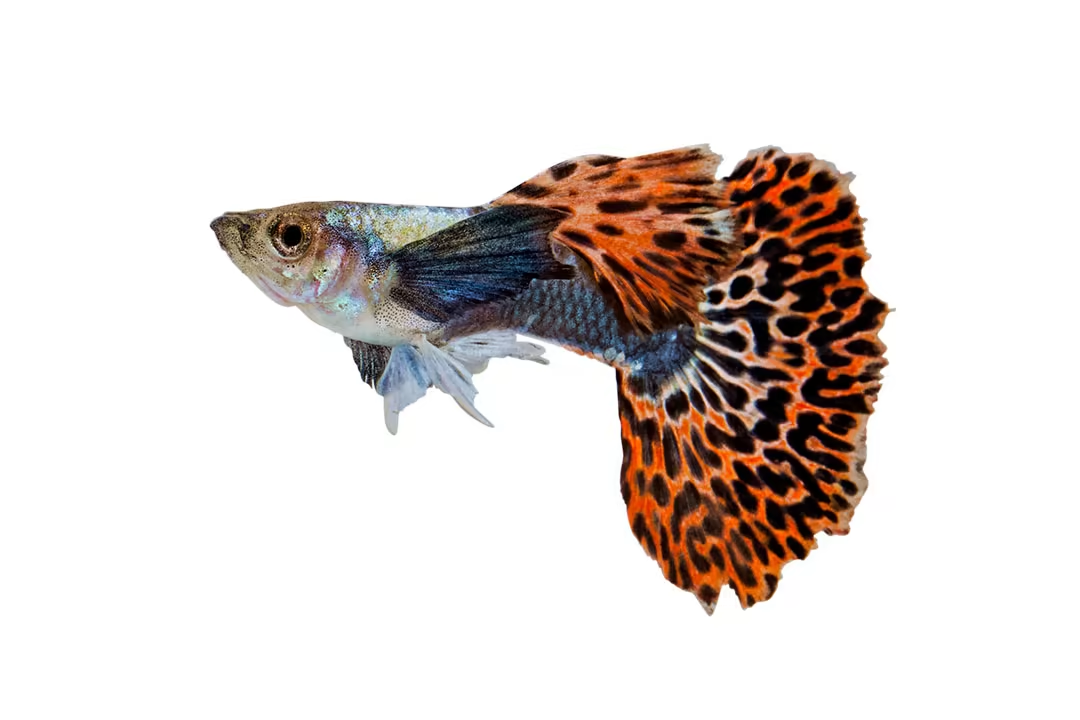
Learn how to care for semi-aggressive fish, recommended diet & aquarium setup. Find the right food, supplies & equipment at your neighborhood Petco.
Updated on April 9th, 2026
Learn how to care for freshwater community fish, recommended diet & aquarium setup. Find the right food, supplies & equipment at your neighborhood Petco.
Updated on April 9th, 2026
Bottom feeders such as plecos or corydoras catfish will do well in a tank of angelfish. Other community fish include silver dollars and the larger Tetra species. Monitor for fin nipping and remove fish if necessary. You have a lovely tank and the angels look very nice in it. Be cautious when adding fish as you may overload your tank. The angels will grow as will any additions and your tank may not be able to support the population. This could lead to poor water quality, aggression and sick fish.
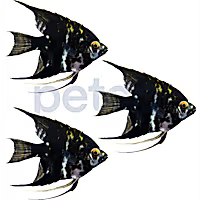
The fish pictured are incompatible in the same tank. Angelfish (black ones) are tropical fish and do best in temps between 73 F and 84 F. Goldfish (white and orange) are cold water fish thriving in temps between 65 F and 72 F. It also appears as if one of your angels has some damage to a tail fin. This is typically due to fin nipping by other fish. You will need to remove either the angels or the goldfish and place them in a different tank. Check the water chemistry for elevated levels of ammonia or nitrites. This can occur in an uncycled tank or a tank that is overstocked. Partial water changes (30-50%) daily can decrease toxin levels. Use only aged or conditioned water that is temperature matched to prevent stress or shock. Confirm your filter is rated for at least twice the water volume of the tank, especially for the goldfish. The links below provide additional information for care of angels and goldfish. http://aquariumtidings.com/angelfish-care/ http://aquariumtidings.com/al
Check the water chemistry and temperature. Use a home test kit or submit a water sample to test fro elevated ammonia or nitrite levels. Most pet stores will do this for free or for a small fee. Partial water changes can be done, if indicated, to stabilize chemistry and improve or maintain water quality. Ideally, you want 0 ppm ammonia and nitrites with nitrates at 20 ppm or less in a non-planted tank or 40 ppm or less in a planted tank. Use only aged or conditioned water that is temperature matched to prevent stress or shock. You'll need to keep the temp at the upper limits for Red Tails in order to keep the Angelfish comfortable. That would be in the 78F to 80 F range. Both have similar pH requirements, 6.8 to 7.5. You can fast the Angel for 2-3 days then feed bits of cooked, shelled green peas. This will usually resolve constipation and bloating. Pristine water quality may resolve the patch on your shark. Recommending a medication without more information or a clear image would be
Check the water temperature. Low temps can affect appetite and digestion in fish. Angels do best between 78 F and 80 F. You can soak food in garlic juice to stimulate his appetite. Next, check the water chemistry. This can be done using a home test kit or by submitting a water sample for testing. Most pet stores will do this for free or for a small fee. Confirm 0 ppm ammonia and nitrites with nitrates at 40ppm or less in a tank with live plants or 20 ppm or less in an unplanted tank. Partial water changes can be done, if indicated, to stabilize chemistry and/or maintain water quality. use only aged or conditioned water that is temperature matched to prevent stress or shock. Although they do best in slightly acidic and soft water, they are quite adaptable. Fast him for 2-3 days then feed bits of cooked and shelled green peas. if he is constipated then this should him him get regular again. A broad spectrum parasite medication, such as PraziPro, should be considered. You can find it in t
If you don’t see any obvious signs of infection in the fish, it could be related to something in the water. Figure out if this is the problem by having the water tested. Also, goldfish are cold water fish and angel fish are tropical fish. It’s generally best to either have a cold water tank or a tropical tank and not mix the two. I hope this helps and please feel free to post any additional questions.