Two Easy Ways to Start Earning Rewards!
Become a member today! Members-only pricing and offers, personalized care notifications, Vital Care points back on every purchase and more!
 Become a credit card member today!
Earn 2X Pals Rewards points at Petco
when you use Petco Pay!APPLY NOWLearn More About Petco Pay Benefits
Tetra Pond Filters

Related Articles & Questions
- Care Sheets
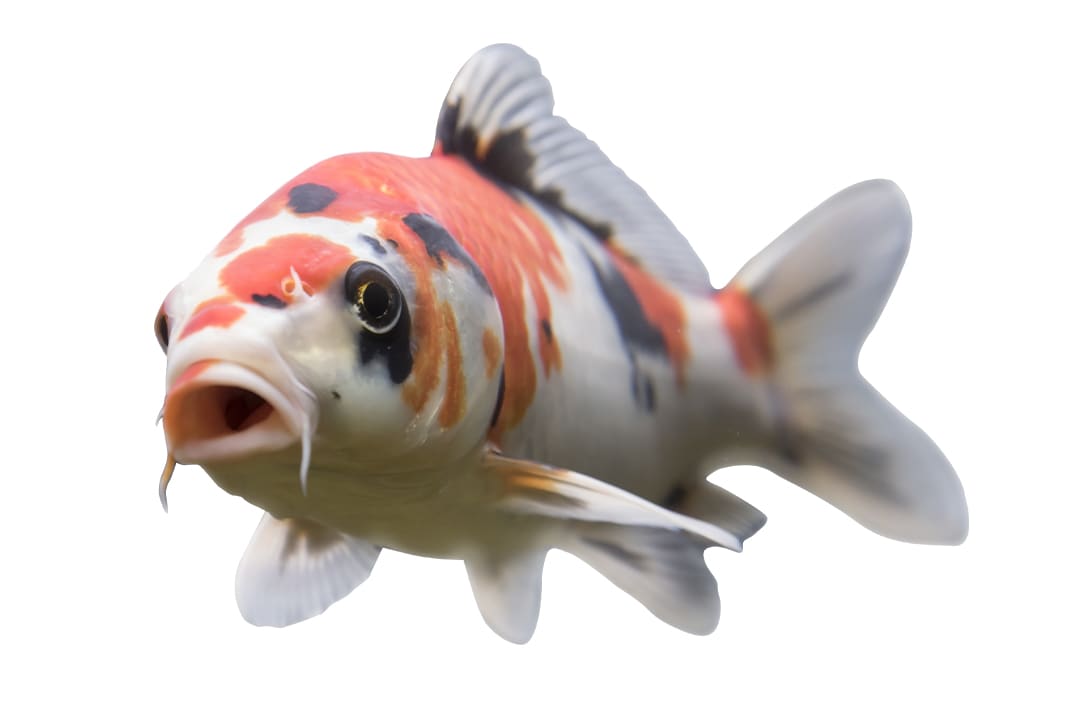
Mastering Koi Care: Optimal Tank, Food, Water Quality & Health Tips
Learn how to care for a Koi, recommended diet and aquarium setup. Find Koi for sale, supplies and equipment at your neighborhood Petco.
Updated on April 9th, 2026
- Care Sheets
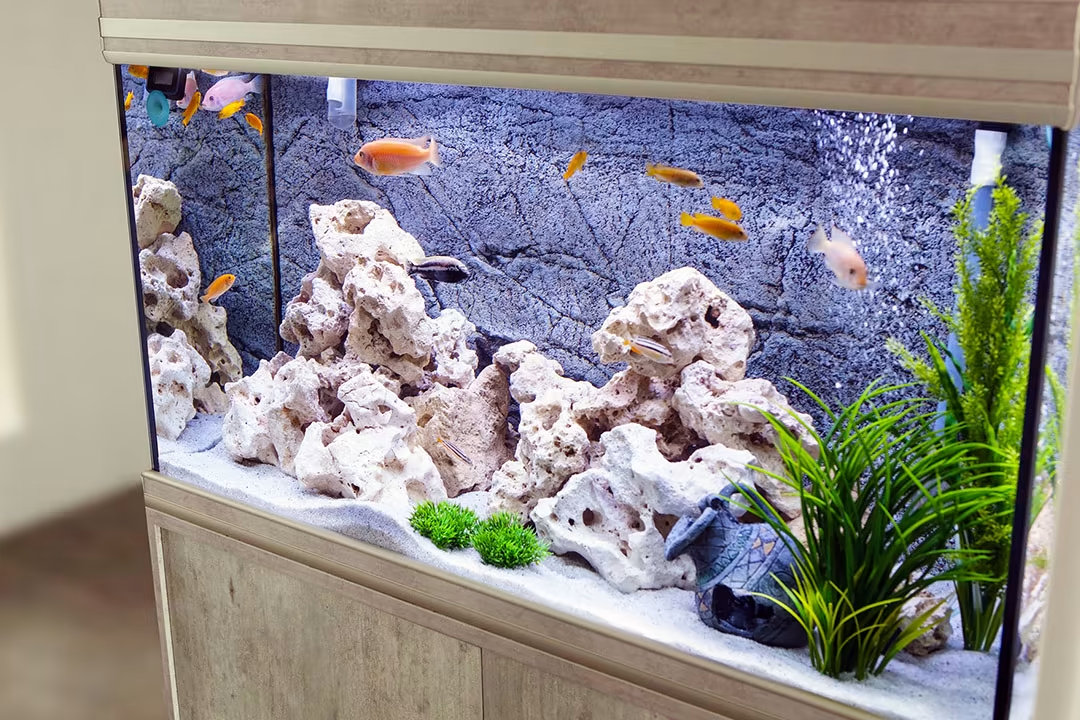
Aquarium Water Quality: Master Healthy Fish & Crystal Clear Tanks
Learn how to test your aquarium water. Poor water quality stresses fish, which leaves them susceptible to disease and possibly death.
Updated on October 23rd, 2025
- Home & Habitat
How to Clean a Dirty Aquarium: Step-by-Step Guide
Find out what tools you’ll need and discover the best way to get your aquarium back on track without starting over and find out how to maintain a clean fish tank.
Updated on June 12th, 2026
 Product Guides
Sponge Filters: What They Are & How They Work
One of the oldest forms of aquarium filtration (and not just for small tanks), a sponge filter may be the right filtration choice for your aquarium!
Updated on June 19th, 2026
- Food & Nutrition
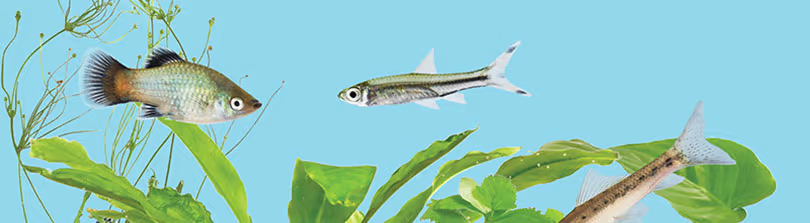
What Do Small Fish Eat? Freshwater Feeding Guide
Feeding your freshwater fish isn't as simple as adding a pinch of flakes! Read these three tips to learn more about how to provide your pets the nutrition and environment they need.
Updated on July 17th, 2026
- Vet Q & A
How to use Imagitarium ammonia-reducing cubes in a 5-gallon filter?
These cubes are typically placed in the filter or directly in the water flow. The filter should have a compartment that can be opened to remove filter media. Without knowing the brand of filter, more accurate advice cannot be given. The cubes begin to work immediately to reduce ammonia levels but they should not be used as a long term solution. Monitor water chemistry using a home test kit or by submitting a water sample for testing. Most pet stores will do this for free or for a small fee. Aim for 0 ppm ammonia and nitrites with a nitrate level of 20 ppm or less. Perform partial water changes, no more than 30% at a time, to stabilize chemistry and/or to improve water quality. Use only aged or conditioned water that is temperature matched to prevent stress or shock. This would be recommended over using another method.
Updated on September 24th, 2025
- Vet Q & A
What fish can I put in a 3-gallon tank, and how to change water?
The small size will limit the species of fish as well as the number. White Cloud Minnows or Guppies would do fine in a small tank. You could keep no more than 2 or 3 fish total. If you are looking for company for your Betta, the same species can be kept. Other options include Otocinclus (Otos), Corys, Platys or Harlequin Rasboras. Again, no more than one or two in addition to the Betta. Water changes for any tank are simple. Change no more than 30% total volume at a time. Use a water conditioner to remove harmful chemicals and make sure the water is temperature matched to prevent stress or shock. Rinse the filter in tank water, not tap water, to preserve beneficial bacteria. Vacuum the substrate every couple of weeks.
Updated on September 24th, 2025
- Health & Wellness
How to treat dirty tap water with iron for a healthy aquarium?
Some iron is necessary for a healthy aquarium, but too much can promote algae growth or impart an unsightly yellow or orange tinge to the water. Reverse osmosis (RO) filters are deal for removing mineral and heavy metals from water but they can be prohibitively expensive. Buying RO water from a local market or pet store is also a possibility but not economically feasible if you have a large tank. The best option may be a Polyfilter, which can be purchased in the local pet store or online. These filters will remove iron or other metals/chemicals and must be changed monthly or quarterly. You can also buy a water conditioner that will precipitate out some of the iron which can then be removed by mechanical filtration. An example of just one is Rid Metals (by Kordon). Follow label directions carefully, perform regular water changes and monitor iron levels with a home test kit or by submitting a water sample for testing.
Updated on September 24th, 2025
- Health & Wellness
Why are my goldfish dying with blood spots, white water, filter stopped?
I am so sorry that this is happening, and I am sorry for the loss of two of your fish. With you mentioning the filter stopping, there could be a number of issues going on. Filters perform a number of tasks, depending on the type you have. First, they help to keep toxins (ammonia, nitrites, nitrates) from building up in the water through the support of good bacteria - when the power goes out, sometimes the bacteria can die. This can put a lot of stress on the fish. Also, the oxygen levels can decrease when the power goes out (not sure if this occurred for you or not) and this can cause fish to die, and others to get stressed. When stress occurs, sometimes fish will injure themselves if they are panicked and trying to move around the tank. From the pictures, it looks like the reddened spots are under the skin and could be related to trauma. There are other issues that can result in spots that look like this as well. I would recommend getting your filter started back up, doing a water change, and then testing your water quality. Once it is back to normal, you can put your fish back in the tank. If your filter didn't stop due to a power outage, I would recommend considering replacing it, or attempting to find the underlying problem that resulted in its malfunction in the first place. For the reddened spots on the head - if they are due to trauma, they should resolve over the next week or so. If you see progression, or if there is a lack of improvement, then I would recommend taking one of the fish in for evaluation by a veterinarian, as there may be something else going on. I hope that this gives you a place to start, and good luck!
Updated on September 24th, 2025
- Vet Q & A
How to fix a cloudy fish tank when chemicals aren't working?
Thanks for reaching out. You need to determine why it is cloudy before you can treat. Test for pH, ammonia, nitrites and nitrates. Exam the filters and clean if necessary. Some fish stores will let you bring in water samples to test. Good luck.
Updated on September 24th, 2025