Two Easy Ways to Start Earning Rewards!
Become a member today! Members-only pricing and offers, personalized care notifications, Vital Care points back on every purchase and more!
 Become a credit card member today!
Earn 2X Pals Rewards points at Petco
when you use Petco Pay!APPLY NOWLearn More About Petco Pay Benefits
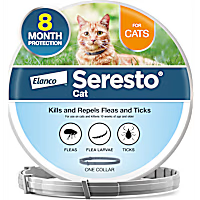
Seresto Flea Drops for Cats
Get It Today



Related Searches
Related Articles & Questions
 New Pet
Protect Your Pet: Flea & Tick Control Solutions for Dogs & Cats
Learn how to remove flea and ticks. Petco has flea and tick removal services for dogs and cats. Get fleas and ticks removed at your neighborhood Petco.
Updated on July 28th, 2026
- Health & Wellness
How Long After Pest Control Is It Safe for Pets?
You may have heard that flea and tick prevention are crucial for dogs and cats, but do you know why? Petco is sharing why and how to prioritize pest prevention for your pet.
Updated on June 19th, 2026
 Health & Wellness
Fleas in Cats: Is Injectable Flea Prevention Right for Your Cat?
Because fleas are so problematic, flea prevention is essential! Commonly prescribed preventives include oral and topical medications—although injectable flea prevention is available, as well.
Updated on June 19th, 2026
- Health & Wellness
Get Rid of Cat Fleas: Identify, Treat & Prevent Infestations
If you've spotted the tell-tale sign of fleas, the first thought you may have is, "How can I get rid of fleas on cats?" But, along with treatment for your pet, prevention methods are essential for their comfort and health.
Updated on October 23rd, 2025
- Health & Wellness
Flea Infestation in Dogs & Cats: Symptoms, Treatment & Prevention
Read more about the different types of flea treatments and how they work to help eliminate fleas from your pet for their safety and happiness.
Updated on June 19th, 2026
 Health & Wellness
My cat has fleas, Seresto collar stopped. What's the best treatment?
Fleas can be frustrating to treat. I know that many people have a lot of success with Seresto collars, but I have not. In order to treat Bandit’s fleas, I recommend using a good quality topical product, such as Advantage (use monthly) or Bravecto (prescription based and used every 3 months). Flea shampoos are rarely effective and can cause irritation to the skin, so I tend to steer clear of them. Be sure to vacuum daily, dispose of the vacuum bag frequently, and wash Bandit’s bedding in hot water. Continue to apply flea medication regularly in order to disrupt the fleas’ life cycle to prevent a recurrence. I hope this helps and that all goes well for Bandit!
Updated on September 24th, 2025
 Health & Wellness
Best tick control for cats in bobcat fever areas? Can I combine?
I would recommend Bravecto for cats https://us.bravecto.com/for-cats . You could combine this with a Seresto cat collar if needed. I would recommend discussing with Levi's vet what products they are finding effective in your area as sometimes a vet will find one product works best for pets in their region.
Updated on September 24th, 2025
- Health & Wellness
Why are my cat's flea drops not working? How to eliminate fleas?
SIGNS OF TOXICITY All flea control products are potentially toxic or may produce unexpected side effects. Toxicity may result from accidental overdose or unexpected sensitivity. Known side effects, although rare, are vomiting, diarrhea, drooling, sluggishness, weakness, or abnormal behavior. If you suspect that your animal is reacting adversely to a flea control product, stop using the product and consult your veterinarian immediately. If the reaction occurs immediately after application, the product should be rinsed off thoroughly and the animal brought to the veterinarian for evaluation. Adverse reactions may occur from minutes to days following application. Insecticides can be toxic to people; all products should be handled carefully, avoiding direct contact as much as possible. Keep all products out of the reach of children. Cats are particularly sensitive to many pesticides. ONLY USE PRODUCTS LABELED TO BE SAFELY USED ON CATS. If you have any questions about a product’s safety, please consult your veterinarian. FLEA CONTROL IN YOUR ENVIRONMENT Immature life stages of the flea accumulate in the environment when animals with fleas serve to disperse flea eggs into the environment where they then hatch into juvenile life stages. House and yard treatments need to be concentrated on "source points", which are areas where your pets spend most of their time. This typically would include the bedding and resting areas, the feeding location, etc. You can lessen the flea burden in your home by thorough vacuuming of all source points followed by disposal of the vacuum bag and by washing all animal bedding weekly in hot water and drying at high heat for twenty minutes. Steam cleaning of rugs and carpeting +/- upholstery is also helpful. In the yard, focus on areas where your pet(s) or other animals spend most of their time. Typically, fleas survive and reproduce in shaded, moist areas with plant or organic debris (under decks, bushes, storage sheds, etc). Fleas do not survive or reproduce well in sunny, open areas of lawn or patio. Elimination of yard debris will be helpful in reducing flea numbers. You may choose to utilize a professional exterminator service for the treatment of fleas in your home and garden. REALISTIC EXPECTATIONS It is important to realize that the various anti-flea medications do not eliminate the immature forms of fleas in the environment. Thus, for the first month or so you may continue to see fleas on your pet as the juvenile forms mature and search for a new host. This does not mean that the fleas have built up resistance to the medication – in reality, flea resistance to these products is quite rare. The most common reasons for failure to control a flea problem are: 1. Frequent washing of a pet treated with a spot-on product (this includes swimming in pools, lakes or the ocean). 2. Inconsistency in the application of the product. 3. Failure to treat all pets. 4. Wildlife reservoirs of fleas (feral cats, raccoons, opossums, coyotes, etc.). Thus areas below outside decks, old sheds, etc. should be barricaded or locked to discourage such ‘visitors’.
Updated on September 24th, 2025
 Vet Q & A
Need flea treatment for multiple cats? What's best to buy online?
If it is available, my best topical flea treatment for cats is Cheristin. It is very effective and kills fleas before they bite, which is helpful for cats with flea allergies since it is the bite they react to. Comfortis is a tablet that is also very effective, but it can cause vomiting.
Updated on September 24th, 2025
- Health & Wellness
What safe flea control for my elderly cat after a Seresto reaction?
lHello, thank you for using PetCoach. There are are oral flea pills available, however, you also cannot take back an oral pill once you give it...... A 19 year old cat may have an underlying kidney or liver problem (actually this is very likely) that is making her more sensitive to these medications. If she has not been to the vet recently she should be examined and have some blood testing run. If you continue to try things and her organs are not functioning properly you may really put her over the edge. Luckily she recovered after the Seresto Collar incident. I suggest you: 1. Treat the environment (ie: the house) as the fleas will be constantly hatching and continuing the problem. I strongly recommend Knockout Spray ES. This works better than any foggers or other home treatments and can be used on all carpeted and upholstered surfaces. ( https://www.chewy.com/virbac-knockout-es-area-treatment/dp/53855 ) 2. ALL animals in the house much be on some type of flea prevention as well or the fleas will continue to thrive. 3. If you have a yard, you need to treat that too as part of the environment even if she does not go outside. ( https://www.chewy.com/vets-best-outdoor-flea-tick-spray/dp/45163 ) 4. To treat her specifically, without using the traditional flea medications, you can use this waterless mousse - it is only a temporary fix though. No real lasting effects like the topical/oral treatments so depending on the severity of the infestation, you may have to use it every day or every couple days. Also depends on how she reacts to the product. Please read the directions fully before using as they recommend a spot trial first. ( https://www.amazon.com/Vets-Best-Waterless-Treatment-Plant-Based/dp/B084PZSR8J/ ) 5. Whatever you do, DO NOT use any Hartz or Adams products on her. They have a high rate of causing serious reactions and even death in dogs and cats (even young and healthy ones). Again, at her age, I strongly recommend she see a vet before you try anything else on her body. Hope this helps. Best wishes.
Updated on September 24th, 2025