Two Easy Ways to Start Earning Rewards!
Become a member today! Members-only pricing and offers, personalized care notifications, Vital Care points back on every purchase and more!
 Become a credit card member today!
Earn 2X Pals Rewards points at Petco
when you use Petco Pay!APPLY NOWLearn More About Petco Pay Benefits
Kaytee Pond Fish Food
Get It Today



Related Articles & Questions
- Care Sheets
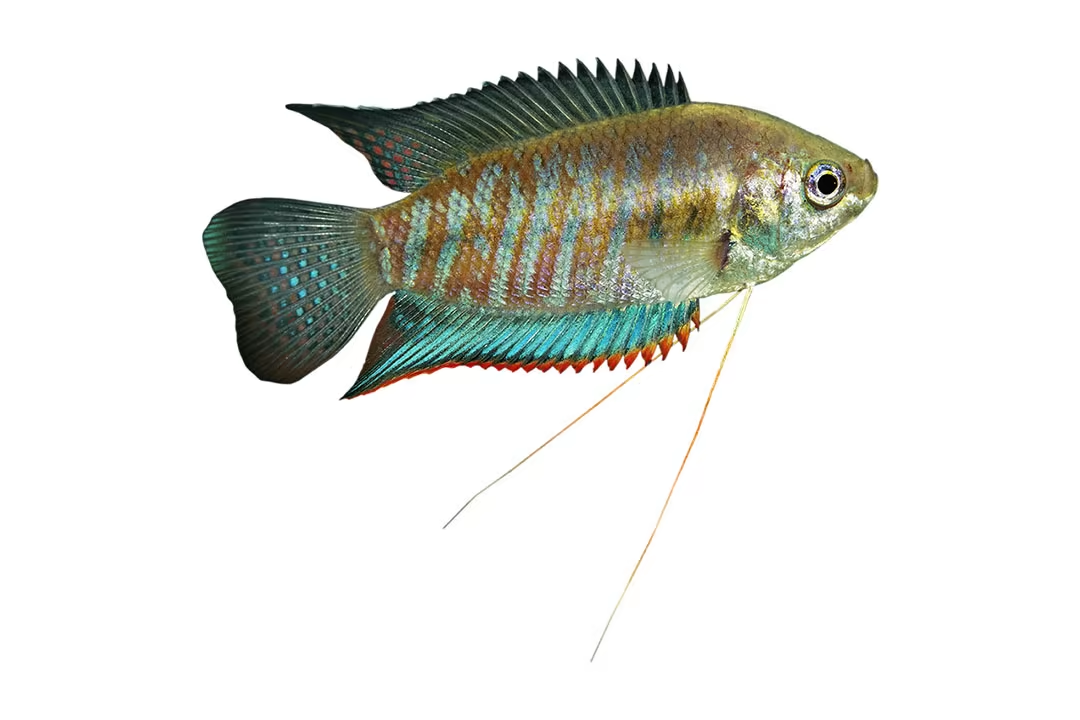
Paradise Fish Care: Complete Guide to Tank Size, Food, & Habitat Setup
Learn how to care for Paradise fish, recommended diet and aquarium setup. Find the right food, supplies and equipment at your neighborhood Petco.
Updated on April 9th, 2026
- Care Sheets
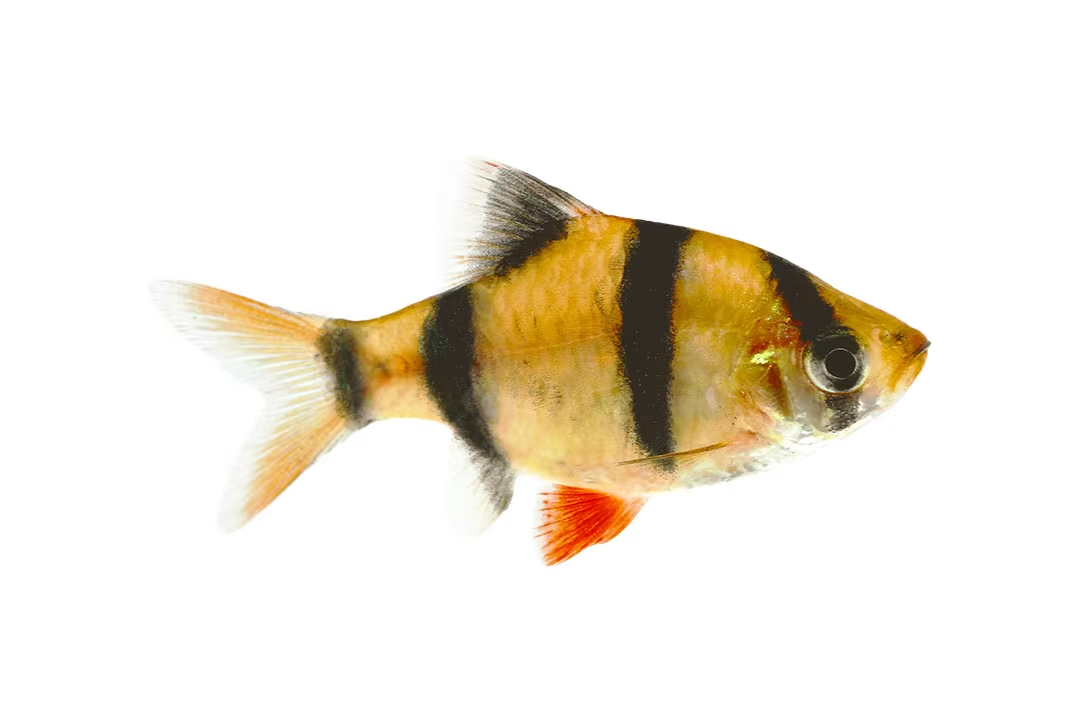
Barbs Fish Care Guide for Beginners: Tank, Food & Compatibility
Learn how to care for Barbs fish, recommended diet and aquarium setup. Find Barbs for sale, supplies and equipment at your neighborhood Petco.
Updated on April 9th, 2026
- Care Sheets
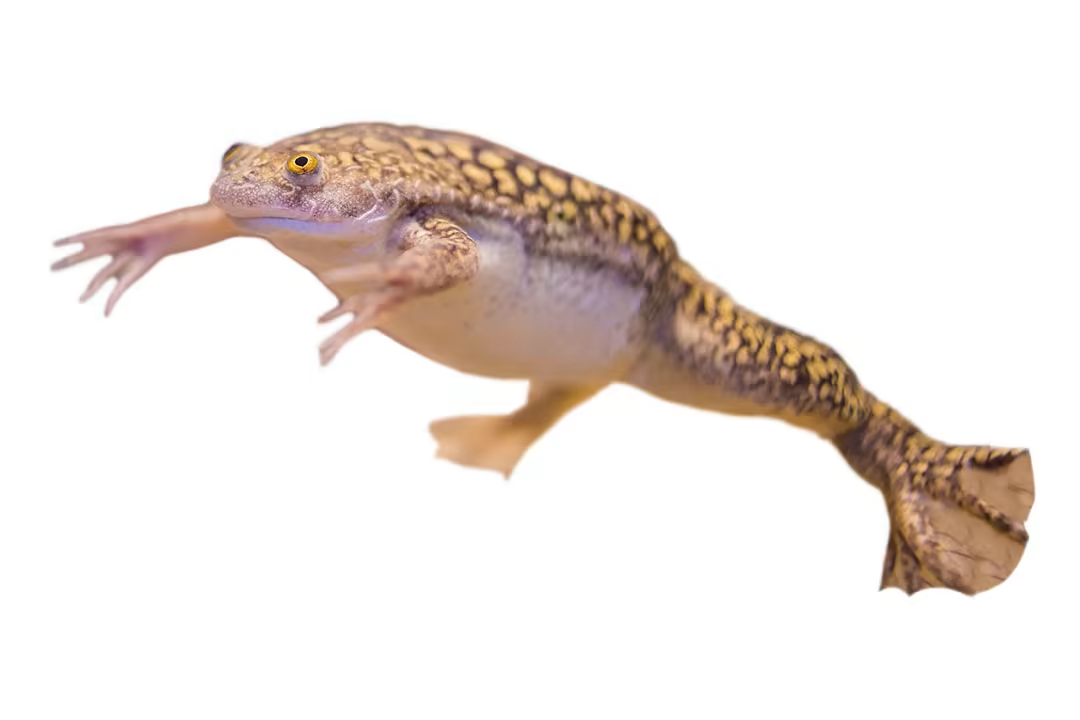
Freshwater Amphibian Care: Ultimate Tank, Food & Habitat Guide
Learn how to care for Freshwater Amphibians, recommended diet and habitat setup. Find the right food, supplies and equipment at your neighborhood Petco.
Updated on April 9th, 2026
- Care Sheets
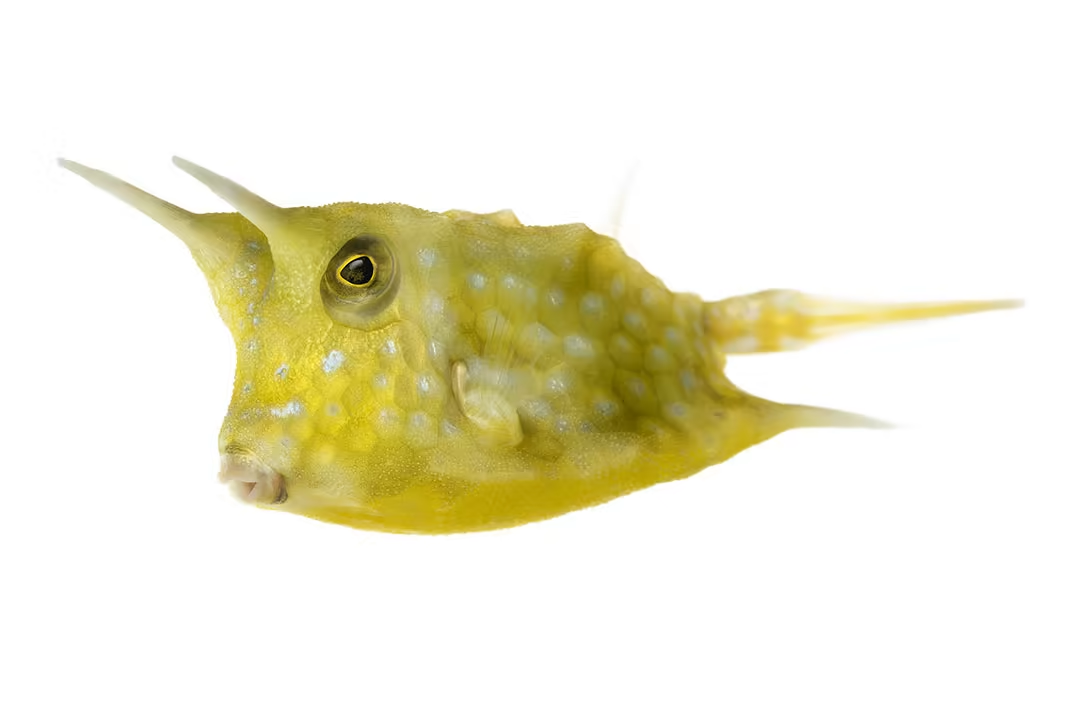
Advanced Boxfish & Cowfish Care: Ultimate Tank Setup, Food, & Safety
Learn how to care for Boxfish & Cowfish, recommended diet and aquarium setup. Find the right food, supplies and equipment at your neighborhood Petco.
Updated on April 9th, 2026
- Care Sheets
Aquatic Pet Safety: Keep Your Home Aquarium Pets Healthy & Safe
Learn how to safely handle your aquatic life to avoid toxin & bacterial exposure. Find aquatic life care supplies at your neighborhood Petco pet care center.
Updated on October 23rd, 2025
- Health & Wellness
Just got a small fish. What breed is it and how do I care for it?
Thanks for reaching out about you fish. It is believed to be a Comet goldfish. Water quality and nutrition is the key to success. Testing water parameter for pH, ammonia, nitrite and nitrate will give you guidance for a healthy environment. Purchased food should be rotated out every 3 months as vitamin C and other nutrients degrade over time. Trying to maintain water temperature can be challenging with out a heater, but most fresh water fish tolerate some changes. Good luck.
Updated on September 24th, 2025
- Health & Wellness
My pufferfish won't eat flakes. Is it stressed or needs new food?
Most puffers will not eat flakes or pellets. They need live or frozen foods. They also require hard foods to keep their teeth worn down. The local Petco will likely have these foods in stock. If the tank is overstocked, he may be stressed. He may also have an infection (bacterial, fungal or parasites) that are causing his symptoms. Ideally, a new fish should be quarantined for 2-4 weeks before being introduced to the main tank.
Updated on September 24th, 2025
- Health & Wellness
How to treat my sick pond fish with mouth and swimming issues?
Thanks for reaching out about Rhino. An infection is likely, but first check water quality parameters such as pH, ammonia, nitrites and nitrates. Correct any abnormalities. Infections around the mouth can be caused by multiple bacteria, but Edwardiella caused a disease called enteric red mouth. Laying on the bottom probably indicates the infection has spread to the swim bladder, causing it to fill with pus or fluid. Systemic antibiotics are needed. Antibiotics added to the water will probably do nothing. A veterinary visit is recommended to help with diagnosis and a treatment plan. Good luck.
Updated on September 24th, 2025
- Health & Wellness
Why are my fish dying with grey spots? How do I treat their illness?
Check the water chemistry. The discoloration could be due to elevated ammonia levels which can cause "burns". Use a home test kit or submit a water sample for testing. The local Petco may do this for free or for a small fee. Aim for an absence (0 ppm) of ammonia and nitrites with nitrates at 20ppm or less. Perform partial water changes to stabilize chemistry and/or to improve water quality. Use only conditioned water that is temperature matched to prevent stress or shock. The Neons (blue fish) appear to be infected with Ich, a parasite. Treatment is possible with commercial products found in the local Petco. Follow label directions carefully. You will need to treat the entire tank until all traces are gone. Removing a lump from your fish on your own is never recommended. You can cause severe injury. Most broad spectrum antibiotics (Kanaplex, Maracyn, Maracyn 2, etc.) found in the aquarium section of the local Petco should help treat or prevent infection. Choose one and follow label directions. Remove the carbon filter insert during treatment if indicated. Maintain pristine water quality via filtration and regular partial water changes to aid in recovery. You can feed frozen worms, just thaw then first in a small cup then place them in the tank.
Updated on September 24th, 2025
- Food & Nutrition
Why is my fish sick, gasping at surface with red fins in a small bowl?
The bowl looks definitively a bit small for the two fishes. To understand exactly what is going on you need to approach this problem radically but logically. Begin by submitting a water sample for quality testing. Most pet stores will do this for free or a nominal fee. Clinical examination should always include a water quality check, even if you have done so already. Water testing should be performed with a quality test kit, measuring NH4, NO2 and NO3. High ammonia levels, PH imbalances may be responsible for these signs. Oxygen concentration and quality of the filters should be determined as well. If water quality is good and there are no major imbalances, your fish should get examined to look for any sign of bacterial/fungal infection and eventually water should be treated. Hope this answer was helpful, but please do not hesitate to contact us again on the forum or by requesting a consultation if you have any more questions or to discuss it any further.
Updated on September 24th, 2025