Two Easy Ways to Start Earning Rewards!
Become a member today! Members-only pricing and offers, personalized care notifications, Vital Care points back on every purchase and more!
 Become a credit card member today!
Earn 2X Pals Rewards points at Petco
when you use Petco Pay!APPLY NOWLearn More About Petco Pay Benefits
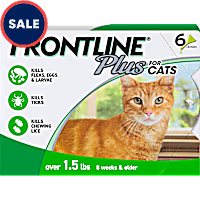
FRONTLINE Flea Drops for Cats
Get It Today



Related Searches
Related Articles & Questions
- New Pet
Protect Your Pet: Flea & Tick Control Solutions for Dogs & Cats
Learn how to remove flea and ticks. Petco has flea and tick removal services for dogs and cats. Get fleas and ticks removed at your neighborhood Petco.
Updated on July 28th, 2026
- Health & Wellness
Get Rid of Cat Fleas: Identify, Treat & Prevent Infestations
If you've spotted the tell-tale sign of fleas, the first thought you may have is, "How can I get rid of fleas on cats?" But, along with treatment for your pet, prevention methods are essential for their comfort and health.
Updated on October 23rd, 2025
- Health & Wellness
Fleas in Cats: Is Injectable Flea Prevention Right for Your Cat?
Because fleas are so problematic, flea prevention is essential! Commonly prescribed preventives include oral and topical medications—although injectable flea prevention is available, as well.
Updated on June 19th, 2026
- Health & Wellness
How Long After Pest Control Is It Safe for Pets?
You may have heard that flea and tick prevention are crucial for dogs and cats, but do you know why? Petco is sharing why and how to prioritize pest prevention for your pet.
Updated on June 19th, 2026
- Health & Wellness
Essential Flea Prevention: 5 Deadly Diseases Threatening Your Cat
Fleas are despicable little creatures. But if you need specific reasons why you should protect your cat from fleas, here are five great ones.
Updated on June 19th, 2026
- Health & Wellness
What's the best flea & lice treatment for cats if Frontline isn't working?
Lice are not terribly common in cats. I don't really feel like Frontline or fipronil products work very well anymore. I prefer products like Revolution or Bravecto. Seresto collars also offer great protection.
Updated on September 24th, 2025
- Health & Wellness
Why are my cat's flea drops not working? How to eliminate fleas?
SIGNS OF TOXICITY All flea control products are potentially toxic or may produce unexpected side effects. Toxicity may result from accidental overdose or unexpected sensitivity. Known side effects, although rare, are vomiting, diarrhea, drooling, sluggishness, weakness, or abnormal behavior. If you suspect that your animal is reacting adversely to a flea control product, stop using the product and consult your veterinarian immediately. If the reaction occurs immediately after application, the product should be rinsed off thoroughly and the animal brought to the veterinarian for evaluation. Adverse reactions may occur from minutes to days following application. Insecticides can be toxic to people; all products should be handled carefully, avoiding direct contact as much as possible. Keep all products out of the reach of children. Cats are particularly sensitive to many pesticides. ONLY USE PRODUCTS LABELED TO BE SAFELY USED ON CATS. If you have any questions about a product’s safety, please consult your veterinarian. FLEA CONTROL IN YOUR ENVIRONMENT Immature life stages of the flea accumulate in the environment when animals with fleas serve to disperse flea eggs into the environment where they then hatch into juvenile life stages. House and yard treatments need to be concentrated on "source points", which are areas where your pets spend most of their time. This typically would include the bedding and resting areas, the feeding location, etc. You can lessen the flea burden in your home by thorough vacuuming of all source points followed by disposal of the vacuum bag and by washing all animal bedding weekly in hot water and drying at high heat for twenty minutes. Steam cleaning of rugs and carpeting +/- upholstery is also helpful. In the yard, focus on areas where your pet(s) or other animals spend most of their time. Typically, fleas survive and reproduce in shaded, moist areas with plant or organic debris (under decks, bushes, storage sheds, etc). Fleas do not survive or reproduce well in sunny, open areas of lawn or patio. Elimination of yard debris will be helpful in reducing flea numbers. You may choose to utilize a professional exterminator service for the treatment of fleas in your home and garden. REALISTIC EXPECTATIONS It is important to realize that the various anti-flea medications do not eliminate the immature forms of fleas in the environment. Thus, for the first month or so you may continue to see fleas on your pet as the juvenile forms mature and search for a new host. This does not mean that the fleas have built up resistance to the medication – in reality, flea resistance to these products is quite rare. The most common reasons for failure to control a flea problem are: 1. Frequent washing of a pet treated with a spot-on product (this includes swimming in pools, lakes or the ocean). 2. Inconsistency in the application of the product. 3. Failure to treat all pets. 4. Wildlife reservoirs of fleas (feral cats, raccoons, opossums, coyotes, etc.). Thus areas below outside decks, old sheds, etc. should be barricaded or locked to discourage such ‘visitors’.
Updated on September 24th, 2025
- Health & Wellness
What are the best flea and tick prevention products for my cat?
Thanks for using Petco Pet Education Center, formerly Petcoach! In my opinion, the best two flea and tick preventative medications are Bravecto and Frontline plus. Any of those would be good options for him. Good luck and have a good night!
Updated on September 24th, 2025
- Vet Q & A
Cat's flea treatment not working. Can I safely apply Frontline now?
Since both Sentry and Frontline use the same active ingredient (fipronil) it is unlikely that you will see better protection switching to the Frontline. You will need to choose a product with a different ingredient, like Advantage or Revolution or a Seresto collar. If you choose to use another topical, I would recommend bathing your kitty today to remove any remnants of the Sentry, and wait 3 days to apply the next topical. It is important to wait after bathing so that the natural body oils have time to coat the skin to ensure adequate absorption. You do not need to wait or bathe to use a Seresto collar.
Updated on September 24th, 2025
- Health & Wellness
Frontline for kittens: How long until fleas are gone and my home is safe?
Frontline will kill fleas within 24 hours and ticks within 48 hours. To be safe, you should also treat all your cats as well. A majority of a flea population lives off the pet, only hopping on to feed. A flea treatment and prevention program will include treatment of the pet and the environment. Use a preventative for at least 3 consecutive months, preferably year round.
Updated on September 24th, 2025