


Two Easy Ways to Start Earning Rewards!
Become a member today! Members-only pricing and offers, personalized care notifications, Vital Care points back on every purchase and more!
 Become a credit card member today!
Earn 2X Pals Rewards points at Petco
when you use Petco Pay!APPLY NOWLearn More About Petco Pay Benefits
Ferret Breeds, Colors & Types: How to Choose
Published on April 27th, 2022
Updated on June 18th, 2026


Written by Elizabeth Anderson Lopez
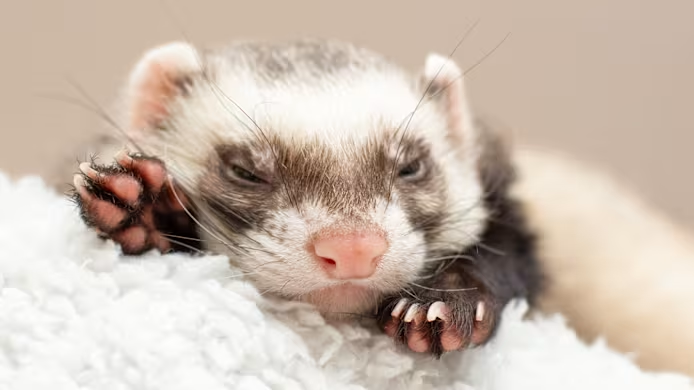
Are ferrets good pets? Explore their lively personality and what living with a ferret demands to decide if they match your lifestyle and pet love.
What Kind of Ferret Can You Get? Understanding Ferret Breeds and Varieties
If you're researching ferret breeds, here's the short answer: domestic ferrets (Mustela putorius furo) are all one species, but they come in a striking range of colors, coat patterns and body types that many pet parents treat as distinct "varieties." Whether you're drawn to a sable-masked classic or a pale-eyed albino, understanding what sets each variety apart is the best first step toward finding your perfect match.
Ferrets have shared a life with humans since around 450 BCE and are now one of the most popular small pets in the United States — beloved for their masked bandit faces, slinky agility and genuinely mischievous personalities.
Before you fall in love: Ferret ownership is illegal in some U.S. states and municipalities. Always check your local regulations before bringing one home.
Are Ferrets Rodents? (Spoiler: No)
Many first-time pet parents are surprised to learn that ferrets are not rodents at all. Ferrets are domesticated members of the weasel family (Mustelidae) — more closely related to otters and mink than to mice or guinea pigs. Unlike wild polecats, domestic ferrets have been selectively bred for centuries to live comfortably alongside humans.
Historically, ferrets were valued for:
- Hunting assistance
- Rodent control
- Their compact size and remarkable agility
Today, they're cherished for something simpler: personality.
Ferret Varieties: Color, Pattern and Coat Type
Because all pet ferrets belong to the same domestic species, the American Ferret Association (AFA) classifies them by color, pattern and coat type rather than by "breed" in the traditional sense. Think of these varieties the way you might think of coat colors in a dog breed — cosmetically distinct, but sharing the same fundamental nature.
Common Ferret Color Varieties
| Color Variety | Coat Description | Eye Color | Nose Color |
|---|---|---|---|
| Sable | Rich dark brown guard hairs, cream undercoat | Dark brown to nearly black | Speckled or brown |
| Albino | Pure white coat, no pigmentation | Red or pink | Pink |
| Black Sable | Deep, cool black-brown guard hairs | Dark brown to black | Speckled or black |
| Chocolate | Warm milk-chocolate guard hairs, white/cream undercoat | Dark brown to burgundy | Pink to beige |
| Champagne | Dilute tan guard hairs, white undercoat | Burgundy to dark | Pink to beige |
| Cinnamon | Reddish-brown guard hairs | Burgundy | Pink to beige |
| Dark-Eyed White (DEW) | White coat with dark eyes | Dark burgundy or black | Pink |
A note on Dark-Eyed Whites: DEW ferrets are genetically distinct from albinos. Some DEW ferrets carry the Waardenburg gene, which can be associated with congenital deafness. If you're considering a DEW ferret, ask the breeder or shelter about hearing screening.
Common Ferret Pattern Varieties
Beyond base color, ferrets also vary by pattern — the distribution of color across the body:
- Solid – Guard hairs are one uniform color with a lighter undercoat
- Roan – Roughly equal mix of colored and white guard hairs, giving a salt-and-pepper look
- Point (Siamese) – Lighter body color with darker legs, tail and mask; similar in look to a Siamese cat
- Blaze – White stripe running from the top of the head down to the nose, often paired with white mitts on the feet
- Panda – White head, bib and shoulders with a colored body; one of the most distinctive-looking varieties
- Mitt – White feet ("mitts") on an otherwise colored body
Coat Types
Most ferrets have a standard short, dense double coat. One notable exception:
- Angora ferrets – A longer, silkier coat produced by a genetic mutation. Angoras require more frequent grooming to prevent matting and are less commonly available in the U.S.
What All Ferret Varieties Share
Regardless of color or pattern, every domestic ferret shares the same core traits that make the species so endearing:
- Long, slender, flexible bodies built for squeezing into tight spaces
- Expressive, masked faces with an unmistakable look of mischief
- Boundless curiosity — ferrets investigate everything
- Dramatic energy cycles — a healthy ferret sleeps 14 to 18 hours a day, then erupts into the legendary burst of frantic play pet parents call "the zoomies"
That sleep-to-chaos ratio is completely normal. It's simply how ferrets are wired.
Does Variety Affect Personality or Care?
In short: not significantly. A ferret's color or pattern does not reliably predict its temperament or care needs. Personality varies far more by individual than by variety. What does matter for care:
- Coat length — Angora ferrets need more brushing
- Genetics — DEW ferrets may need a hearing check
- Age — kits (baby ferrets) require more socialization time than adult ferrets
For all varieties, the fundamentals of ferret care — a spacious habitat, a high-protein diet, regular veterinary visits and plenty of daily out-of-habitat playtime — remain the same.
Key Takeaways
- All pet ferrets are one domestic species; "ferret breeds" refers to color, pattern and coat varieties
- There are seven or more recognized color varieties and six or more pattern varieties
- Dark-Eyed White ferrets may carry a gene linked to deafness — ask about screening
- Angora ferrets need extra coat care; all other varieties have similar grooming needs
- Personality is individual, not variety-specific — meet the ferret, not just the color
- Ferrets are Mustelids, not rodents — a fun fact worth knowing before anyone asks
- Always verify local laws before bringing a ferret home
Ferret Quiz
Quiz time! Ask yourself the following questions to determine if your lifestyle, expectations and willingness to meet their unique needs make a ferret a yes or a no.
- Do you have a sense of humor? Ferrets are playful clowns who love to steal things and hide them. If you bring in a ferret as a pet, you’ll need to be prepared to clean up some messes and occasionally hunt for lost things. Having a good sense of humor will go a long way in making your ferret’s initial adjustment period a success.
- Do you have patience? Ferrets are quite athletic and love to explore, escaping their enclosures and getting into things they shouldn’t. While their antics are generally playful, ferrets require pet parents who can remain patient during training and think of creative ways to keep their pet entertained.
- Can you provide a consistent daily routine? Like other pets, ferrets like to have a consistent, predictable daily routine, with dedicated time to play, eat and sleep. Make sure your daily schedule would allow you to stick to a consistent schedule for your ferret.
- Do you have time to play? In order to thrive, ferrets need one-on-one attention from their pet parents. Make sure you have time each day to handle and socialize them to help create a long-term bond.
- Are you looking for a loving, affectionate pet? While ferrets enjoy running around, most also love to be pet and cuddled at times. Generally, the more affectionate you are with your ferret, the more affectionate they will, in return, be with you. Playing games, being held and spending time together are all forms of affection ferrets tend to appreciate.
- Are you willing to ferret-proof your home? This is a big one! Ferrets can squeeze into spaces/crevices as small as 1" in diameter. That’s tiny! Hiding places you’ll need to block include:
- Gaps behind appliances
- Holes in cabinets or walls
- Spaces under doors
- Recliner and sofa frames
- HVAC vents and ducts
Also be sure to secure any wires or cords that may be tempting to chew or play in.
Can you legally have a ferret?
Like some other species (bully breed dogs and Quaker Parakeets, for example) ferret-keeping is restricted in some regions. Always verify local regulations before bringing home a ferret. For that matter, if you live in an apartment or rental property, confirm ferrets are allowed. It’s never worth assuming and then having to rehome your fuzzy friend.
United States (examples):
- California (illegal to keep)
- Hawaii (illegal to keep)
- Select cities (illegal in New York, N.Y., and Washington, D.C., to name a few)
Mexico (varies by region):
- Some municipalities restrict exotic pets
Fun fact:
When Arnold Schwarzenegger was governor of California, some ferret-focused organizations tried to get him to legalize pet ferrets, citing his familiarity with the animal from his movie star days. Despite vetoing the 2004 SB 89, he cited the pets as positive: “I love ferrets. I costarred with a ferret in Kindergarten Cop.”
Common misconceptions and surprises
If someone has only had dogs and then gets a cat, there are many similarities in being a pet parent to both. Now ferrets are a whole different animal. New/prospective ferret moms and dads are often surprised by:
- Diet needs: Ferrets require high-protein, meat-based diets. Rodent mixes are inappropriate. Ferrets should be fed a commercially available, ferret-specific diet.
- Veterinary care: Ferrets need vets experienced with exotic mammals. Check to see if you have an exotics vet near you before you bring a ferret into your home. From wellness checks and vaccinations to potential illnesses, veterinary care is a must for ferrets.
- Housing expectations: They need large enclosures, plus safe roaming time. Again, ferret-proofing a home is no small task, and it is ongoing.
- Behavior: They investigate everything, sometimes stealing and stashing items they find. Because of this, ferret-proofing includes keeping things out of reach, from trinkets to toxic cleaning supplies, as well as preventing access to electrical cords.
Preparing for a pet ferret: Everyday care and enrichment
A well-prepared environment leads to a happier ferret and pet parent. These checklists in three main categories can get you off on the right paw.
Habitat, sweet habitat
- Spacious multilevel enclosure
- Soft bedding
- Litter boxes
- Hideouts
Petco offers ferret-appropriate habitats, bedding and enrichment toys designed for safe play.
Food tips for ferrets
Ferrets are obligate carnivores. Fresh water should always be available, of course, and ideal nutrition includes:
- Ferret-specific food
- High-protein, meat-based diet and treats
- Limited carbohydrates
Environment enrichment must-haves
- Tunnels
- Puzzle toys
- Safe chew items
- Daily out-of-cage time
Choosing your new ferret
If the high-energy, clownish personality of a ferret sounds like the right fit for your family, the next step is to choose the individual who’s best for you. Ferrets come in many different coat colors and patterns. The ferret rainbow includes:
Albino: These ferrets have white coats, red to pink eyes and pink noses.
Blaze: The body of a blaze ferret can be any color or combination. The blaze refers to the unbroken white stripe that usually runs from their face, between their eyes, over the top of their head, then down the back of their neck. They have four mitts and a white bib.
Chocolate: The chocolate coat is similar to the sable coat, except the banded mask, tail and legs are dark brown with red tints. The body, neck and head have brown guard hairs (longer, thicker hairs than the soft, dense undercoat), and their undercoat is cream to wheaten in color. Their eyes are usually black but may be a deep ruby, and their nose is pink to brown.
Cinnamon: The guard hairs of a cinnamon ferret are reddish brown, and the legs and tail are darker reddish brown. Their mask color (found in darker shades of cinnamon) complements the ferret's overall color. Their nose is pink, and their eyes are usually deep ruby to red but may be black.
Panda: A panda ferret’s head is white from nose to shoulder. They have a white bib and a white underside. Their body may be any color but white, with deeper-colored fur on the shoulders and hips and a white-tipped tail and mitts. They have a pink nose, and their eyes may be any color.
Sable: Sable ferrets have black legs with a full mask, and their undercoat can be dark to cream with dark guard hairs. They have even coloring over their body, neck and head. Their eyes are black, and their nose is pink, mottled or black.
Siamese: Any standard sable, chocolate or cinnamon ferret who has a body color several shades lighter than their feet and legs is considered Siamese. Their mask is V-shaped, and it's the same color as their leg and tail. The length of their underside has a dark line the same color as that of their extremities.
Mitt pattern: Mitt-patterned ferrets have base coats in one of the above colorations but with light-colored mitts.
Striped white: A striped white ferret is mostly white, with a dark stripe down their back. The stripe may extend into the tail, and their eyes are either pink or dark ruby. Their nose may be pink or pigmented to black.
White with dark eyes (black-eyed white): The body of these ferrets is usually white, but some have a few dark hairs along their back. Their eyes are black, and their nose is usually pink but may also be black.
Ultimately, when you choose a ferret, there is no reason besides personal preference to pick one specific body type or coloring over another. Every ferret’s appearance and personality is unique, and their color and body shape won’t affect the care they need. What you should definitely look for are:
✔ Bright, clear eyes
✔ Clean ears
✔ Smooth, clean coat
✔ Curious behavior
Consider:
- Age
- Temperament
Fun fact: A male ferret is called a hob; a female ferret is a jill. A spayed female is a sprite, a neutered male is a gib, and a male who has been neutered is known as a hoblet. Ferrets under 1 year old are known as kits. A group of ferrets is known as a business, which is perfect because they love to be all up in yours!
Takeaways
A ferret can be an extraordinary companion in the right household, but success depends on preparation, realistic expectations and commitment. Before deciding if a ferret makes a good pet for you, reflect honestly on your schedule, patience and readiness.
If you’ve determined this unique pet is right for you, Petco can help you ferret out all the ferret supplies you need for your new friend!
Related Articles


FAQs about keeping pet ferrets
Behaviorally, ferrets resemble cats more than rodents. They are carnivores, playful and often can be litter trained.
Concerns may include:
- Wildlife impact
- Escape risks
- Local regulations
A common adjustment guideline for new pets:
- 3 days to decompress
- 3 weeks to learn routines
- 3 months to feel fully settled
Compared with hamsters, yes. They require more time, space, interaction and specialized care. And ferret-proofing includes removing access to any spaces more than 1" in diameter, from behind the fridge to furniture mechanisms. This doesn’t mean you can never have a recliner as long as you have a ferret, but you will need to know exactly where your ferret is before sitting or reclining in one.
Many do once bonded, though most prefer short cuddles followed by play.