


Two Easy Ways to Start Earning Rewards!
Become a member today! Members-only pricing and offers, personalized care notifications, Vital Care points back on every purchase and more!
 Become a credit card member today!
Earn 2X Pals Rewards points at Petco
when you use Petco Pay!APPLY NOWLearn More About Petco Pay Benefits
Can Cats Eat Cheese? A Vet-Backed Guide
Published on January 11th, 2023
Updated on June 12th, 2026

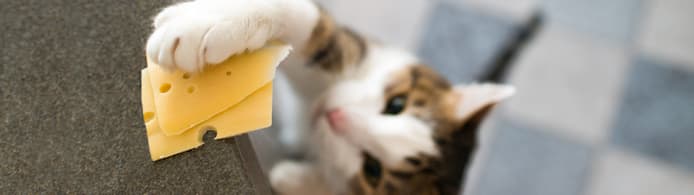
Do you have questions about whether it’s safe to give your cats cheese? Petco has the answers to this and other feline diet questions!
Yes, cats can eat cheese—with some very important exceptions. If you want to give your cat cheese as a special treat, be sure to monitor the quantity and type of cheese to ensure your pet’s health and safety. Always consult your veterinarian before adding a new food to your cat’s diet to ensure it’s an appropriate snack for your pet.
Cheese is generally safe to feed your cat in small amounts and can make a tasty treat, but it can cause problems, too, depending on the type of cheese you feed your cat and their own pre-existing health conditions.
Types of Cheese
Can cats eat string cheese?
Yes, but be sure to monitor your pet after the first time you provide string cheese. The two most common types of string cheese without additional ingredients are provolone and mozzarella, and the latter is more likely to upset your cat’s stomach.
Can cats eat cheddar cheese?
Yes, plain sharp cheddar has lower amounts of lactose than other types of cheese and is less likely to cause gastrointestinal upsets.
Can cats eat Swiss cheese?
Yes. Swiss cheese is typically made plainly and low in lactose, as long as it is served in bite-sized pieces.
Can cats eat provolone cheese?
Yes. As a softer cheese lower in lactose, provolone can be a good option the first time you offer your cat a small piece of cheese.
Can cats eat gouda?
Yes. The curds of gouda are traditionally washed during processing, which removes a portion of the lactose. As a harder cheese, it’s recommended to feed this in small crumbles.
Can cats eat goat cheese?
Yes, but it isn’t recommended. While it does have less lactose, it is higher in fat and lower in vitamin D than cheese made from cow’s milk.
Can cats eat American cheese?
Yes, but it isn’t recommended. Many don’t consider American cheese to be a real cheese, as it’s processed instead of aged, and it is higher in unnecessary carbohydrates.
The health benefits of cheese for cats
While cheese is generally considered safe for cats to eat, there are some important things to keep in mind.
Cats are a type of meat-eating animal called an obligate carnivore. This means they get most of their nutritional needs met by eating meat, and their digestive system is especially suited to this type of diet. Providing your cat with high-quality cat food is the best way to ensure they get all the nutrients they need and eat a healthy diet.
For this reason, feeding your cat cheese has little to no health benefit. The nutrients they need are more readily available in high-quality cat food and treats designed specifically for felines.
While the health benefits of feeding your cat cheese are minimal, the list of health risks is quite significant. Each cat is different, and what their digestive system can tolerate will vary from cat to cat. Where one cat can eat cheese without issues, another cat may develop digestive discomfort from cheese.
Cats can be lactose intolerant and develop digestive issues from cheese, including diarrhea, constipation and vomiting. If you’ve ever noticed your cat experiencing digestive problems after drinking milk, it’s best to avoid feeding them cheese.
It's also important to note that while hard cheeses like cheddar and Swiss are lower in lactose and may be less problematic for your cat to eat, soft cheeses like brie, mozzarella and cottage cheese contain higher amounts of lactose and can potentially cause more gastrointestinal upset for your cat.
It’s also important to not feed your cat any cheeses with additional elements or flavorings, such as onion, garlic and chives, to name a few. All of these are toxic.
Moldy cheese should be avoided for cats, too. This includes both cheese that’s been in the refrigerator too long and cheese that’s intentionally moldy, like blue cheese. The mold of blue cheese is edible for humans but is formed from Penicillium, a type of fungus that grows on aging food and can be toxic to pets.
Lastly, if your cat has a health condition—such as heart or kidney disease—that would usually require you to feed them a low-sodium diet, you should also avoid feeding them cheese.
How to feed cheese to your cat
Human foods like cheese should only be given to cats occasionally and in small quantities. The majority of your cat’s calories should come from foods specially formulated to give them the nutrients they need, such as a commercially available cat food. Be sure to consult your veterinarian before adding new foods to your pet's diet.
Cheese should be considered a treat and not a regular aspect of your pet's diet. The total of all treats provided throughout the day should never exceed 10% of your cat’s daily caloric intake, and cheese is very high in calories.
To feed your cat cheese, cut the cheese up into pieces small enough for your cat to easily bite and chew. In addition to their digestive system not being especially well-suited for cheese, their teeth are also not built to chew such food. If you feed your cat a piece that’s too large, they could swallow it whole and potentially choke.
Start with only one small piece of cheese and monitor your pet closely to ensure there aren’t any problems. If your cat shows signs of gastrointestinal distress—such as vomiting or diarrhea—contact your veterinarian for care guidance and discontinue feeding cheese immediately.
Frequently Asked Questions
Is cheese bad for cats? Cheese isn't toxic to cats in the way that onions or garlic are, but it isn't a nutritionally beneficial food for them either. Because cats are obligate carnivores, their digestive systems are designed primarily for meat-based nutrition — not dairy. Cheese can cause gastrointestinal upset, including vomiting and diarrhea, especially in cats who are lactose intolerant. Think of it as an occasional indulgence rather than a wholesome addition to your cat's diet. https://www.merckvetmanual.com/management-and-nutrition/nutrition-small-animals/nutritional-requirements-of-small-animals
What happens if a cat eats cheese? For many cats, a small nibble of a low-lactose cheese like cheddar or Swiss will pass without incident. However, some cats — particularly those who are lactose intolerant — may experience diarrhea, constipation or vomiting after eating cheese. If your cat shows any signs of gastrointestinal distress after eating cheese, stop offering it immediately and contact your veterinarian for guidance. https://www.vet.cornell.edu/departments-centers-and-institutes/cornell-feline-health-center/health-information
How much cheese can cats eat? Cheese should be treated like any other treat: the total of all treats combined should never exceed 10% of your cat's daily caloric intake. Because cheese is calorie-dense, even a small cube can add up quickly. A piece roughly the size of a pea — offered only occasionally — is a reasonable upper limit for most cats. When in doubt, ask your veterinarian what's appropriate for your cat's specific size and health status. https://wsava.org/global-guidelines/global-nutrition-guidelines/
Are cats lactose intolerant? Many adult cats are lactose intolerant to some degree. Kittens produce the enzyme lactase to digest their mother's milk, but lactase production typically decreases as cats mature. Without sufficient lactase, the lactose in dairy products like cheese ferments in the gut rather than being properly digested, which can lead to gas, bloating, diarrhea or vomiting. Hard, aged cheeses such as cheddar, Swiss and gouda contain less lactose than soft cheeses and may be better tolerated — but every cat is different. https://www.merckvetmanual.com/management-and-nutrition/nutrition-small-animals/nutritional-requirements-of-small-animals
What types of cheese are dangerous for cats? Several cheeses should be avoided entirely. Blue cheese contains mold from Penicillium, a fungus that can be toxic to pets. Any cheese containing onion, garlic or chives is dangerous, as these ingredients are toxic to cats. Soft cheeses like brie, mozzarella and cottage cheese are high in lactose and more likely to cause digestive upset. Processed cheeses like American cheese offer little nutritional value and are high in sodium and unnecessary carbohydrates — a particular concern for cats managing heart or kidney disease. https://www.aspca.org/pet-care/animal-poison-control
Can cheese be used to give a cat medication? Some pet parents use a small piece of soft cheese to help disguise a pill, and a tiny amount used this way is generally low-risk for a healthy cat. However, you should always check with your veterinarian first — some medications interact with food, and some cats have health conditions (such as kidney disease or heart disease) that make even small amounts of high-sodium, high-fat foods inadvisable. Your veterinarian can suggest the safest pill-delivery method for your individual cat. https://www.vet.cornell.edu/departments-centers-and-institutes/cornell-feline-health-center/health-information
Cheese Types at a Glance: Lactose, Safety & Serving Size for Cats
| Cheese Type | Relative Lactose Level | Generally Safe for Cats? | Notes & Suggested Serving |
|---|---|---|---|
| Sharp cheddar | Low | Yes | One small cube (pea-sized); harder texture means crumble or dice finely |
| Swiss | Low | Yes | One bite-sized piece; plain varieties only — avoid flavored versions |
| Provolone | Low–Medium | Yes | Good "first try" option; soft texture is easier to portion |
| Gouda | Low–Medium | Yes | Wash process removes some lactose; serve in small crumbles |
| String cheese (mozzarella) | Medium | Yes, with caution | Mozzarella more likely to cause stomach upset than provolone; monitor closely after first offering |
| String cheese (provolone) | Low–Medium | Yes | Lower lactose than mozzarella; tear into very small pieces |
| Goat cheese | Low (but high fat) | Not recommended | Less lactose than cow's-milk cheese, but higher fat content and lower vitamin D make it a poor choice https://www.merckvetmanual.com/management-and-nutrition/nutrition-small-animals/nutritional-requirements-of-small-animals |
| American cheese | Medium | Not recommended | Processed rather than aged; higher in unnecessary carbohydrates and sodium |
| Brie / soft-ripened cheeses | High | Use caution | Higher lactose; greater risk of gastrointestinal upset including vomiting or diarrhea https://www.vet.cornell.edu/departments-centers-and-institutes/cornell-feline-health-center/health-information |
| Cottage cheese | High | Use caution | High lactose; avoid if your cat has shown any sensitivity to dairy |
| Blue cheese | High + mold | No | Contains Penicillium mold, which can be toxic to cats; avoid entirely https://www.aspca.org/pet-care/animal-poison-control |
| Any cheese with onion, garlic or chives | Varies | No | These ingredients are toxic to cats regardless of cheese type https://www.aspca.org/pet-care/animal-poison-control |
Quick rule of thumb: Lower lactose = lower risk of digestive upset, but no cheese is nutritionally necessary for cats. All treats combined — cheese included — should never exceed 10% of your cat's daily caloric intake. When in doubt, check with your veterinarian before offering a new food.
Frequently Asked Questions
Can cats eat cheese safely? Most cats can tolerate a small, occasional piece of plain, low-lactose cheese such as sharp cheddar or Swiss without immediate harm. However, because cats are obligate carnivores, cheese offers little nutritional value and carries real risks — including lactose intolerance symptoms and excess sodium — so it should only ever be an infrequent treat, not a dietary staple. https://www.merckvetmanual.com/management-and-nutrition/nutrition-small-animals/nutritional-requirements-of-small-animals
Why do some cats react badly to cheese? Many cats are lactose intolerant. After kittenhood, cats naturally produce less lactase — the enzyme needed to break down lactose — so dairy can cause vomiting, diarrhea or constipation. Soft cheeses like brie, cottage cheese and mozzarella contain more lactose than hard cheeses and are more likely to trigger these symptoms. https://www.vet.cornell.edu/departments-centers-and-institutes/cornell-feline-health-center/health-information
Is blue cheese toxic to cats? Yes — blue cheese should be avoided entirely. Its characteristic veining comes from Penicillium mold, a fungus that can be toxic to pets. Even a small amount may cause serious gastrointestinal distress. If your cat accidentally eats blue cheese, contact your veterinarian or the ASPCA Animal Poison Control Center right away. https://www.aspca.org/pet-care/animal-poison-control
How much cheese can I give my cat? Think pea-sized. All treats combined should make up no more than 10% of your cat's daily caloric intake, and cheese is calorie-dense. One small crumble or cube on an occasional basis is plenty. The remaining 90% or more of calories should come from a complete and balanced cat food formulated to meet feline nutritional requirements. https://www.aafco.org/consumers/understanding-pet-food/
Are there cheeses I should never feed my cat? Yes. Avoid blue cheese (toxic mold), any cheese containing onion, garlic or chives (all toxic to cats), moldy or expired cheese, and highly processed varieties like American cheese that are high in sodium and additives. Cats with heart disease, kidney disease or other conditions requiring a low-sodium diet should not have cheese at all — consult your veterinarian for guidance specific to your cat. https://www.aspca.org/pet-care/animal-poison-control
Does cheese provide any real nutritional benefit for cats? Very little. Cheese does contain protein and some fat, but cats' nutritional needs — including essential amino acids like taurine — are far better met by high-quality, species-appropriate cat food. Cheese is not a meaningful source of the nutrients cats require as obligate carnivores, and its risks (lactose, sodium, excess calories) outweigh any minor benefit. https://www.merckvetmanual.com/management-and-nutrition/nutrition-small-animals/nutritional-requirements-of-small-animals
This article was created with assistance from AI tools and reviewed for accuracy by Petco's content team.


FAQs About Cats Eating Cheese
If your cat eats a small amount of cheese, there likely won’t be any negative effects. Cheese is generally considered an acceptable treat for cats to eat, with some notable exceptions. Moldy or “stinky” cheese—like blue cheese—can be toxic for your cat, and if you suspect your cat has eaten blue cheese, call your veterinarian right away.
For most other types of cheeses, the most likely complication is gastrointestinal distress, which can include vomiting, diarrhea or constipation. If your cat seems to be experiencing these symptoms, call your veterinarian for care guidance; if more severe symptoms develop or do not resolve in a timely manner, get them to the veterinary clinic right away for treatment.
Cats are considered obligate carnivores, meaning their preferred diet is meat and other animal products. They may be attracted to the high fat content of the cheese.
Cats are also unique animals. It’s not uncommon for them to adopt all sorts of odd and finicky tastes, including for cheese. If your cat seems to especially love cheese, it’s okay to allow them to have small pieces and only on occasion. Never let treats including but not limited to cheese be more than 10% of their daily caloric intake or a daily occurrence.
Most varieties of hard cheeses are considered safe for cats to eat. Cats can usually tolerate small amounts of aged, hard cheese or cheese that’s low in lactose, including cheddar, muenster, Swiss, provolone, colby jack, parmesan, gouda, cream cheese, mozzarella, feta, string cheese and goat cheese. Soft cheeses like Brie and cottage cheese can be an acceptable treat, too, but be aware they are usually higher in lactose and can potentially cause more complications for a lactose-intolerant cat. Also, if your cat has health problems, such as a heart condition, kidney condition or diabetes, cheese can be unhealthy and should never be offered for them to eat.
Cheese is generally considered safe for cats to eat in small quantities, with hard cheeses being the least likely to cause complications. That being said, cheese has very little nutritional benefit for cats and should only be fed to them in small amounts and on rare occasions. If you do decide to feed cheese to your cat, it should be considered a treat, and treats should never make up more than 10% of your cat’s daily calories.
Generally speaking, cheese is not poisonous to cats, but with one set of notable exceptions: Moldy cheeses, like blue cheese and “stinky” cheeses, contain elements that can be highly toxic to cats. And if the cheese contains any additives that are toxic for cats—like chocolate, grapes or raisins—the cheese will consequently be toxic, too.
Cheese has very little nutritional benefit for cats, so it’s questionable whether cats should eat cheese at all. If you do decide to feed cheese to your cat, it should be considered a treat, and treats should never make up more than 10% of your cat’s daily calories.
Soft cheeses are generally considered safe for cats to eat, but you should closely monitor your cat’s reaction. These cheeses contain more lactose than hard varieties and can potentially cause more complications for a lactose-intolerant cat. The most likely complication is gastrointestinal distress, which can result in vomiting, diarrhea or constipation. Also, if your cat has health problems, such as a heart condition, kidney condition or diabetes, cheese can be unhealthy for them to eat.
Moldy cheeses, like blue cheese and “stinky” cheeses, contain elements that can be toxic to cats. In the case of blue cheese, the flavorful mold is from Penicillium, a type of fungus that can be toxic to pets. If you suspect your cat has eaten blue cheese, call your veterinarian right away.
Nacho cheese generally includes ingredients like onions, garlic and other seasonings that are unsafe for cats. It’s best to not allow your cat to eat nacho cheese.
American cheese contains extra-high levels of sodium, fat and other chemical ingredients that may harm your cat’s system. It’s best to avoid American cheese for your cat.