


Two Easy Ways to Start Earning Rewards!
Become a member today! Members-only pricing and offers, personalized care notifications, Vital Care points back on every purchase and more!
 Become a credit card member today!
Earn 2X Pals Rewards points at Petco
when you use Petco Pay!APPLY NOWLearn More About Petco Pay Benefits
Manx Breed Facts and Information
Updated on June 17th, 2025




Temperament
Fun, playful, loyal
Coat Color
Red, black, cream, blue, silver, white
 Weight
8 - 13 Pounds
 Height
7 - 9 Inches
 Life Expectancy
8 - 14 Years
Maintenance Level
Low Maintenance
High Maintenance
Personality
Reserved
Extroverted
About the Manx
For a fun and playful companion that’s as loyal as they come, look no further than the Manx. Often compared to dogs, the Manx loves a good caper, is full of energy and is happy to entertain.
Origin: Isle of Man Other Names: Cymric (Kim-Rick) is the long-haired version of the Manx
Manx Appearance
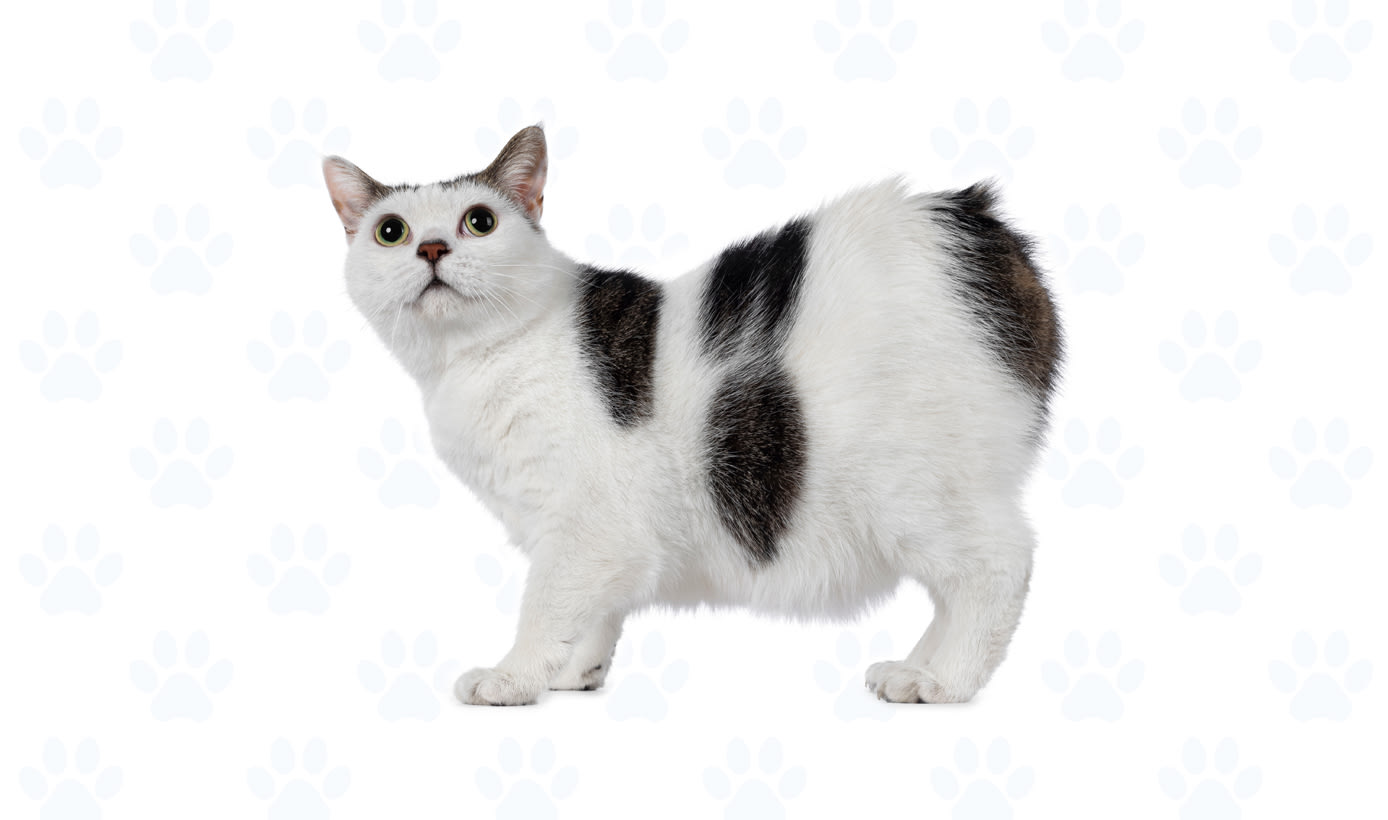
Manx cats are easily distinguished by their physical characteristics. The Manx can have many different tail lengths, including no tail at all. Manx with no tail are referred to as a “rumpy,” while a cat with a short tail is a “riser,” says Catherine Roso, a Manx breeder.
The Manx is also known for having an overall round look, including a well-rounded head, prominent cheeks, almond shaped or round eyes, and a well-padded stocky body. Sometimes their back legs are longer than their forelegs, which pushes their rump up a bit higher than their shoulders, making for an overall arched appearance. “This can especially be seen in the rumpy version of Manx [who have] a smooth curve from shoulder to hock,” says Roso.
Manx come in long- or short haired varieties and are well known for their patterned coats with distinctive classic tabby marks or regal solid colors. “Pedigreed cats are only recognized in their original colors of red, black, cream and blue, silvered, white spotted or white,” says Roso.
Use the arrow keys to switch between coat color examples.
Size & Weight
Manx cats typically weigh between 8 and 13 pounds.They typically measure 7-9 inches at the shoulder.
Full Grown
Female
7 in. / 8 lbs.
Male
9 in. / 13 lbs.
Height is measured up to the shoulders.
Characteristics
- Lifestyle
- Care
- Personality
How to Care for a Manx
Often compared to dogs, the Manx is known for its playful and engaging energy. They can often be found playing fetch or carrying toys and love the company of their owners. “They still have a bit of their origin in them and have been known to be great hunters of houseflies or other little wiggly things,” Roso adds.
Manx thrive on interaction, with access to fun and engaging toys, lots of space to run and play and tons of love and affection ranking high on their list of needs. It’s also important to keep in mind that Manx cats love to jump, so you’ll want to keep a landing spot on the top of your cabinets available for them and keep the breakables out of reach.
Manx also have the unique ability to carry on a conversation with their people by using a sweet, trilling voice. “For a great big cat, they have some tiny little meows, and the biggest boys can have the softest little chirps,” says Roso.
Cost of Owning
Savings & Rewards
Unlock exclusive rewards with Petco Perks. Plus, members get 35% off their first Autoship order and 5% off all future orders.

Enjoy exclusive rewards on expert rated and pet parent approved products, like member prices, extra points and special offers designed to help you save on what your pet needs.

Get your pet’s essentials delivered on your schedule so you never run out and save up to 35% on your first order, then 5% on every order after that.
Your love story starts here.
Find adoptable pets near you with a simple search.
Fun Facts
The Manx was one of the original breeds of show cats represented in the first cat shows in Great Britain.
One of the most obvious characteristics in the Manx is the fact that this breed often doesn’t have a tail. This was likely caused by a dominant mutation traced back to the first Manx cats on the Isle of Man. Today, the Manx can come with any version of tail length, often within the same litter.
Manx are listed as a critically-endangered domestic breed, with fewer than 250 pedigree breeding animals in the world today.
Domestic cats can spontaneously have kittens without tails, but only a cat descended from the Isle of Man can be called a Manx.
History
This ancient breed originated as a working cat on the Isle of Man, catching all of the rats, mice and hedgehogs that caused farmers and fishermen so much trouble. Their strong build and witty character made them excellent companions for farmers. The common physical trait of the Manx, a lack of a tail, likely comes from a dominant gene mutation which, when mixed with other members of the breed, can produce a litter with all different tail lengths. The Manx was probably a short-haired breed originally, but the long-haired gene was likely introduced during the Viking rule when they were mixed with other long-haired cats.