


Two Easy Ways to Start Earning Rewards!
Become a member today! Members-only pricing and offers, personalized care notifications, Vital Care points back on every purchase and more!
 Become a credit card member today!
Earn 2X Pals Rewards points at Petco
when you use Petco Pay!APPLY NOWLearn More About Petco Pay Benefits
Chinese Cave Gecko Care: Expert Tips for Habitat, Food & Health
Updated on August 16th, 2023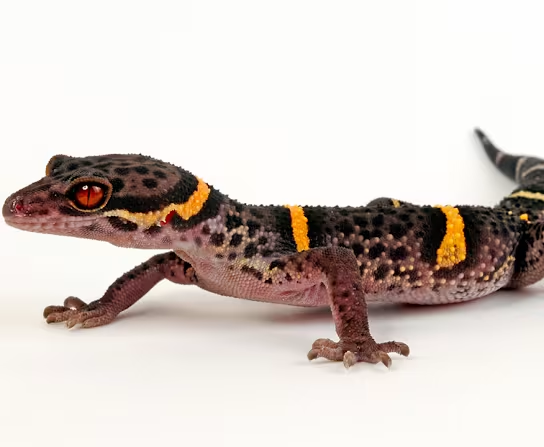
Goniurosaurus hainanensis
Chinese cave geckos are nocturnal terrestrial lizards native to China, Vietnam and Japan. Sometimes called Hainan cave geckos, they live in rainforests near caves and rocks among dense vegetation.
Learn how to take care of your Chinese Cave Gecko, tank size, diet & habitat setup. Find the right food, supplies and equipment at your neighborhood Petco.
Typical appearance and behavior
- These geckos have black to purple spotted bodies with white/yellow/orange circumferential bands and black-and-white banded tails; they have distinct red eyes with vertically oriented pupils and bumpy skin
- Male and female Chinese cave geckos can be distinguished by the bulge at the male’s tail base from the reproductive organs inside their tail
- Like some other geckos, they store fat in their tails; this serves as a nutrient reserve when food is scarce
- Unlike other geckos, Chinese cave geckos have eyelids
- They also lack the sticky toe pads that enable other gecko species to adhere to smooth surfaces; instead, they use their claws to climb
- They tend to be a shy, secretive species
- They prefer a cooler, moist environment and generally don't tolerate higher temperatures for extended periods of time
- Juveniles typically can be housed in groups, but adult males should be kept separate, as they may become territorial or aggressive towards other males
Characteristics
| Care Difficuty | Beginner |
|---|---|
| Average Life Span | 10-12 years |
| Average Adult Size | Up to 8” long |
| Diet | Insectivorous |
| Minimum Habitat Size | 30” L x 12” W x 12” H tank for one adult |
Habitat size
Provide as large a habitat as possible for normal behavior and exercise. Minimum habitat size is 30” L x 12” W x 12” H for one adult. Chinese cave geckos may be housed in groups of multiple females or a male with one or more females. Enclosure size should increase to double the minimum size for small groups to prevent aggression over territory.
Building your habitat
- Décor -
- Chinese cave geckos do well in habitats that mimic their native tropical environments with places to climb and hide
- Provide commercially available thick branches, driftwood and large rocks for climbing and basking on; tall, dense, nontoxic live or artificial plants or pieces of cork bark for climbing or hiding behind; and hiding places, such caves, hide boxes, logs or tunnels
- Artificial plants with fabric leaves do not allow water droplets to form on them for geckos to drink
- Décor should be arranged to allow geckos to hide for security.
- Humidity -
- Chinese cave geckos come from moist, tropical habitats and require moderately high humidity to thrive, with some variation by species
- Maintain habitat at 70–80% humidity by misting plants and other décor daily and as needed every day; monitor humidity with a humidity gauge
- Ensure good ventilation to prevent development of bacteria and fungus
- Geckos lick water droplets from leaves and off their eyes and nose
- A shallow water bowl on the floor of the habitat will help maintain humidity as it evaporates; an environment that is too dry leads to problems shedding
- Substrate -
- Because these geckos are native to humid habitats, they need substrate that holds moisture; sphagnum moss, coconut fiber and orchard bark may be used to retain moisture and increase habitat humidity
- Moisture-retaining bedding may be layered over a layer of commercially available paper-based bedding
- Bedding made of small particles, such as sand or small bark chips, is not recommended, as it can be irritating to geckos’ eyes; it is also indigestible, so it can lead to life-threatening gastrointestinal tract obstruction if accidentally consumed
- Bedding should not get too wet, or it may stick to geckos’ feet
- Moist substrate should be changed frequently to prevent mold growth
- Temperature -
- Chinese cave geckos do well with a temperature gradient that is 70–75°F in the basking/warm zone during the daytime and 70–75°F in the cool zone; nighttime temperatures can fall to 65–70°F
- Monitor temperature with at least two thermometers—one in the cool zone and the other in the hot (basking) zone
- Heat may be provided by an incandescent bulb, ceramic heat bulb or an under-tank heating pad
- Heat sources should be attached to thermostats to regulate temperatures; thermostats are especially important with heating pads, which can get hot and cause burns through the tank floor if not regulated properly
- Hot rocks should not be used as a heat source, as they can burn reptiles
- Reptiles not kept at the appropriate temperature ranges are more likely to become immunosuppressed and get sick
- Lighting -
- While Chinese cave geckos are nocturnal, studies have shown they can utilize vitamin D
- Provide 5.0 ultraviolet (UV) lighting for 10–12 hours a day to help geckos make vitamin D in their skin so that they can absorb dietary calcium; a fluorescent bulb can be used to provide UVB light in the basking area during daylight hours only
- Change UV bulbs every six months as their potency wanes
Cleaning your habitat
Thoroughly clean and disinfect water and food bowls daily. The habitat should be spot-cleaned daily to remove droppings. Thoroughly clean the habitat at least once a week:
- Place the gecko in a secure habitat
- Scrub the tank and furnishings with a reptile habitat cleaner or 3% bleach solution
- Rinse the tank and all furnishings thoroughly with water, removing all traces of habitat cleaner or bleach smell
- Dry the tank and furnishings before putting the gecko back into the habitat
Feeding
A well-balanced Chinese cave gecko diet consists of a variety of live insects, including gut-loaded (recently fed) crickets, mealworms, calci-worms, black soldier fly larvae, butterworms, Dubia roaches and waxworms.
Things to remember when feeding your Chinese cave gecko:
- Fresh, clean water should be available at all times
- Feed appropriately sized insects based on the gecko’s size; insects should be no larger than the space between the gecko’s eyes
- Feed juveniles daily and adults every other day
- Feed no more insects than your gecko can consume in a 15-minute period
- Sprinkle food with calcium supplement containing vitamin D daily for juveniles and 2–3 times per week for adults
- Sprinkle food with a multivitamin or mineral supplement once a week
Care
- Geckos regularly shed their skin; ensure habitat humidity is at appropriate level to allow proper shedding
- When geckos are shedding, mist the habitat more frequently to increase humidity
Where to buy a Chinese cave gecko
Chinese cave geckos are available for purchase at your local Petco Pet Care Center location. Please call ahead to check availability.
Supplies
- Appropriately sized habitat
- Substrate
- Sphagnum moss
- Water and mealworm dishes
- Insects for feeding
- Hideaway place
- Climbing décor
- Plants
- Heat light
- Heat fixture
- Under-tank heater
- UVB lighting and fixture
- Multivitamin supplement
- Calcium supplement with vitamin D
- Cricket keeper
- Cricket food
- Cricket quencher
- Thermometers
- Humidity gauge
- Thermostat
- Mister
Habitat mates
- Chinese cave geckos may be housed in groups of multiple females or a male with one or more females
- Males should not be housed together, as they may fight
- Do not house different reptile species together
Health
Signs of a healthy Chinese cave gecko
- Active and alert
- Clear, bright eyes with no swelling or discharge
- Full, muscular body and tail
- Supple skin with no sores, swellings or discoloration
- Droppings are firm, not runny or bloody
- Eats and passes stool regularly
- Clear nose and vent
Red flags (if you notice any of these signs, contact your veterinarian)
- Weight loss or decreased appetite
- Discharge or bubbles from eyes, mouth or nose
- Lesions, swelling or discoloration of skin or retained shed
- Lethargy
- Sneezing, runny nose or difficulty breathing
- Weakness or paralysis of limbs
- Runny or bloody stool or lack of stool
Common Chinese cave gecko health issues
| Health Issue | Symptoms or Causes | Suggested Action |
|---|---|---|
| Gastro-intestinal disease | Runny or bloody stools, caked or smeared stool around the vent, weight loss or loss of appetite; caused by bacterial, viral or parasitic infection | Consult your veterinarian |
| Respiratory tract disease | Labored breathing, mucus and/or bubbles in the mouth or nose; can be caused by inappropriate habitat temperature and humidity, leading to secondary bacterial, viral or fungal infection | Consult your veterinarian and ensure habitat has proper temperature and humidity |
| Dysecdesis (problems shedding) | Retained pieces of skin anywhere on body, especially over the eyes or around toes; caused by dry habitat or underlying disease | Increase habitat humidity; contact your veterinarian if there is no improvement |
| Skin problems | Redness, swelling, lesions or discoloration of skin; may be due to infection with bacteria, fungus or parasites or to an unclean habitat or inappropriate humidity | Consult your veterinarian; thoroughly clean the habitat and ensure habitat is at appropriate temperature and humidity |
Notes and sources
Ask a Pet Care Center associate about Petco's selection of products available for the care and happiness of your new pet. All products carry a 100% money-back guarantee.
Because all reptiles are potential carriers of infectious diseases such as salmonella bacteria, always wash your hands before and after handling your reptile or habitat contents to help prevent the potential spread of disease.
Pregnant women, children under the age of 5, senior citizens and people with weakened immune systems should contact their physicians before purchasing or caring for reptiles and should consider having a pet other than a reptile.
The information on this care sheet is not a substitute for veterinary care. If your pet is sick or you need additional information, please contact your veterinarian as appropriate.
Related Articles


