


Two Easy Ways to Start Earning Rewards!
Become a member today! Members-only pricing and offers, personalized care notifications, Vital Care points back on every purchase and more!
 Become a credit card member today!
Earn 2X Pals Rewards points at Petco
when you use Petco Pay!APPLY NOWLearn More About Petco Pay Benefits
Butterfly Fish Care: Tank Setup, Feeding, & Water Quality Guide
Updated on January 23rd, 2024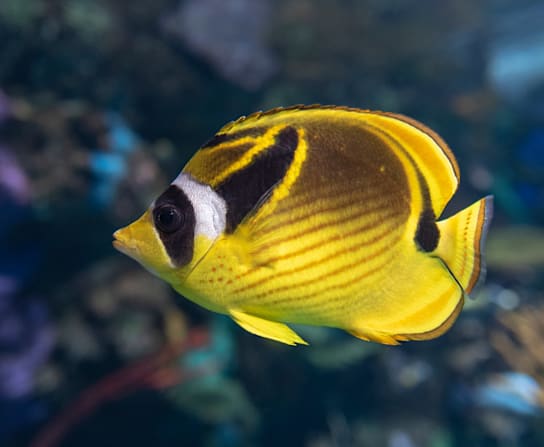
Scientific names: Chaetodon auriga, Heniochus acuminatus, Chaetodon quadrimaculatus, Chaetodon lunula, Forcipiger flavissimus, Chaetodon facula, Chaetodon ephippium
Butterflyfish are a highly recognizable and popular species in the marine hobby. Many butterflyfish resemble butterfly wings, containing eye spots to deter predators. Several butterfly species have special feeding requirements, which can include live coral polyps. Most commonly found on the tropical reefs of the Pacific, Atlantic and Indian oceans.
Learn how to care for Butterfly fish recommended diet and tank setup. Find the right food, supplies and equipment at your neighborhood Petco.
This care sheet covers a variety of butterflyfish, including:
- Auriga butterfly
- Heniochus butterfly
- Fourspot butterfly
- Raccoon butterfly
- Longnose butterfly
- Falcula butterfly
- Saddleback butterfly
Typical appearance and behavior
- Butterflyfish are known for the dark band that runs across their eyes, as well as their sharp dorsal spines
- They are typically found swimming in pairs or schools
- Tend to be shy and peaceful, but some can be territorial
- Butterflies usually inhabit the middle and lower part of the tank
Characteristics
| Care Difficulty | Beginner to advanced, depending on species |
|---|---|
| Average Life Span | Up to 10 years with proper care, depending on species |
| Average Adult Size | 4-12 inches, depending on species |
| Diet | Omnivore |
| Minimum Habitat Size | 50+ gallons, depending on species |
| Water Temperature | 74-80°F |
| Salinity Level | 1.020-1.025 |
Habitat
Habitat size
It is recommended that butterflyfish be kept in a 50-gallon or larger aquarium, depending on the species. A larger aquarium is always encouraged, as water conditions can change rapidly in smaller water volumes.
Building your habitat
- Water health - Provide proper filtration to ensure optimal water quality to help maintain health. Moderate to strong water circulation, based on the species, should be provided to mimic water currents found in the butterflyfish's natural habitat. Stable water quality (pH, ammonia, nitrate, nitrite) and water temperature are critical to the health of aquatic life. If you are unsure of your water quality, bring a sample to Petco for free testing. The addition of a protein skimmer can aid with maintaining great water quality and high dissolved oxygen levels.
- Temperature - An aquatic heater should be used to stabilize water temperature, ensuring it does not fluctuate more than +/-2 degrees in a 24-hour period. The specific gravity should remain stable. Do not allow specific gravity to fluctuate more than +/-0.001 in a 24-hour period
- Décor - Provide rock and décor for hiding places and plenty of room for movement
- Live rock – Live rock can provide a natural food source while also enhancing biological filtration
Feeding
A well-balanced butterflyfish diet consists of:
- Pellets, flakes, freeze-dried, frozen food or live corals
- A varied diet will help to ensure proper nutritional balance
Things to remember when feeding butterflyfish:
- Depending on the species and size, feed small amounts two to three times daily, no more than fish will eat in one to two minutes
- Thaw frozen food before feeding
Butterflyfish care
- Avoid overcrowded conditions, as this is a major cause of stress and disease
- Maintaining great water quality with regular water changes and adequate filtration is important to help keep your butterflyfish healthy
- Daily: Check filter, water temperature and other equipment
- Weekly: Test water quality at least once a week
- Monthly: Change 10 to 25% of the total volume of water every two to four weeks or as needed. Change filter media monthly
Where to buy butterflyfish
Various butterflyfish are available for purchase at Petco online and in store. If visiting your local Petco Pet Care Center location, please call ahead to check availability.
Supplies
- Appropriate size aquarium
- Appropriate food, dry and frozen
- Décor
- Water conditioner
- Filter
- Water test kit
- Full-spectrum lighting
- Net
- Thermometer
- Protein skimmer
- Marine substrate
- Heater
- Refractometer
- Live rock
Habitat mates
- Can be aggressive with other butterflyfish or similar-looking fish
- Avoid coral reef tanks since they like to eat coral
- Compatible with:
- Dwarf angelfish
- Anthias
- Basslets
- Blennies
- Cardinalfish
- Chromis
- Clownfish
- Dartfish
- Foxface/Rabbitfish
- Gobies
- Jawfish
- May be compatible with:
- Large angelfish
- Damselfish
- Psuedochromis
- Tangs
- Wrasses
Health
Signs of a healthy fish
- Clear eyes
- Healthy appetite
- Bright, even coloring
- Fins completely intact and undamaged
- Free of parasites or disease
Red flags (If you notice any of these signs, contact your local aquatic specialist or veterinarian.)
- Loss of color or appetite
- Spots or fungus on body or mouth
- Erratic swimming
- Labored breathing
- Listlessness
- Weight loss
- Cloudy eyes or pop eye
- Frayed fins
Common health issues
| Health Issue | Symptoms or Causes | Suggested Action |
|---|---|---|
| Health IssueFin rot | Symptoms or CausesFrayed or disintegrating fins; the base of the fins usually reddens. | Suggested ActionImprove water quality; consult your local aquatic specialist or aquatic veterinarian for treatment. |
| Health IssueMarine ich | Symptoms or CausesCysts on fins, gills and skin; labored breathing, excess skin mucus or pale skin. | Suggested ActionQuarantine fish immediately and use a commercial parasite remedy. Complete a water change, freshwater dips can dislodge the parasites; Consult your local aquatic specialist or aquatic veterinarian for treatment. |
| Health IssueBacterial infections | Symptoms or CausesCloudy eyes, open sores and/or reddening of the skin. | Suggested ActionImprove water quality; use a commercial antibacterial remedy as directed, consult your local aquatic specialist or aquatic veterinarian for treatment. |
| Health IssueViral infection (lymphocystis) | Symptoms or CausesWhite nodule growths on fins or body. | Suggested ActionImprove water quality; consult your local aquatic specialist or aquatic veterinarian for treatment. |
Notes and resources
Ask a Pet Care Center associate about Petco's selection of products available for the care and happiness of your new pet. All products carry a 100% money-back guarantee.
Because all aquatic life are potential carriers of infectious diseases, such as atypical mycobacterium and salmonella, always wash your hands before and after handling your aquatic life and/or habitat contents to help prevent the potential spread of diseases.
Pregnant women, children under the age of 5, senior citizens and people with weakened immune systems should contact their physician before purchasing and/or caring for aquatic life and should consider not having aquatic life as a pet.
Go to the Centers for Disease Control at cdc.gov/healthypets for more information about aquatic life and disease.
The information on this Care Sheet is not a substitute for veterinary care. If you need additional information, please contact your veterinarian as appropriate.
Related Articles


FAQs
Butterflyfish benefit from a varied diet that includes pellets, flakes, and freeze-dried and frozen food. Some may also eat live corals, therefore, they are not recommended for reef tanks.
Butterflyfish are not poisonous or venomous, however, some have sharp dorsal spines, which they use to defend themselves.
While all aquatic life require good water quality, some butterflyfish are more finicky eaters than others, making them more suited for advanced aquarists. In general, the care level will vary by species with some, such as the racoon butterfly, being a good choice for beginner hobbyists.
Butterflyfish are not recommended for reef tanks. Caution must be taken if housing a butterflyfish in a reef tank, as they may consume live coral polyps and anemones.
A minimum of a 50-gallon tank is recommended for one butterflyfish, depending on the species, however, a much larger aquarium is needed for a school of butterflyfish as they need ample room to swim.
Butterflyfish may consume live coral polyps and anemones.