Home & HabitatIs my bearded dragon's tank setup good for their health and safety?
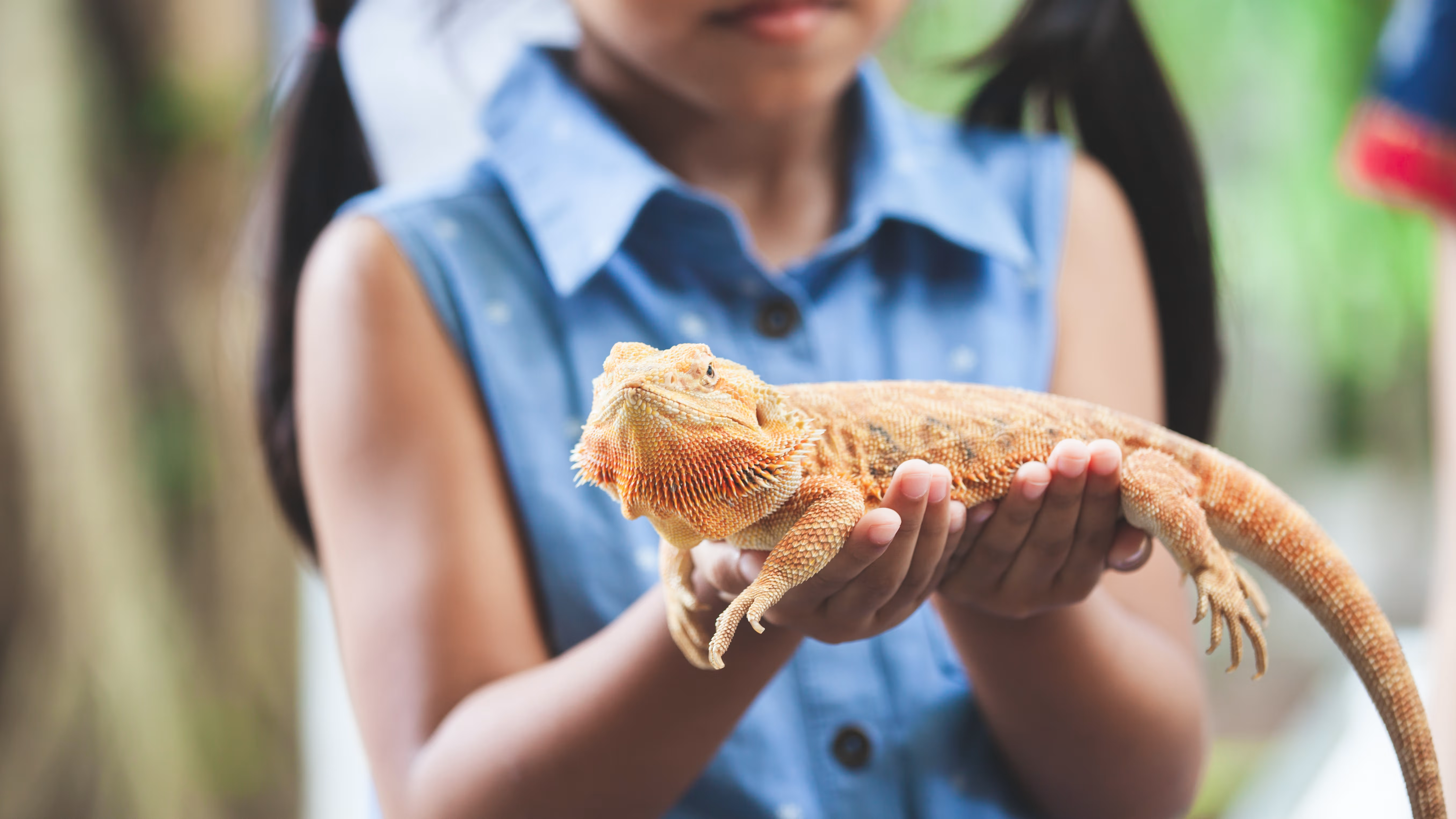
Thanks for your question about Smaug, and thanks for the photo as well! I think that you have a good start to your set up, and that we can tweak a few items. First, your lighting situation appears adequate - I see a UVB light (please change this bulb every 4-6 months), a basking light, and a ceramic heat bulb. I would ensure that your temperatures are appropriate for this species, and that you are monitoring them using digital thermometers (I think that you see both a digital and analog thermometers currently) at the level of Smaug. Analog thermometers are inaccurate, so I don't recommend using them (also, they are high up on the sides of the enclosure, so they wouldn't be giving an accurate temperature read for Smaug). For the cage furniture that you have, I like that you have places for Smaug to climb and hide. However, I would recommend having a hide on both the warm side of the enclosure and the cool side so that Smaug has choices. Same for the climbing structures. I may have missed a food and water dish in the enclosure - I would recommend that both of these be shallow, and be large enough for Smaug's entire body to fit within them. I cannot tell what type of shavings that you have on the bottom of the enclosure, but the only wood shavings that I recommend are aspen shavings. If they are pine, these can be irritating to the respiratory system.
I hope that gives you a place to start, and thanks for using Petco Pet Education Center, formerly Petcoach!
Updated on September 24th, 2025


 Members-only pricing and offers, personalized care notifications, Vital Care points back on every purchase and more!
 Become a credit card member today!