Two Easy Ways to Start Earning Rewards!
Become a member today! Members-only pricing and offers, personalized care notifications, Vital Care points back on every purchase and more!
 Become a credit card member today!
Earn 2X Pals Rewards points at Petco
when you use Petco Pay!APPLY NOWLearn More About Petco Pay Benefits
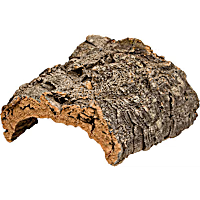
Zoo Med Reptile Hideaways
Get It Today




Related Searches
Related Articles & Questions
- New Pet
Reptile Habitat Setup Guide | Petco
Learn how to setup your reptiles terrarium to ensure your reptile lives a wholesome & happy life. Shop at your local Petco for all reptile terrarium needs.
Updated on July 17th, 2026
- Care Sheets
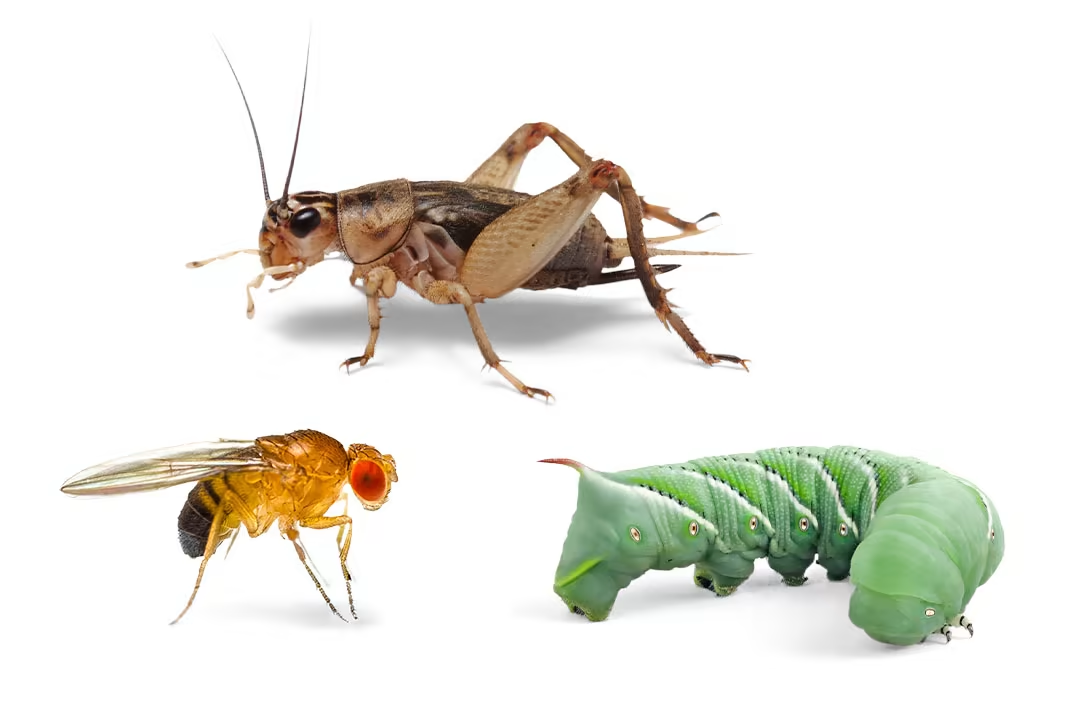
Reptile Feeding: Live Insect Selection & Care for Optimal Health
Learn about live insects for reptile feeding, recommended diet & habitat setup. Find the right food, supplies & equipment at your neighborhood Petco.
Updated on April 9th, 2026
- Care Sheets
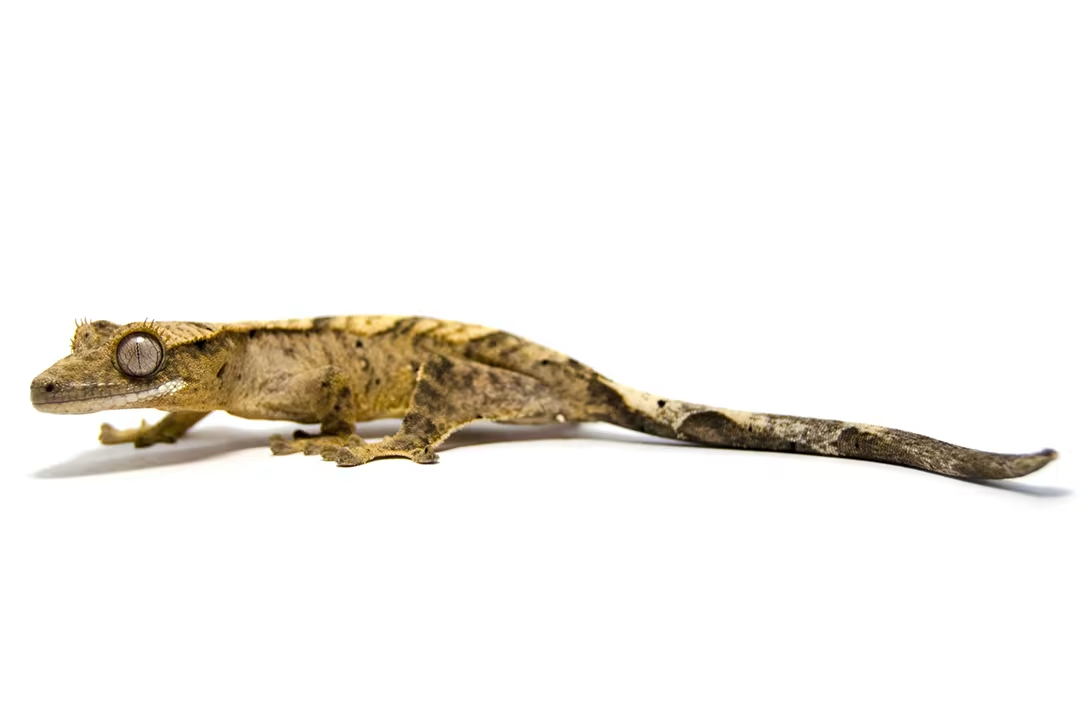
Crested Gecko Care: Habitat, Diet, Health, Supplies - Ultimate Guide
Learn how to take care of your Crested Gecko, tank size, diet & habitat setup. Find the right food, supplies and equipment at your neighborhood Petco.
Updated on December 22nd, 2025
- Care Sheets
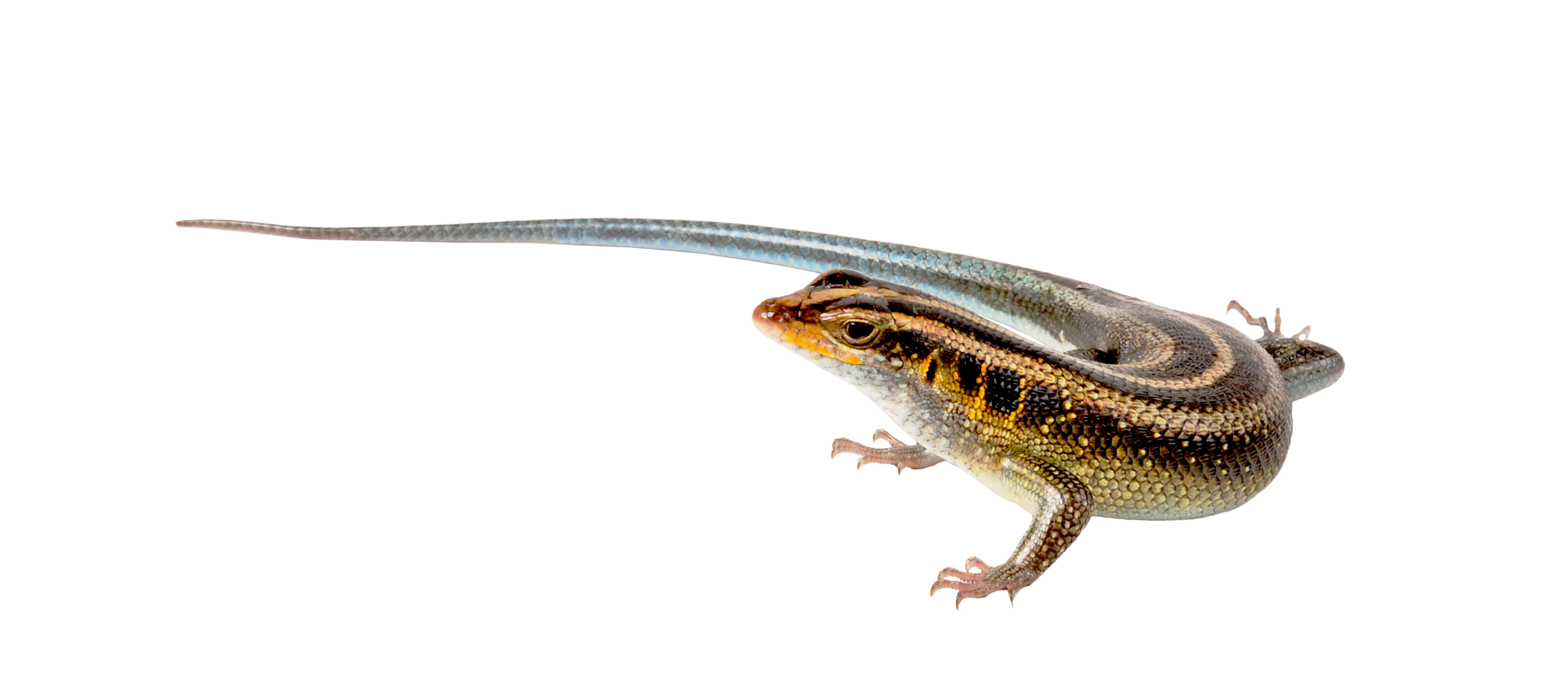
Arid Skink Care: Your Ultimate Guide to Habitat, Food & Health Tips
Learn how to care for an Arid Skink, recommended diet and habitat setup. Find the right food, supplies and equipment at your neighborhood Petco.
Updated on April 9th, 2026
- Care Sheets
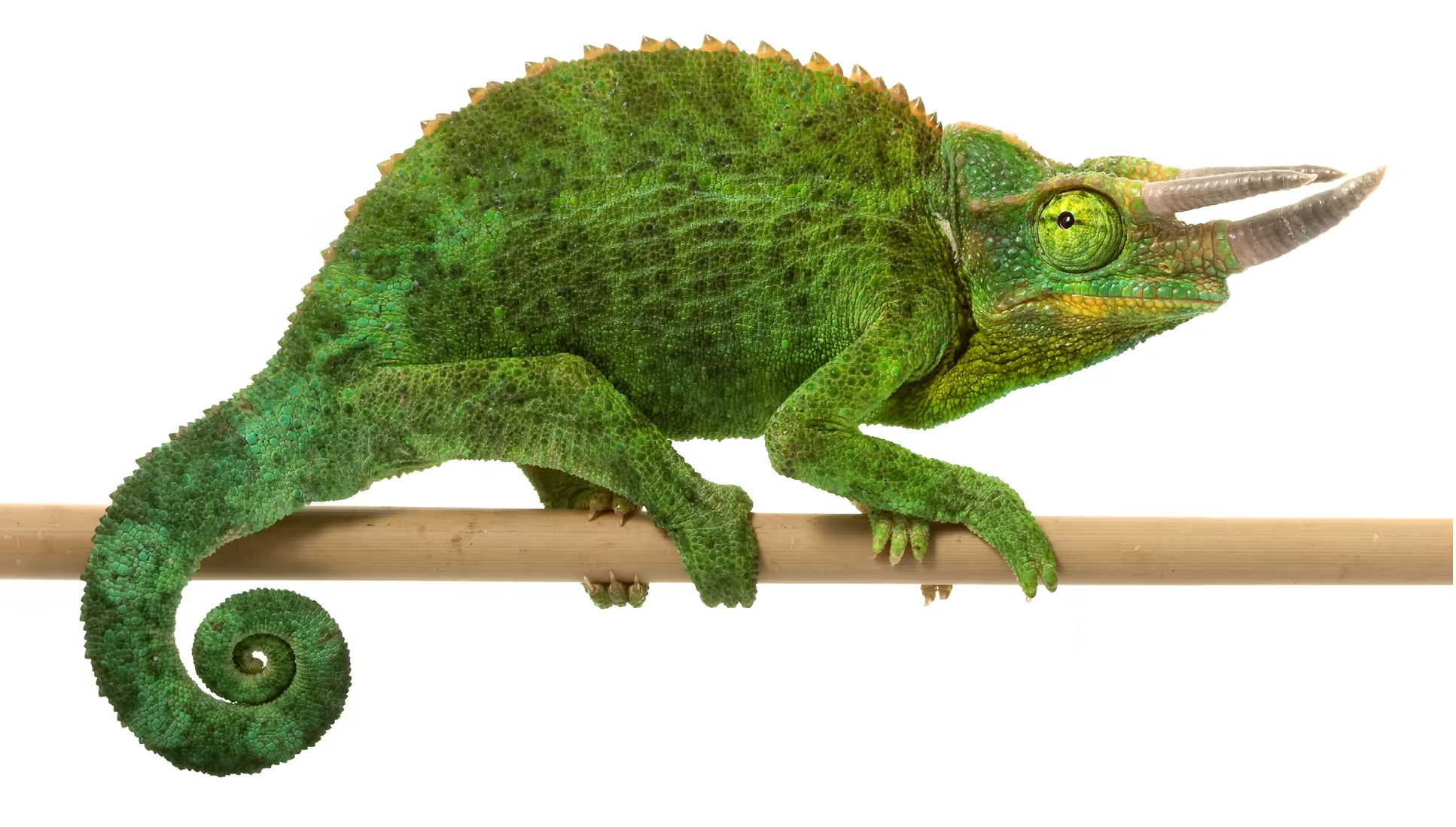
Jackson's Chameleon Care: Thrive Guide for Food, Habitat & Health
Learn how to care for Jackson's Chameleons, recommended diet & habitat setup. Find the right food, supplies & equipment at your neighborhood Petco.
Updated on April 9th, 2026
- Training & Behavior
My reptile's tank is perfect, why is he acting strange?
Stress or illness are likely responsible. Placing dark colored paper around the lower 10-12 inches of the glass might decrease stress. If this doesn't seem to help, a veterinary visit is recommended. Good luck.
Updated on September 24th, 2025
- Home & Habitat
Why is my reptile not shedding, has shut eyes, and green liquid?
Soak Razor in warm water for 15-20 minutes. Gently rub off any loose shed but do not pull or tear at it. If he is wiggly, you can place him in a small container with paper towels moistened with warm water for 15-20 minutes. The moist heat and humidity should help with the shed. Make sure he can breathe in the container. You can put this moist hide in his enclosure so he has a place to go when he is shedding. Monitor his stool and submit a sample to your vet to diagnose intestinal parasites if you see more "green liquid".
Updated on September 24th, 2025
- Health & Wellness
How to tell if my snake is overheating from a new heating mat?
The addition of an under-tank heater can change the temperature of an enclosure significantly. To determine what the temperatures are within Ladon's enclosure, I would recommend utilizing digital thermometers. These should be located on both the warm and cool end of the enclosure, and should be located at Ladon's level (not higher or lower than him). With that information, you can tell if the temperatures are now too hot or not. I would also recommend that you have hides present on both the cool end and on the warm end - this will provide Ladon with choices within his enclosure as well. With the water bowl, this may also be related to his enclosure temperature. I would recommend monitoring for any changes once you have determined if the temperatures are appropriate for his species. You can refer to a care sheet if needed to gather temperature information. I hope that answers your question, and thanks for using Petco Pet Education Center, formerly Petcoach!
Updated on September 24th, 2025
- Vet Q & A
My power is out! How do I keep my pet reptile warm and safe?
Here are some tips on how to care for pets who require continuous heat, such as reptiles and snakes: - Before a power outage, if possible, buy a generator. This will allow you to keep your reptiles warm during the outage. - Amphibians will do okay without heat for a period of time. Try to limit the number of times you open the habitat. - For a heat source, you can go to your local sporting goods store and purchase the heat packs used to warm feet and hands. These can be placed underneath the habitat (just like you would place an electric heating pad). This will allow your reptile to get heat. Do not put the pack into habitat with the reptile. - Another way to warm cold reptiles is to use a pillowcase. Place the reptile gently in the case and place the pillowcase next to your body under your shirt for warmth. - Pillow cases can also be used to transport reptiles if needed. - Do not feed your reptile as they need heat to digest their food. - You can save plastic milk containers and put warm water in them and place in the habitat for warmth. You can heat water on a BBQ grill or your hot water heater. Be careful not to use hot water, as it could burn your reptile. - Be advised that most reptiles will do fine with cooler temperatures; they go into a body slow down, so the temperature change won't hurt them for a short period of time: 24 - 48 hours. - Contact friends that have power and see if you can move your animals to their homes. - It is important to plan ahead of a power outage and have these items on hand to care for your reptiles. Additionally: Usually, IF a reptile needs to be kept warm during a short outage (few days or less), it is recommended that you place them into a small cooler (those little $5 styro ones can work) in a small container. A plastic shoebox or sandwich container can work, with some air holes. Hand warmers, hot water bottles, etc. can be placed into the cooler as well. This will form a very insulated area with a small amount of volume to heat. Be sure there is ventilation provided, though, as the hand warmers can suck oxygen from the air for the chemical reaction. This is a method that can be carried out for a relatively long period of time if necessary, and a digital thermometer with a probe can be placed in with the reptile and monitored from the outside, so you don't have to open the cooler and let out the warmth to check that the heat packs are still working. In all honesty, though, all but the most tropical reptiles can go a few days with temperatures into the 50's or 60's.
Updated on September 24th, 2025
- Home & Habitat
New corn snake owner: Shedding signs, care, and best bedding?
Just prior to shedding, the skin will become dull and the eyes will turn a cloudy blueish white. The snake will also begin to rub on anything and everything in the enclosure. Increase humidity or provide a moist hide to facilitate shedding. A water bowl should be provided as well. Aspen shavings are ideal for bedding. Avoid anything dusty such as sand or kitty litter.
Updated on September 24th, 2025