Two Easy Ways to Start Earning Rewards!
Earn 2X Pals Rewards points at Petco
when you use Petco Pay!
Get It Today
Do you have questions about bearded dragon poop? Visit Petco.com to find all the answers about the health of your bearded dragon poop.
Updated on October 23rd, 2025
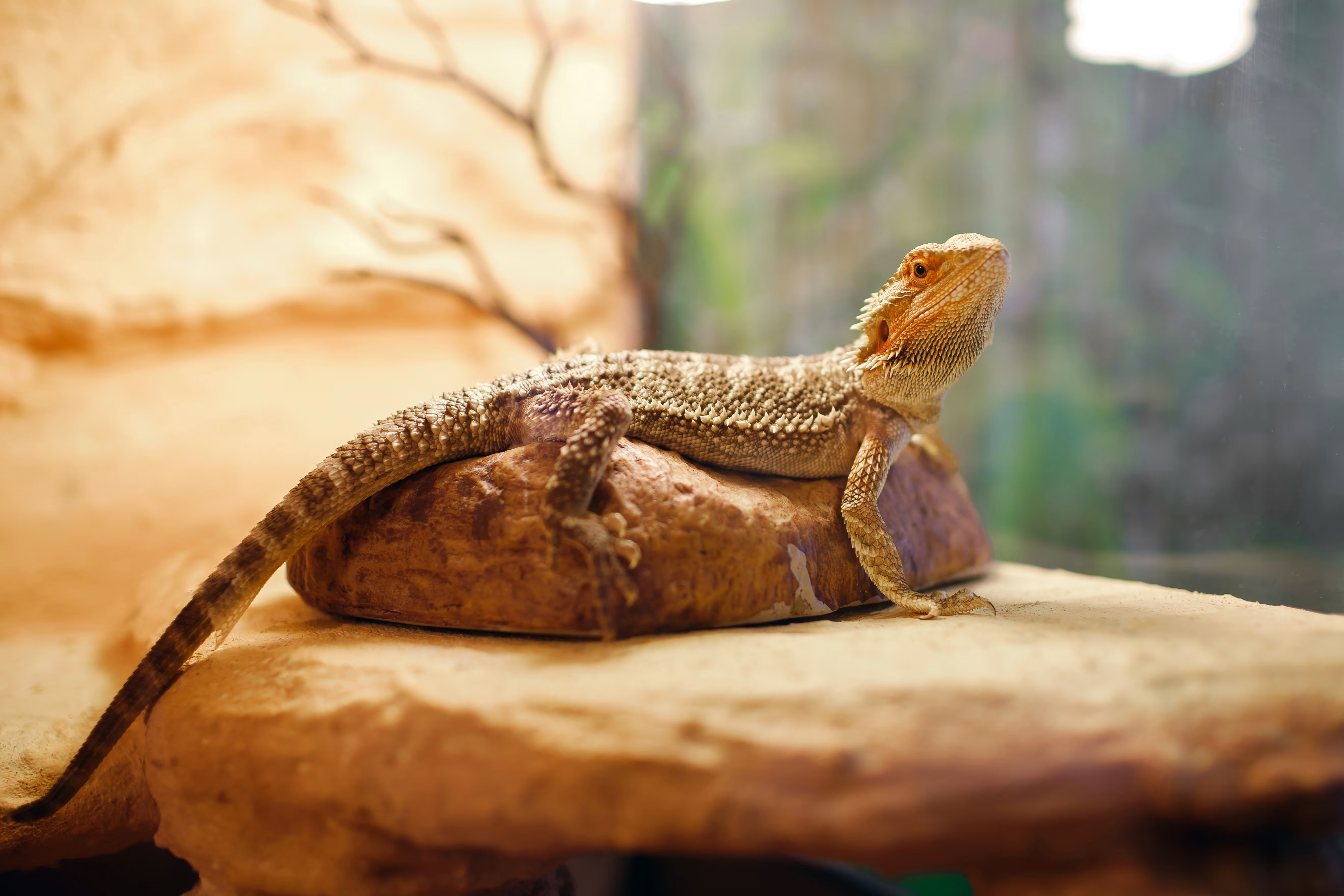
When it comes to reptile habitats, one of the most essential elements to creating a happy home for your pet is including the appropriate type of lighting. Zoo Med helps outline which lights are right for your pet.
Updated on October 23rd, 2025
Learn how to identify bearded dragon impaction and what to do. Stop by Petco to learn about the signs of impaction in bearded dragons, symptoms and treatment.
Updated on October 23rd, 2025
Learn how to care for tropical lizards, recommended diet & habitat setup. Find the right food, supplies & equipment at your neighborhood Petco.
Updated on October 23rd, 2025
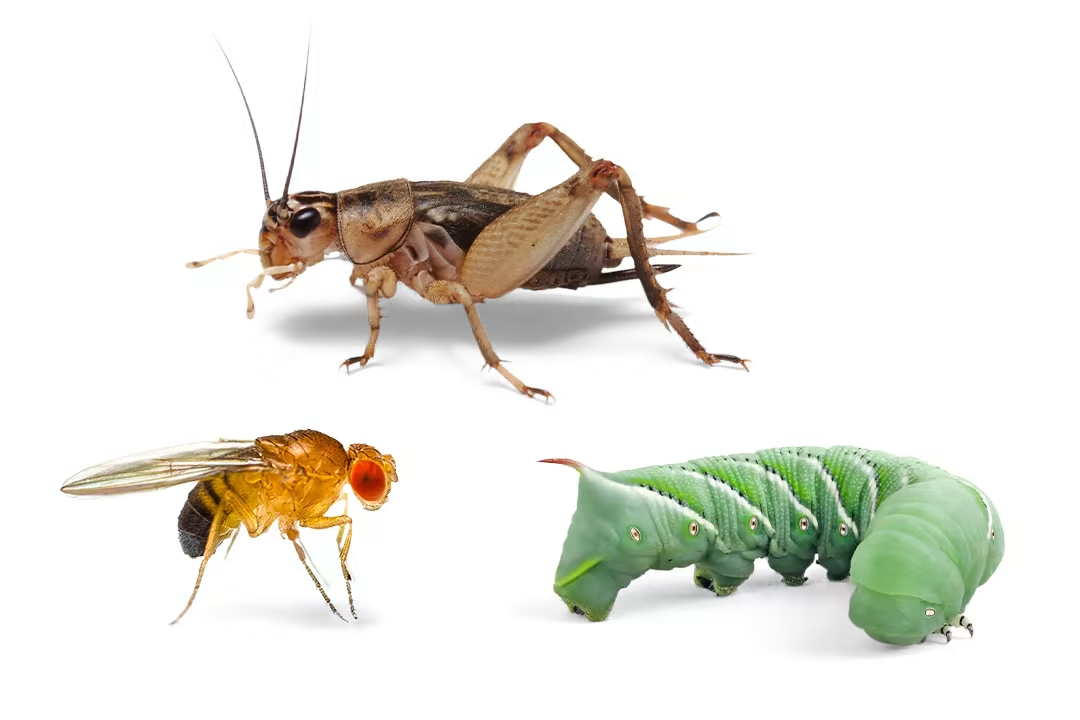
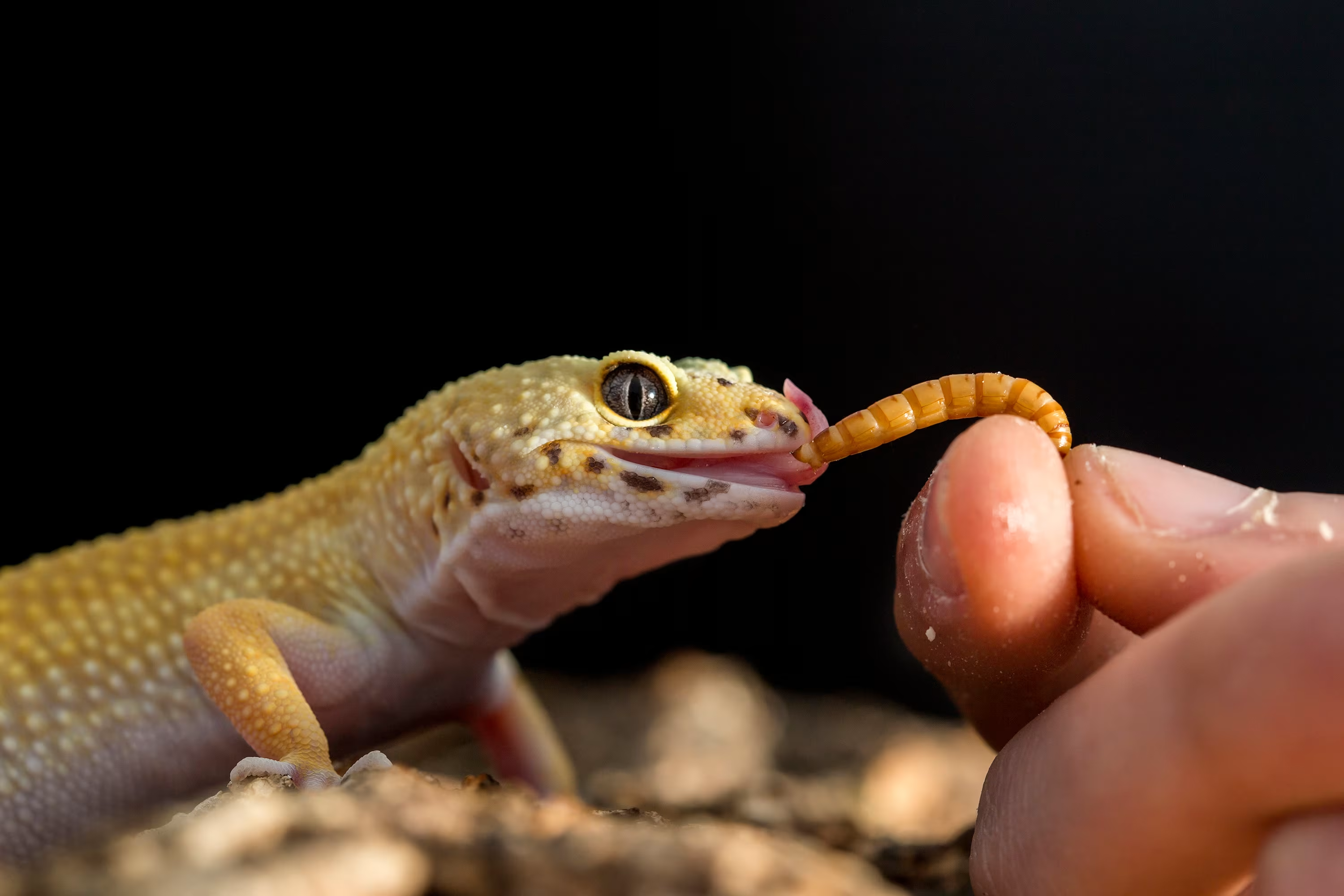
Learn about live insects for reptile feeding, recommended diet & habitat setup. Find the right food, supplies & equipment at your neighborhood Petco.
Updated on October 23rd, 2025
One of the most reliable sites for beardie care is found at the link below. http://www.anapsid.org/bearded.html You can find additional information here: http://www.reptilesmagazine.com/Care-Sheets/Lizards/Bearded-Dragon/ Provide heat, UVB lighting, water and a balanced diet while she recovers and beyond. Once she is healthy again, acclimate her to your presence slowly then gradually introduce her to handling by holding her for ever increasing periods of time.
Updated on September 24th, 2025
Thanks for your question about Tarzan. The lack of activity that you are describing may be normal for Tarzan, but when you then combine it with her not shedding and not going to the bathroom very often I begin to suspect that there is something else going on. I would recommend feeding Tarzan a small salad of dark leafy greens on a daily basis, with calcium supplementation 2-3 times per week based on her age. I would also recommend protein 2 times per week based on her age as well. You eluded to having recommended temperatures in the cage, but I didn't see how you were monitoring the temperatures or if there was UVB light provided. I would recommend monitoring using a digital thermometer and changing the UVB light every 4-6 months. I am glad that she seemed to be doing okay at her vet visit in the fall. I didn't see if blood work was performed, but that is something that I recommend for every reptile at regular intervals for wellness examinations, as reptiles are very good at hiding th
Updated on September 24th, 2025
Beardies can have regular soaks even as juveniles, especially when they are shedding. Use warm water and fill a container no higher than Lucky Man's shoulder. Never leave him unsupervised while he is bathing. Bearded dragons are omnivorous. They eat plant and animal matter. Greens and veggies should make up about 20% of the diet. Acceptable foods include carrots, green beans, squash, mustard greens, collard greens and dandelion greens. Prey should be of appropriate size. Beardies can eat crickets, locusts or dubia roaches. Wax worms can be offered as treats. Never feed insects caught indoors or in the yard. Raise your own, buy online or from a pet store. They do enjoy being held once acclimated and are very curious about their environment. Follow the link for more information: http://www.anapsid.org/bearded.html
Updated on September 24th, 2025
Choose the largest cage your space and budget will allow. At minimum, a 55 gallon enclosure should be considered. Acceptable substrates include slate, reptile carpet, decomposed granite or large gravel. Yes, setting up a bio-active environment for beardies is possible. It will take a bit of research and effort to get it right.
Updated on September 24th, 2025
While it is true that these signs could be due to trauma caused by the other beardie, it is also possible that it could be due to inappropriate nutrition or environment. Make sure that you are providing your bearded dragons with adequate calcium (supplemented in the food), and sufficient heat and UVB lighting in their cages. I also recommend that you take Luchi to see a reptile veterinarian in case he was injured and requires pain medications. You can find a reptile veterinarian in your area on www.arav.org.
Updated on September 24th, 2025