Two Easy Ways to Start Earning Rewards!
Become a member today! Members-only pricing and offers, personalized care notifications, Vital Care points back on every purchase and more!
 Become a credit card member today!
Earn 2X Pals Rewards points at Petco
when you use Petco Pay!APPLY NOWLearn More About Petco Pay Benefits
UniPaws Dog Doors & Flaps

Related Searches
Related Articles & Questions
- New Pet
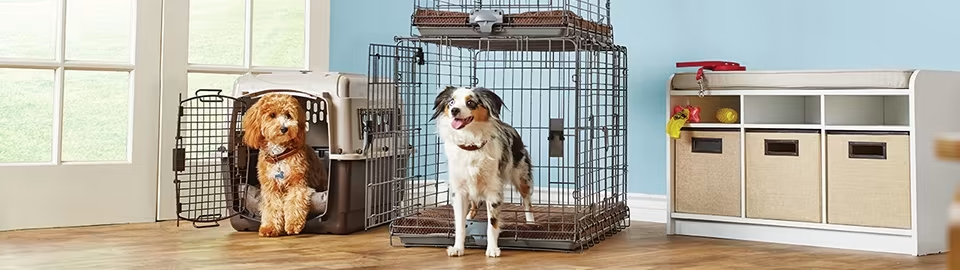
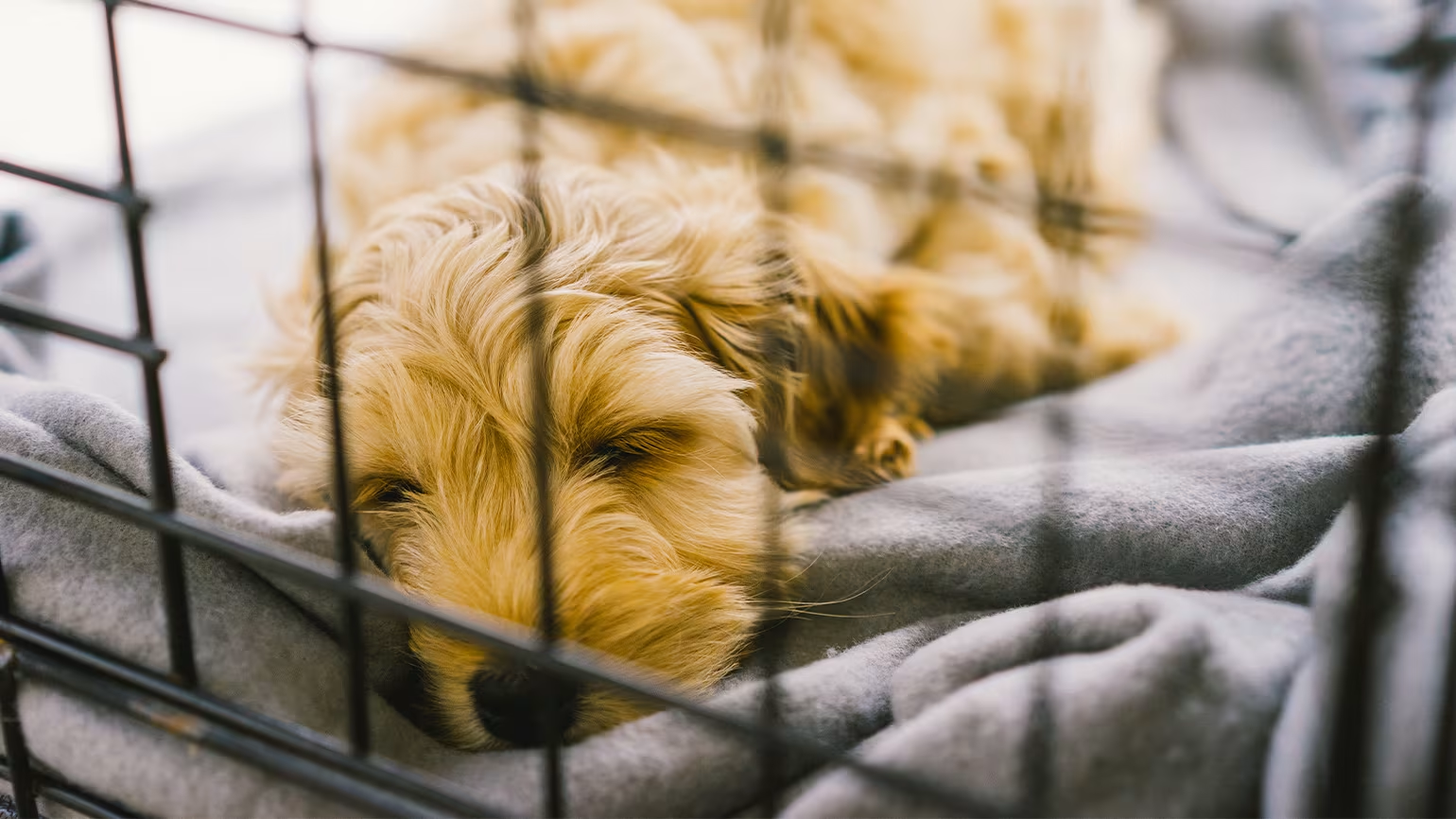
Easy Crate Training: Puppy & Dog Tips for a Calm, Happy Home
Puppy and dog crate training encourages puppies to control themselves for longer periods of time and keeps them safe when unsupervised.
Updated on October 23rd, 2025
- Product Guides
How to Pick the Perfect Dog Crate Size for Your Furry Friend
Wondering what size dog crate for your dog? Our pet experts have developed a chart to help you determine what size crate is the right fit for your dog.
Updated on March 18th, 2026
- Home & Habitat
Sustainable Dog Accessories & Eco Pet Parenting Guide
Being a sustainable pet parent involves good practices and habits. Learn more about eco-friendly dog products, eco-friendly cat products and other solutions.
Updated on June 19th, 2026
- Care Sheets
New Dog Owner's Guide: Feeding, Health, & Creating a Happy Home
Learn how to care for your dog, recommended diet and training. Find the right food, supplies and equipment at your neighborhood Petco.
Updated on April 9th, 2026
- Home & Habitat
DIY Custom Dog Leash Hook: Personalize & Organize Your Pet's Gear!
Visit Petco to make a unique gift for the pet lover on your list. With a few hardware pieces, wood stains & paint, you can design a DIY dog leash & treat holder.
Updated on October 23rd, 2025
- New Pet
My puppy escapes her crate. How do I keep her safely inside?
I would recommend getting a different cage or one that requires two fingers to engage a spring. Dogs are unable to open the cages that have the springs in my experience. These are similar to cat carriers that have the spring loaded mechanism on the door. I hope this helps! Please let me know if you have any other questions or concerns and I would be more than happy to help you further.
Updated on September 24th, 2025
- Training & Behavior
How to stop my Labrador from repeatedly chewing the dog door flap?
Unfortunately there isn't a quick and easy solution to your dog's weird obsession. You can try spraying a product called Bitter Apple or No Chew (look at the pet store) to deter him from chewing there. Also make sure he has plenty of other (and safer!) things to chew on. If those don't work, you may consider crate training or training him to wear a basket muzzle to prevent him from getting in trouble when you are gone.
Updated on September 24th, 2025
- Food & Nutrition
Preparing for dog recovery: small crate cost & regular food?
That's cool that the recovery suit will work for her then. The cost of crates vary by location, so I would check costs in pet stores, as well as checking online sites that resell things (like Ebay if you have that in Bosnia & Herzegovina). You may be able to buy one second hand. Yes, she can eat her regular food :-)
Updated on September 24th, 2025
- Health & Wellness
What's the best way to treat my dog's crate separation anxiety?
Hello, thank you for your question about Moose. I have provided some information from a handout on crate training, it can be tough and challenging but you are doing a great job already! Moose is likely exhibiting these behaviors because he knows you are leaving him and he is trying to do anything to get you to stay and take him from the crate. Why should I crate train my puppy? Crate training is a great way to limit your puppy’s access to your house while he learns appropriate behavior. It will cut down on the number of “accidents” while your puppy is learning to be housetrained, and will reduce destroying and chewing of furniture or other household items. It will give you more peace of mind and freedom to be away from home during your puppy’s growing up period. If your puppy is used to being crated it will also be easier and less stressful for him to travel, to be in a cage at the veterinarian, or to be confined for any other reason in the future. You may choose to continue to use the crate into your dog’s adulthood as his very own comfortable “room”. Why does it work? In the wild, dogs naturally seek out dens for sleeping quarters. Presumably this is because they are closed with only one entrance, giving the dog a sense of security. Dogs instinctively do not like to soil in their dens and will go outside to eliminate. Crating your dog is simply using his instinct not to soil in his den, and so therefore allowing you to gradually teach him that your whole house is his “den” and to only eliminate outside. Some people feel apprehensive about crating their dog, thinking that it is mean and that their dog won’t like it. However, since dogs seek out dens on their own, a crate is both natural and comforting to a puppy. How do I choose a crate? Both wire and plastic crates are available. Both work well, so it really depends on your personal preference. Keep in mind that plastic crates can be used for airline travel while wire crates may be collapsible, thus easier for storage. Getting the right size is very important. Your dog should be able to stand up and turn around freely in his crate, but it should not be big enough for him to have a separate toilet area. If your puppy is going to grow a lot more, get a crate that will be big enough for him as an adult, but block the back area so it is not big enough for him to have a separate toilet area now. How do I crate train my puppy? First, make sure the crate is comfortable by placing a towel or bed inside. Place the crate in a common area and put toys and treats inside for your puppy to discover. Don’t ever force your puppy into the crate, as going in should always be a positive experience. Praise him every time that he goes into the kennel. After he is comfortable going inside his crate for treats, beginning feeding his meals inside the crate. Start closing door while he is eating, but open it before he is done. Next, leave the door closed for longer increments of time, building slowly. Never open door when he is whining or scratching, but only open it when he is quiet. If he is consistently whining, he is being closed in for too long, so go back to an amount of time he tolerates well and increase more slowly. After that, start crating him at other times besides his meals. Always give him an incentive to go into the crate (treats, food-filled toys, such as a Kong®, toy etc.). First stay in the room with him and then start leaving the room for short increments of time, building very slowly. Once he handles this well you can start leaving the house for short periods of time, again slowly increasing length of time. The length of time it takes for a puppy to learn varies from dog to dog, so remember that patience is key for your puppy’s success!
Updated on September 24th, 2025
- Training & Behavior
Rescued dog poops inside. Will crating help with housebreaking?
Snoopy is absolutely adorable!! I would keep Snoopy in the crate when you cannot keep 100% watch on him. When he comes out of the crate I would then walk him (on a leash even if the backyard is enclosed). After he goes to the bathroom he can go off leash to play. If he goes then I would play with him and once you have to turn your back he goes back in the crate. If he does not go to the bathroom when you take him out of the crate I would put him back in for 20 minutes and try again. If you catch him going to the bathroom tell him no and take him and put him where you want him to go and praise him for going. If you just see the accident then clean it up and do not say anything to him. A crate should be big enough for him to stand up, sit down and turn around. The crate is a very safe option and dogs end up loving their crates, it's their safe house. Since we do not know what type of life Snoopy had previously this process can take some time and patience. I hope this helps and thank you for using Petco Pet Education Center, formerly Petcoach!
Updated on September 24th, 2025