Two Easy Ways to Start Earning Rewards!
Earn 2X Pals Rewards points at Petco
when you use Petco Pay!
Get It Today
Learn more about beachcombing tips with your water-friendly dog to understand how to get most out of your dog’s day at the beach.
Updated on July 17th, 2026
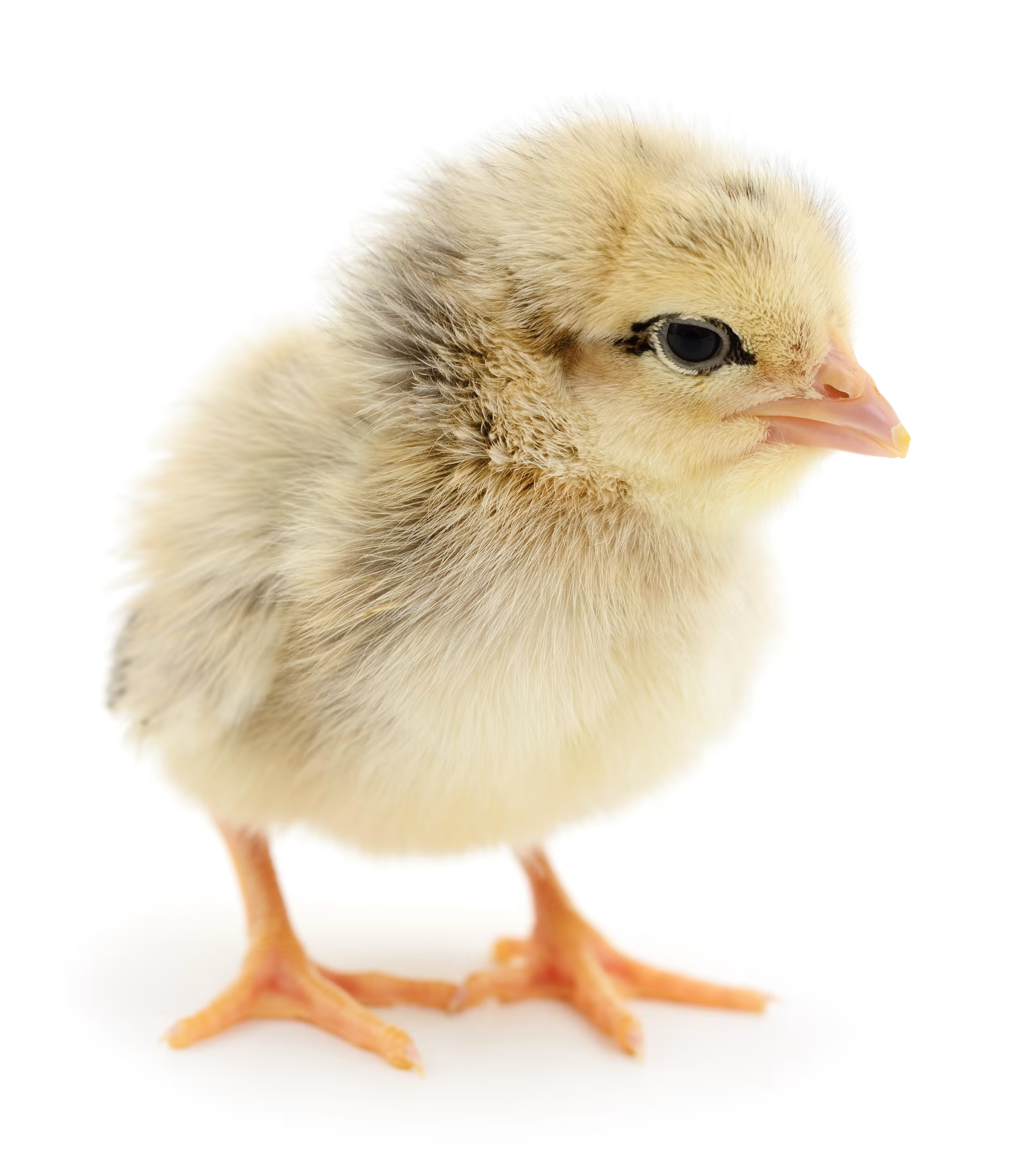
Learn how to take care of a Chick, recommended diet and habitat setup. Find the right food, supplies and equipment at your neighborhood Petco.
Updated on April 9th, 2026
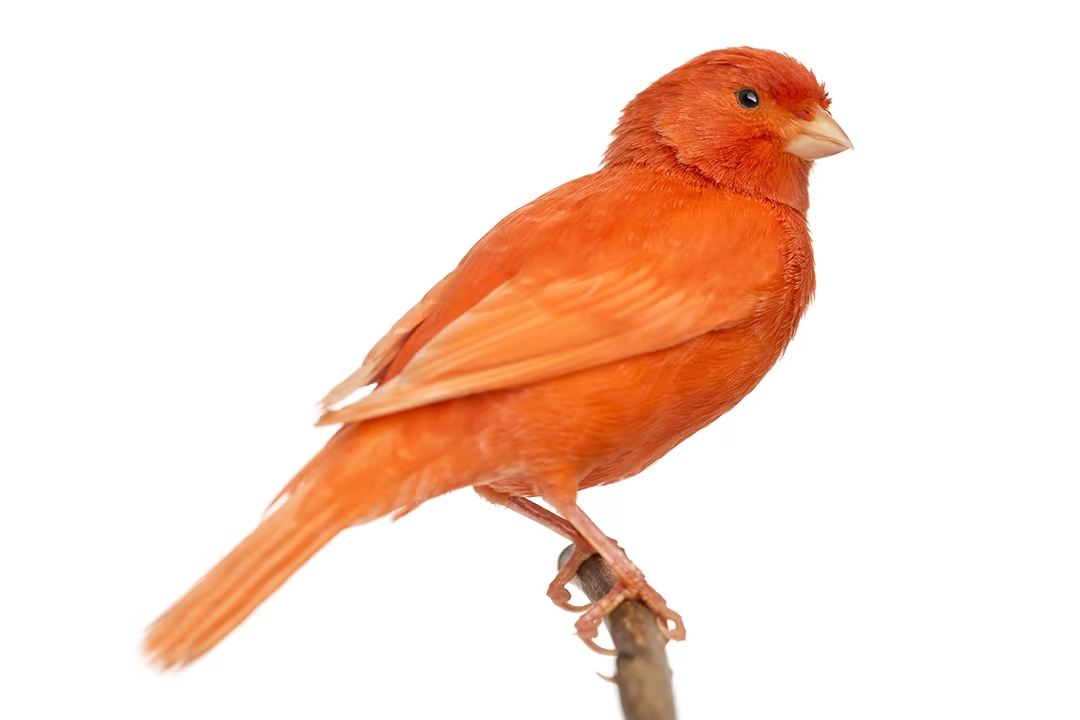
Learn how to care for a Canary, Canary facts, recommended diet and habitat setup. Find the right food, supplies and equipment at your neighborhood Petco.
Updated on April 9th, 2026
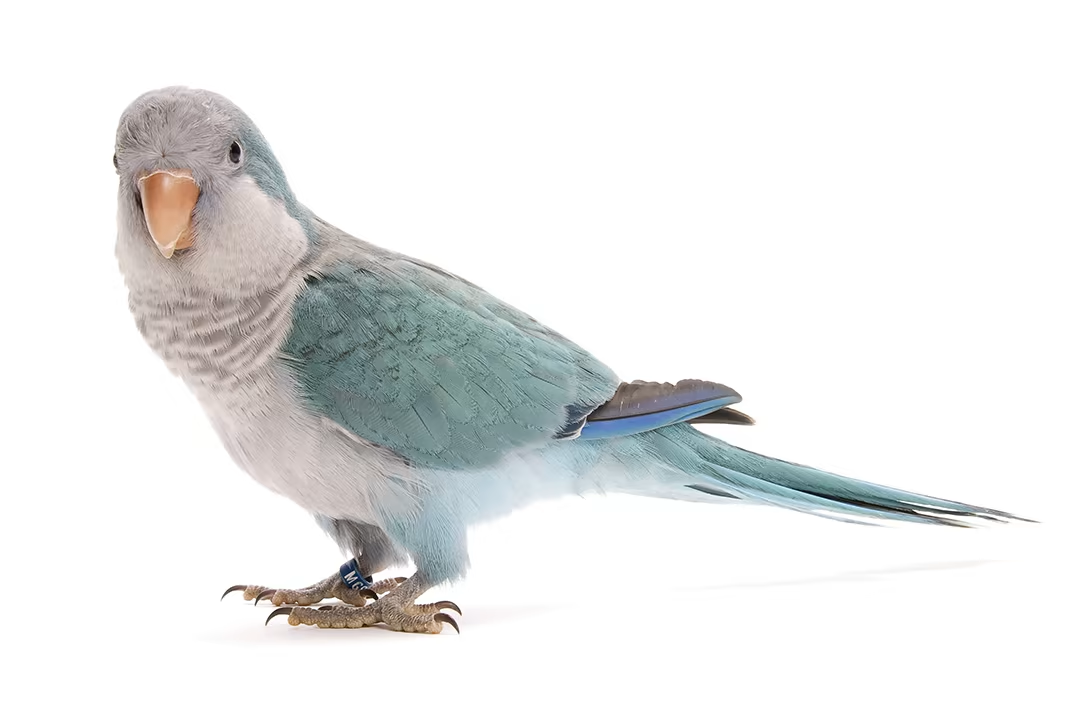
Learn tips about breeding Parakeets in a safe way. Search Petco to keep your feathered friends happy & healthy.
Updated on June 19th, 2026
Review a description of the toxic or poisonous plants for birds, and a listing of plants considered safe for pet birds.
Updated on June 19th, 2026
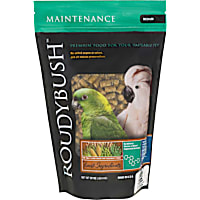
Thanks for your questions about birds. You can shower with birds, but it is recommended that they sit on a perch or on the shower rod during the shower, not that they are directly hit by the spray. A safer way to give them a shower is by using a gentle mist directed over the top of them with a spray bottle. When provided with appropriate and balanced nutrition, a cuttle bone is not necessary for parrots. The food that you posted is a reliable pelleted diet, but you would need to ensure that you got an appropriate size for the species - for example, the mini pellets would be good for a conure but not for an Amazon. If you have never had a bird before, it may be a big commitment to get a medium to large sized parrot. When cared for appropriately, these large parrots can live many decades - ideally 50 years or more. You may potentially consider starting with a smaller parrot, such as a cockatiel (life span of up to 25 years) or a budgerigar (life span around 8 years). I hope that gives you some additional information!
Updated on September 24th, 2025
I am sorry to hear about your bird. This is a condition that requires veterinary care. In some cases, increase in humidity, lubrication of the cloacal area, and administration of supplements and medication called oxytocin that can help expulsion of the egg. If this isn't successful or possible then sometimes manual removal or surgical intervention is needed. You can read more about this at http://www.peteducation.com/article.cfm?c=15+1829&aid=3060. Also, FYI, the photos you have attached are of parakeets aka budgerigars, not love birds.
Updated on September 24th, 2025
Feather picking is common in birds and is usually related to behavioral issues like stress and Boredom. I recommend trying to increase the amount of toys and interactions through the day. Also keep in a low stress area of the house. If that does not help I would recommend taking him to a veterinarian for medications to try and stop the behavior.
Updated on September 24th, 2025
You can over supplement calcium so be careful. Use a supplement made for birds and follow the instructions on the bottle. ( https://www.arcatapet.com/item.cfm?cat=24044 ) Normal clutch size is 4-6 eggs.
Updated on September 24th, 2025
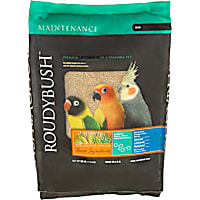
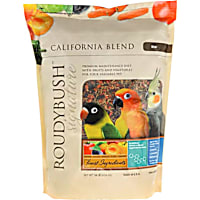
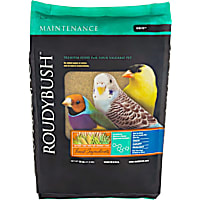
Thanks for reaching out. There are several brands with good quality nutrients and research. Roudybush or Harrison's are brands that most avian veterinarians approve. Look at the ingredients listed to make sure it isn't heavy in fillers such as corn or wheat. Transitioning to pellets is sometimes difficult but highly recommended. Pellets should not be the sole diet, but should be used to supplement fresh vegetables, a vegetarian protein source and other vitamin sources. Good luck
Updated on September 24th, 2025