Two Easy Ways to Start Earning Rewards!
Become a member today! Members-only pricing and offers, personalized care notifications, Vital Care points back on every purchase and more!
 Become a credit card member today!
Earn 2X Pals Rewards points at Petco
when you use Petco Pay!APPLY NOWLearn More About Petco Pay Benefits
Miracle Care
Get It Today


Related Articles & Questions
- New Pet
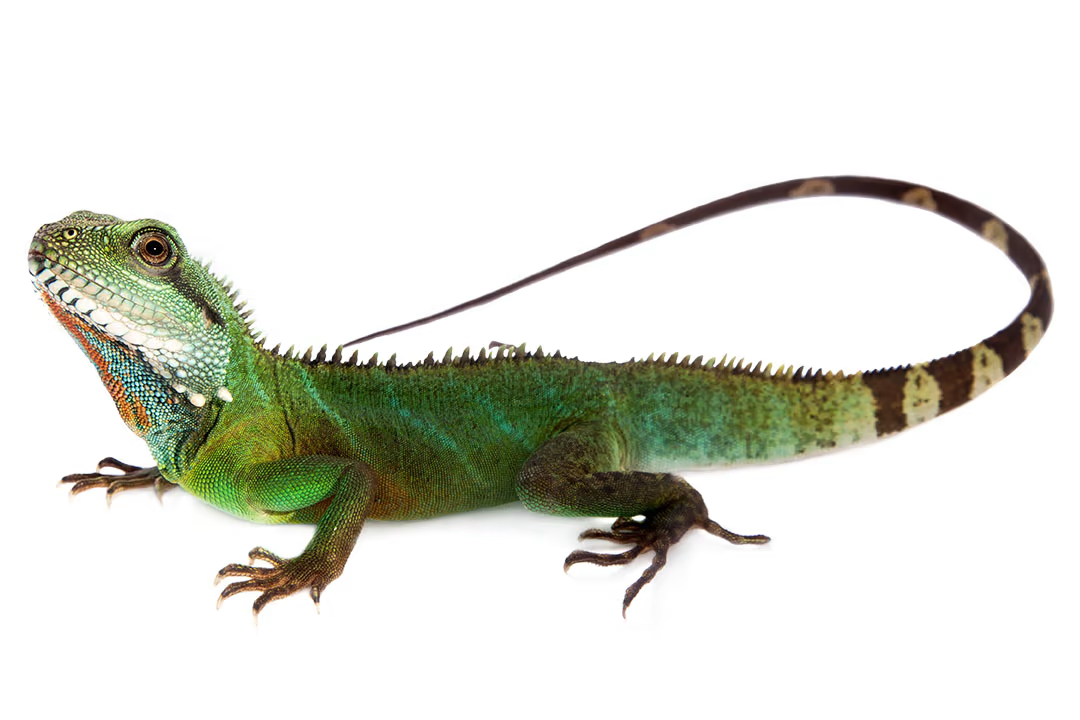
Ultimate Tropical Lizard Care: Habitat, Food & Health for a Happy Pet
Learn how to care for tropical lizards, recommended diet & habitat setup. Find the right food, supplies & equipment at your neighborhood Petco.
Updated on November 13th, 2025
- New Pet
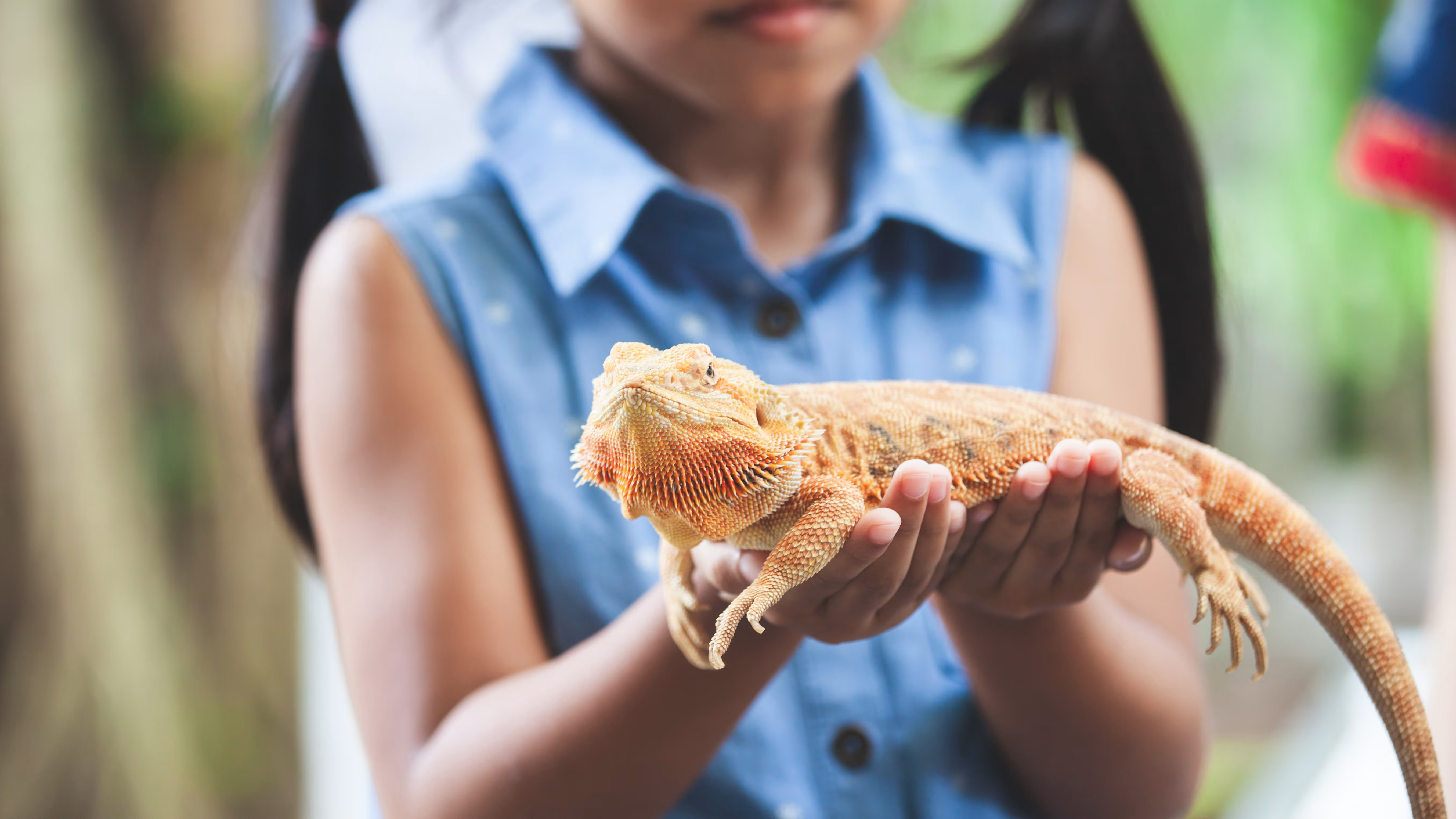
How to Safely Handle Reptiles: Stop Salmonella, Protect Your Family
Read more about our recommendations for preventing the transmission of infectious diseases in reptiles. Keep pets safe with these best practices.
Updated on November 13th, 2025
- New Pet
Aquatic Turtle Care: Master Tank, Food & Health for a Healthy Pet
Learn how to care for aquatic turtles available at Petco. Care Sheets provide you with essential info on how to best take care of these interesting pets.
Updated on November 13th, 2025
- New Pet
Pet Tortoise Care: Essential Guide to Food, Habitat & Health
Learn how to care for tropical tortoise, recommended diet & habitat setup. Find the right food, supplies & equipment at your neighborhood Petco.
Updated on November 13th, 2025
- New Pet
Cool Climate Chameleon Care: Habitat, Food, Health & Setup Secrets
Learn how to care for cool climate Chameleons, recommended diet & habitat setup. Find the right food, supplies & equipment at your neighborhood Petco.
Updated on November 13th, 2025
- Health & Wellbeing
Would reptaid help for a baby sulucta tortoise which I think has runny nose syndrome?
It may provide an immune system boost and could stimulate the appetite which is important in a sick pet. Personally, I think the claims it makes as an "antibiotic" may be a bit thin. You can try it for a day or two, but if you don't see an improvement, have Tart examined by your veterinarian for a definitive diagnosis and an appropriate treatment.
Updated on August 12th, 2025
- Health & Wellbeing
How should you care for your reptile during a power outage?
Here are some tips on how to care for pets who require continuous heat, such as reptiles and snakes: - Before a power outage, if possible, buy a generator. This will allow you to keep your reptiles warm during the outage. - Amphibians will do okay without heat for a period of time. Try to limit the number of times you open the habitat. - For a heat source, you can go to your local sporting goods store and purchase the heat packs used to warm feet and hands. These can be placed underneath the habitat (just like you would place an electric heating pad). This will allow your reptile to get heat. Do not put the pack into habitat with the reptile. - Another way to warm cold reptiles is to use a pillowcase. Place the reptile gently in the case and place the pillowcase next to your body under your shirt for warmth. - Pillow cases can also be used to transport reptiles if needed. - Do not feed your reptile as they need heat to digest their food. - You can save plastic milk
Updated on August 12th, 2025
- Health & Wellbeing
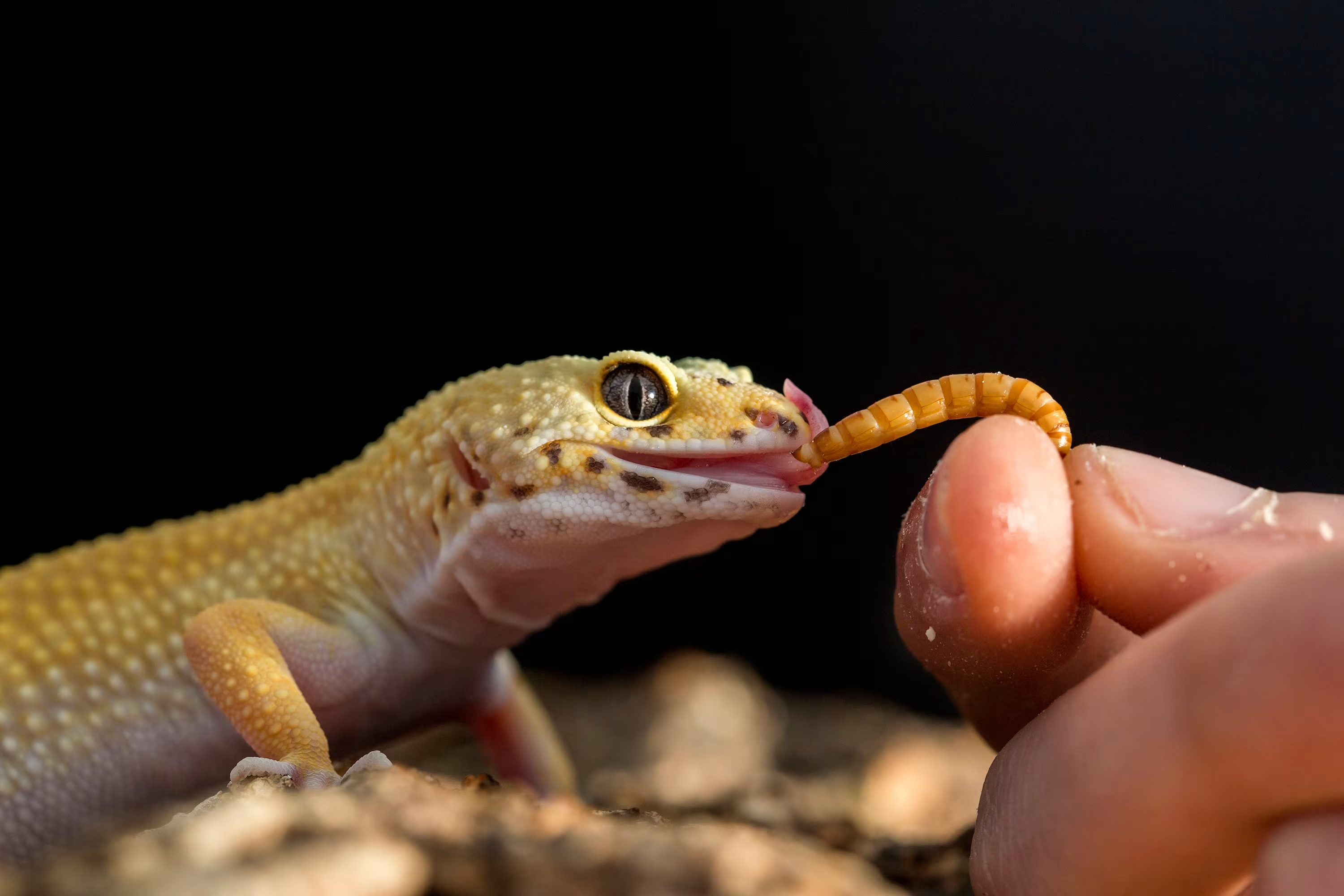
My leopard gecko may have early signs of kidney disease. The vet says the xrays were fine and he looks healthy and gave me some omega 3 to give my gecko. He is 18 yrs old. What can I do at home via diet, soaking etc to help him heal? I have found
Soak once or twice weekly in a warm 50/50 solution of water and unflavored PediaLyte. Feed lower protein prey (mealworms, nightcrawlers, crickets). Avoid high protein prey such as locusts, dubia roaches and waxworms. Blood work may need to be monitored to track progression. Further treatment (steroids, phosphate binders, calcium supplements, fluid therapy) will depend on status. The waxy substance may be normal secretions from the pre anal pores. This is used for marking branches and letting other geckos know who is in the area.
Updated on August 12th, 2025
- Health & Wellbeing
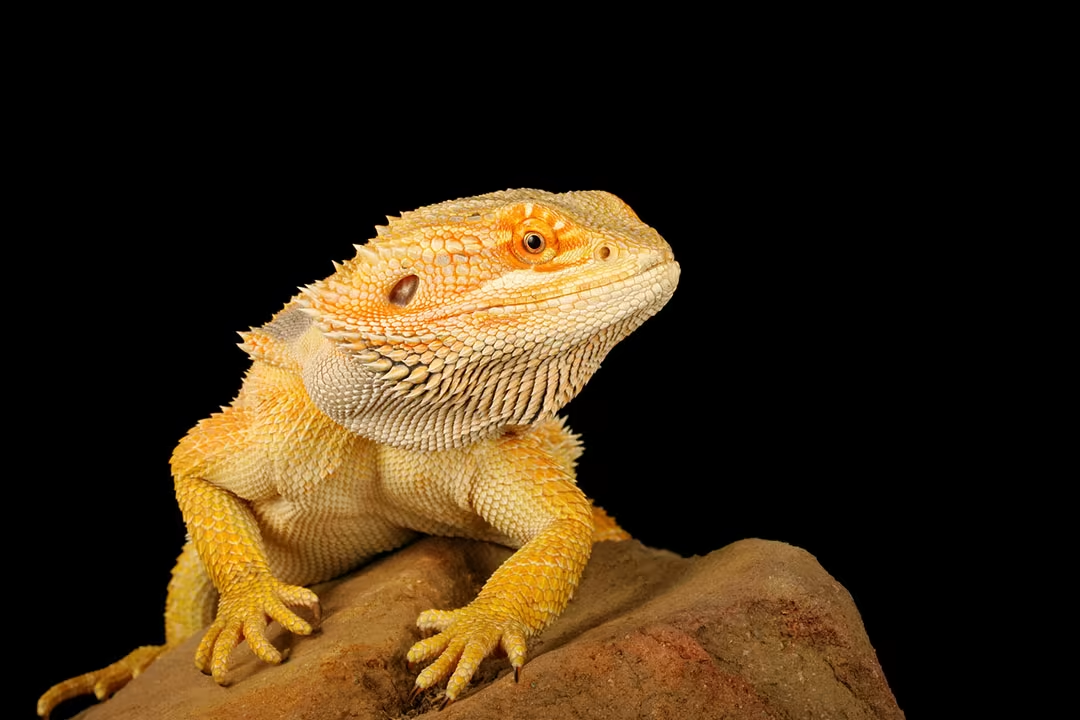
My bearded dragon tank lost its lightbulb and our car doesn't work. (Going to a store isn't an option.) What can I feed him besides crickets and do to keep him warm. Keep in mind we only ha e access to household items. He won't eat any vegetables I f
Hi, For heat you could do a number of things e.g. place any incandenscent bulb above him, place other types of heaters near the tank etc. Please make sure that the temperature is not too high. As for food, this is more of a problem. If he's used to eating crickets it would be difficult to switch him at once to something else. I assume meal worms or otjer insects are also unavailable? You could very temporarily try some soft cat food but it may not work.
Updated on August 12th, 2025
- Food & Nutrition
Recently our bearded dragon had a prolapse. We rushed her to the emergency vet where they told us everything we learned about bearded dragon care was inaccurate to some degree. (We got her from pet smart as well as all info about 'him'- which is a he
One of the most reliable sites for beardie care is found at the link below. http://www.anapsid.org/bearded.html You can find additional information here: http://www.reptilesmagazine.com/Care-Sheets/Lizards/Bearded-Dragon/ Provide heat, UVB lighting, water and a balanced diet while she recovers and beyond. Once she is healthy again, acclimate her to your presence slowly then gradually introduce her to handling by holding her for ever increasing periods of time.
Updated on August 12th, 2025