Two Easy Ways to Start Earning Rewards!
Become a member today! Members-only pricing and offers, personalized care notifications, Vital Care points back on every purchase and more!
 Become a credit card member today!
Earn 2X Pals Rewards points at Petco
when you use Petco Pay!APPLY NOWLearn More About Petco Pay Benefits
Kaytee Holiday Gifts By Price
Get It Today




Related Articles & Questions
- Seasonal Topics
Petco Holiday Gifts: Treat Your Pet to Creative & Affordable Fun
Petco's, Jenny Wolski, shares insights on crafting the ideal holiday gifting experience for pets. Discover how creativity, affordability, and unique touches come together in Petco's Merry Makings collection to bring festive joy to pets and their families.
Updated on June 19th, 2026
- Seasonal Topics
Best Pet Stocking Stuffer Gift Ideas | Petco
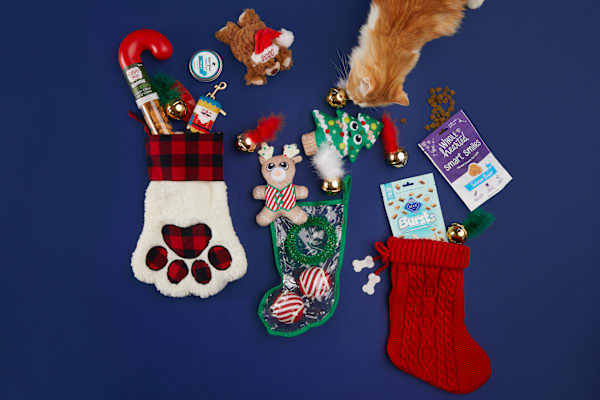
Get you pet involved in the holiday festivities with their own stocking stuffed with a few of these pet gift ideas.
Updated on June 19th, 2026
- Home & Habitat
Top 10 Best Holiday Dog Gifts: Treats & Toys Your Pup Will Adore!
Choosing the perfect gift for family and friends can often be a challenge. Fortunately, ‘fetching’ the perfect holiday treats and toys for your pup can be just as fun as your average game of, well...
Updated on October 23rd, 2025
- Seasonal Topics
Best Holiday Cat Gifts: Treats & Toys Picky Felines Can't Resist
Spoil your cat this holiday season with our favorite treats and toys, perfect for keeping them entertained and happy during the festivities.
Updated on June 19th, 2026
- Seasonal Topics
Safe & Healthy Holiday Treats for Your Dog & Cat This Season
Discover festive and safe holiday treats for your dogs and cats, with ideas to make the season extra special for your furry friends.
Updated on June 19th, 2026
- Vet Q & A
Where can I buy the best budgie toys online for my bird?
There are many places to look for budgie toys online, and doing a simple google search can help you find them. Looking at places such as Petco (if available in your area), Drs Foster Smith, etc, or other online pet stores can give you an idea of what's available and can be shipped to you. most places will also mark the size of the toy so you can pick out ones appropriate for budgies.
Updated on September 24th, 2025
- Training & Behavior
New to parakeets? Essential care tips for first-time owners.
Parakeets, also called Budgerigars, are small members of the parrot family and they can become good mimics. The average adult size is 7 inches long, head to end of tail. The average life span is between 10 to 20 years with proper care. A well-balanced Parakeet diet consists of: Specialized pellets should make up 60-70% of diet, fresh vegetables and fruits and small amounts of fortified seeds Clean, fresh, filtered, chlorine-free water, changed daily. Do not feed birds: avocado, fruit seeds, chocolate, caffeine or alcohol; it can cause serious medical conditions. Avoid sugar and high fat treats. Things to remember when feeding your Parakeet: Fresh food and water should always be available. Vegetables and fruits not eaten within a few hours should be discarded. Remember, treats should not exceed 10% of total food intake. Housing Parakeets acclimate well to average household temperatures, not to exceed 80°F; be cautious of extreme temperature changes. The habitat should area that is well-lit and away from drafts. A habitat approximately 18"W x 18"D x 18"H, with metal bars spaced no greater than 1-2" apart, makes a good home for one Parakeet. A flight habitat is strongly recommended. It is best to provide the largest habitat possible. Perches should be at least 4" long and 3-8" in diameter; a variety of perch sizes to exercise feet and help prevent arthritis is recommended. Perches should be at least 4" long and 3-8" in diameter; a variety of perch sizes to exercise feet and help prevent arthritis is recommended. A metal grate over the droppings tray will keep the bird away from droppings; line the droppings tray with habitat paper or appropriate substrate for easier cleaning. To avoid contamination, do not place food or water containers under perches. Parakeets can be kept alone to bond with pet parent or in pairs to bond with each other. Different birds she not be housed together. Normal Behavior Parakeets are talkers, but their little voices are sometimes hard to hear. Active and need daily time out of their habitats to interact with family. Keep in pairs if unable to devote daily interaction time. Provide foraging toys, which provide important mental stimulation. Housing Maintenance Clean and disinfect the habitat and perches regularly; replace substrate or habitat liner weekly or more often as needed. Replace perches, dishes, and toys when worn or damaged; rotate new toys into the habitat regularly. Ensure that there are no habitat parts or toys with lead, zinc or lead-based paints or galvanized parts as these can cause serious medical issues if ingested by your bird. Do not use a lot of cleaning agents around your bird a natural cleaner. Grooming & Hygiene Provide filtered, chlorine-free, lukewarm water regularly for bathing; remove the water when done. As an alternative, mist the bird with water. Clipping flight feathers is not necessary, but when done correctly it can help prevent injury or escape; consult an avian veterinarian on what is best for your bird. Nails should be trimmed by a qualified person to prevent injury to the bird. Signs of a Healthy Animal: Active, alert, and sociable Eats and drinks throughout the day Dry nares and bright, dry eyes Beak, legs and feet normal in appearance Clean, dry vent Smooth, well-groomed feathers Common Health Issues Chlamydiosis: Appetite loss, fluffed feathers, nasal discharge, green stool. Seek immediate avian veterinary attention. Diarrhea: Fecal portion of stool is not formed. Multiple causes from diet change to internal parasites. Consult with an avian veterinarian and ensure proper diet. Feather plucking: Bird plucks own feathers; may be due to boredom, poor diet or other illness. Consult your veterinarian and relieve boredom with attention, new toys or new space. Mites (scaly face and leg disease): White deposits on eyes, beak, legs, and feet. Consult your veterinarian. Red Flags Beak swelling or accumulations Fluffed, plucked, or soiled feathers Sitting on floor
Updated on September 24th, 2025
- New Pet
Got pet care questions? Bird bonding, cage size, heating, and litter?
Thanks for reaching out. Sound like you have a full house. 1. Birds will often bond together but continue to work with them in a quiet environ, offering treats to win and re-enforce trust. Toys, the radio or tv, can all assist with boredom. Setting up foraging toys so birds need to spend time looking for food. 2. There is no such thing as too big a cage. 3. Heating rocks are rarely approved for use, as they will eventually become faulty and get too hot, potentially damaging the animal. A heat lamp is recommended. 4. The bunny's litter box should be spot cleaned daily and full clean weekly. If you can smell it you waited too long. Good luck.
Updated on September 24th, 2025
- Food & Nutrition
What healthy food and engaging toys are best for my senior lovebird?
Harrison's Bird Diet is the best food out there. It is pelleted so there can be some resistance from your bird transitioning to the new diet if he has been on a seed diet, but it is nutritionally complete and very high quality. Toys I find that lovebirds like have been cotton rope toys that they can preen and groom like the feathers of another bird.
Updated on September 24th, 2025
- Vet Q & A
Where can I find an affordable or free cage for my two parakeets?
Thanks for reaching out about Aqua. You can search for free cages on sites such as Craigs List or local bird rescue groups. A minimal size is probably 2' x 2' x 3', but depends on how much time is spent in the cage. Flight is good exercise but needs to monitored so the birds don't get themselves into trouble flying around. No bird should be left outside of its cage unattended. If birds are active and out of the cage for a fair amount, the night cage can be smaller, as is for mostly sleeping. Good luck.
Updated on September 24th, 2025