Two Easy Ways to Start Earning Rewards!
Become a member today! Members-only pricing and offers, personalized care notifications, Vital Care points back on every purchase and more!
 Become a credit card member today!
Earn 2X Pals Rewards points at Petco
when you use Petco Pay!APPLY NOWLearn More About Petco Pay Benefits
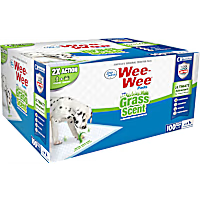
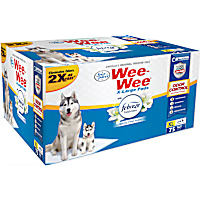
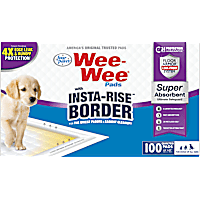
Four Paws Dog Potty Training & Cleanup
Get It Today




Related Searches
Related Articles & Questions
- New Pet
Potty Train Your Puppy: A Complete Guide for Stress-Free Success
Learn how to potty train a puppy to poop & pee outside. Find the right supplies & equipment at your neighborhood Petco pet care center.
Updated on October 23rd, 2025
- Training & Behavior
6 Reasons Your Dog Has Potty Accidents Indoors
Potty accidents are pretty common in dogs of all ages. Find out what could be causing this unwanted behavior and how to solve it.
Updated on June 19th, 2026
- New Pet
Easy Crate Training: Puppy & Dog Tips for a Calm, Happy Home
Puppy and dog crate training encourages puppies to control themselves for longer periods of time and keeps them safe when unsupervised.
Updated on October 23rd, 2025
- Home & Habitat
Sustainable Dog Accessories & Eco Pet Parenting Guide
Being a sustainable pet parent involves good practices and habits. Learn more about eco-friendly dog products, eco-friendly cat products and other solutions.
Updated on June 19th, 2026
- Training & Behavior
Dog Training Treats: How to Pick the Best for Your Dog's Success
Choosing the best dog training treat all depends on your dog's preference and what environment you will be training in. Take a look at these recommendations from Petco positive dog training experts.
Updated on June 19th, 2026
- Training & Behavior
My puppy's pee pads aren't working. Which are most absorbent?
All Absorb or Four Paws training pads are excellent pads. Both are very absorbent and have a protective layer to minimize or eliminate messes or staining. This is my own opinion. You may be able to purchase them at your local Petco or at www.petco.com.
Updated on September 24th, 2025
- Training & Behavior
My dog keeps having indoor accidents despite walks. How to stop it?
Hi there and thank you for using pet coach to address your concern. If the puppy pads do not work, I would recommend a product called Fresh Patch, which you can order online. I have found that potty training is much more successful with this product. I hope this helps! Please let me know if you have any other questions or concerns and I would be more than happy to help you further.
Updated on September 24th, 2025
- Training & Behavior
How to potty train an 8-month-old dog who won't use puppy pads?
Hi there and thank you for using Petco Pet Education Center, formerly Petcoach. I honestly would recommend using Fresh Patch. I've had so many clients have success stories with potty training their puppy because of this product. It is basically a patch of grass that you order online that comes in a cardboard box that auto-ships to you to replace the used one. I would look into this and try it out to see if it helps more than the puppy pad. I hope this helps! Please let me know if you have any other questions or concerns and I would be more than happy to help you further.
Updated on September 24th, 2025
- Training & Behavior
Help! How do I stop my puppy from peeing and pooping indoors?
Potty training your dog or puppy can sometimes be a challenging task. However, with the steps below and a a lot of patience, you can have your dog potty trained quickly! Keeping a schedule, focusing on times when your dog needs to go, keeping the area clean, and stopping accidents before they happen will make the potty training process much easier. The steps are; Keep a routine- Most dogs will need to go out about 5-15 minutes after activities such as eating and drinking, playing, or waking up from a nap Know your dog's body: puppies, the rule of thumb is that they can hold their bladder at most 1 hour per month of age. This means a 2-month old puppy can hold his potty for a maximum of 2 hours. This is just a general rule and smaller dogs or those with bladder control issues may need even more frequent outings. Be sure to never let your dog go more than 8 hours without a potty break to prevent hurting their bladder! Keep in mind health issues Not punish your dog Cleanup after accidents as the scent attracts them to repeat accidents. Here is a link to puppy pads to help while you Are still training; Www.drsfostersmith.com/product/prod_display.cfm?pcatid=37282 Here is an excellent resource to help you as you proceed; https://www.petcoach.co/article/7-rules-for-effective-housetraining/ https://www.petcoach.co/article/6-common-reasons-for-potty-accidents-in-dogs/ https://www.petcoach.co/article/top-5-tips-to-potty-train-your-dog-young-and-old/
Updated on September 24th, 2025
- Food & Nutrition
How to stop my 4-month puppy from biting and potty training?
Watch the level of play! If your puppy is getting increasingly aroused, then STOP play for a few seconds and then give him a toy. This technique will prevent your puppy from reaching the excitement level of play where he starts the nipping behavior – by preventing this escalation you are successfully preventing this intolerable behavior. · Another great option that is highly recommended in addition to the above suggestions is to enroll your puppy in Puppy Preschool – these classes provide an ideal avenue to introduce both you and your puppy to the most modern and humane ways to socialize your puppy to be a valuable member of the family! What NOT to do: · NEVER punish your puppy by hitting, slapping, flicking on the nose, putting fingers down his throat, pinching lips, kicking, or any other physical means, as this will NOT solve the nipping problem. Punishment such as this will only make the problem worse and will instead encourage fear or aggressive behavior in your puppy. · Punishment may escalate the very problem you are trying to avoid and, depending on your puppy’s temperament, it may result in any of the following: o Your puppy may respond in a fearful manner and tremble or shy away when a hand comes near his face, or not come when called. o Your puppy may respond in a defensive manner and bite you. o Your puppy may respond in a playful manner and become even more excited and aroused, thinking that it is all part of the game. · Avoid rough play – this means never play tug-of-war, wrestle with your puppy or allow him to grab your clothes if he is prone to nipping. Games such as this will further promote the very problem you are trying to resolve. Minimize inappropriate behavior and teach your puppy calm behavior. Remember that the focus should be on rewarding acceptable behaviors rather than punishing unacceptable ones. Things to think about: · Understanding the underlying cause of aggression is important in developing a plan to prevent it from occurring. While most ‘puppy aggression’ is play-related nipping or biting that can be addressed with the above methods, more serious underlying problems are possible. The first step in addressing these problems is being able to recognize them so that you can seek advice. Other forms of aggression include human or dog-directed aggression that may be based in fear, dominance, territoriality, predatory or pain-related motivations. · Signs to look for include specific body language and vocalizations. For example, if your puppy’s ears are pointed towards you and his tail is up, then that may be a sign of confident aggression. In contrast, if his ears are laying flat against his head and his tail is tucked under, then that may be a sign of fear and anxiety. Some puppy nipping is not playful, but true aggression. You want to avoid escalation of the problem by seeking immediate advice from your local veterinarian. When to see your vet: If you continue to experience problems with your puppy or have any questions related to your puppy’s health or behavior, do not hesitate to contact your local veterinarian for guidance and management solutions. Again, congratulations on your new puppy and enjoy the many years of joy and happiness this new furry companion will bring to you and your family!
Updated on September 24th, 2025