Two Easy Ways to Start Earning Rewards!
Earn 2X Pals Rewards points at Petco
when you use Petco Pay!
Get It Today
Learn how to test your aquarium water. Poor water quality stresses fish, which leaves them susceptible to disease and possibly death.
Updated on October 23rd, 2025
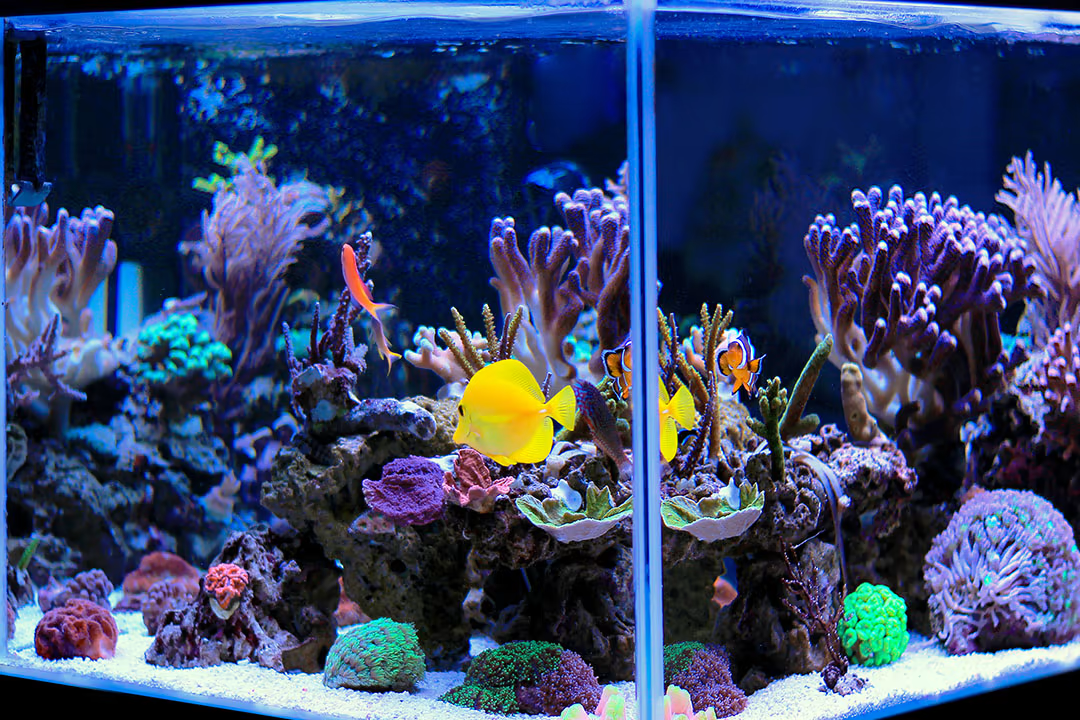
Learn how to set up a saltwater fish tank and key considerations regarding placement, supplies needed, and the overall set up process.
Updated on October 23rd, 2025
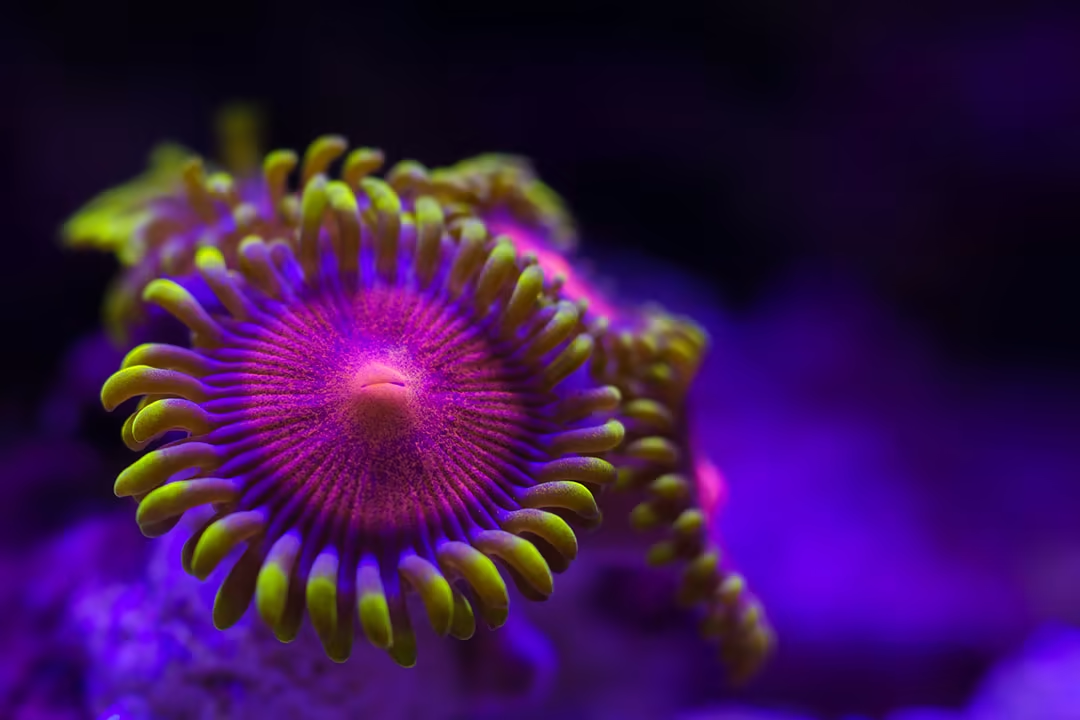
Learn how to care for soft coral, recommended care & habitat setup. Find the right food, supplies & equipment at your neighborhood Petco.
Updated on April 9th, 2026
Learn how to safely handle your aquatic life to avoid toxin & bacterial exposure. Find aquatic life care supplies at your neighborhood Petco pet care center.
Updated on October 23rd, 2025
Learn how to care for large marine fish, recommended diet and habitat setup. Find the right food, supplies and equipment at your neighborhood Petco.
Updated on April 9th, 2026
Monitor water chemistry using a home test kit or submit a water sample for testing. The local Petco may do this for free or for a small fee. Aim for an absence (0 ppm) of ammonia and nitrites with nitrates at 20ppm or less. Perform partial water changes to stabilize chemistry and/or to improve water quality. Use only conditioned water that is temperature matched to prevent stress or shock. Pristine water quality is the foundation for healing and recovery from infection or injury in fish. You can use plain aquarium salt (NOT table or Epsom salt) as a general tonic to reduce stress, improve gill function and aid in recovery. Dissolve 1 teaspoon of salt per gallon of water in a cup or two of water and gently pour it into the tank. Treat for 14 days then reassess the condition. An "all in one" product, such as Lifeguard (by Tetra), can be used concurrently to treat infection or parasites. Find one in the aquarium section of the local Petco. Follow label directions carefully and remove the carbon filter insert during treatment if indicated.
Updated on September 24th, 2025
Without anything to use for scale, it is hard for me to tell how big your tank is, but in general it seems very small. Also, the water that is in the tank appears very cloudy right now, so that would be the first place to start. Water quality is very important, and will make or break your ability to house and care for fish. I would recommend getting a good filter system (you can visit a local pet store to assist you with brands in your area, as I am not familiar with what you can get in India). Be sure to bring the measurements (height, length, width) of your tank, or the gallons or liters so they can tell you what capacity of filter you will need. Everything else will depend on what types of fish you get - if you plan on getting multiple fish, they will need to be small - a general rule of thumb is one square inch of fish per gallon of water. Depending on the species you get, you may need to also get a bubbler to ensure there is enough oxygen in the water for them, and you will also likely need to get some sort of substrate for the bottom and cage furniture (different species have different air requirements, and some are secretive and like to hide). You may also need a water heater, depending on the species you would like to house. But, depending on how small your tank is, it may be hard to get a water heater that will fit. The food type will also depend on what species you get, as there can be differences in diet type between species. I hope that gives you a place to start, and good luck!
Updated on September 24th, 2025
Yes, in order to have a healthy tank and to give your fish the best environment, it is necessary. Here is a good write-up on the reasons why: https://www.petcoach.co/article/water-chemistry-basics-ph-temperature-water-hardness-waste/
Updated on September 24th, 2025
Do not use plain aquarium salt or table salt. To make brackish water, you need marine salt. You will also need a hydrometer to measure specific gravity. A hydrometer can be found in the aquarium section of most pet stores They cost $15 or less. Depending on the species of fish you have, brackish water will need a SG between 1.005 and 1.010. One tablespoon of marine salt per gallon of water will create brackish water at the lower end of the SG range. Yes, you will need a conditioner to remove chlorine and chloramine before you add the marine salt.
Updated on September 24th, 2025
Water softeners leave very little salt residue in the treated water. Most, not all, fish *should* do fine in softened water. Make sure you get species that does better in soft water. Use a hardness kit and monitor KH. This parameter is what can affect pH. You can set aside a gallon or two and test it after it has aged for 24-48 hours to confirm it is safe to use. Check the softener unit for a bypass valve. Some units will have one or you can get one installed. Taps/faucets outside may not be in line with the softener, so you can use water from there if necessary.
Updated on September 24th, 2025