

Two Easy Ways to Start Earning Rewards!
Become a member today! Members-only pricing and offers, personalized care notifications, Vital Care points back on every purchase and more!
 Become a credit card member today!
Earn 2X Pals Rewards points at Petco
when you use Petco Pay!APPLY NOWLearn More About Petco Pay Benefits
AA Aquarium
Get It Today


Related Articles & Questions
- Home & Habitat
Aquarium Substrate: Choose the Best for Healthy Fish & Plants
Choosing the right substrate for your aquarium is important and provides an area for beneficial bacteria to grow which keeps your aquatic environment safe.
Updated on October 23rd, 2025
- New Pet
Perfect New Fish Tank: Water Quality & Cycling for Healthy Fish
Before establishing an aquarium at home, learn more about the basics of fish care.
Updated on October 23rd, 2025
- New Pet
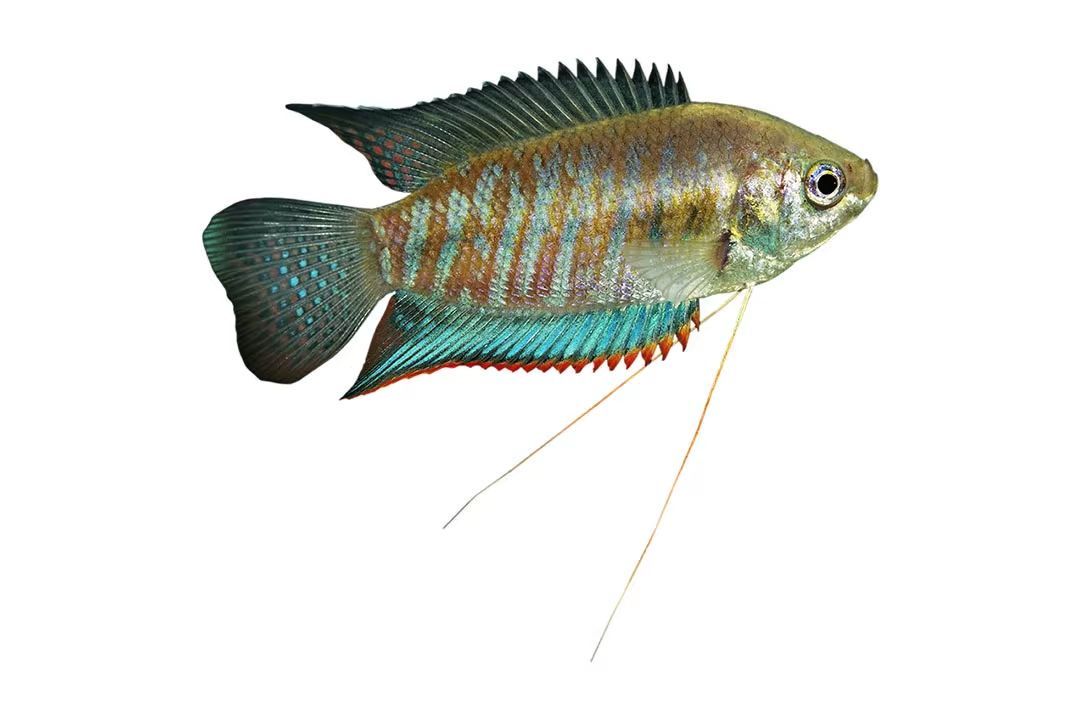
Paradise Fish Care: Complete Guide to Tank Size, Food, & Habitat Setup
Learn how to care for Paradise fish, recommended diet and aquarium setup. Find the right food, supplies and equipment at your neighborhood Petco.
Updated on October 23rd, 2025
- New Pet
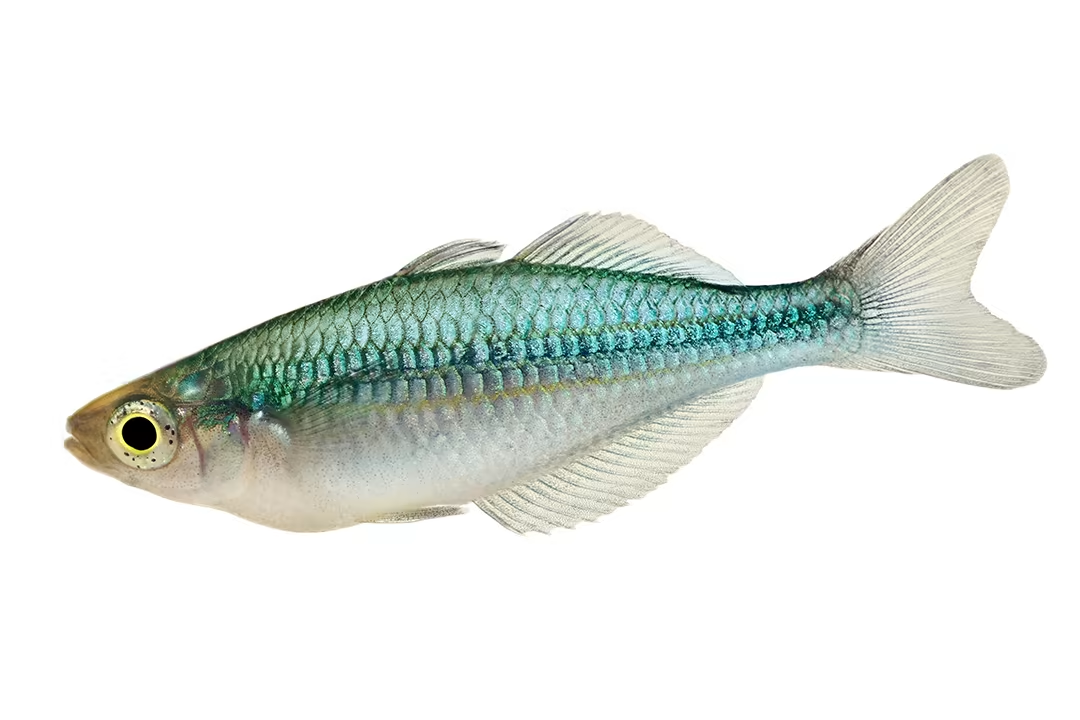
Rainbow Fish Care: Tank, Food, & Compatibility for Thriving Pets
Learn how to care for Rainbow fish, recommended diet and aquarium setup. Find the right food, supplies and equipment at your neighborhood Petco.
Updated on December 21st, 2025
- New Pet
How to Acclimate New Fish & Aquatic Life: Thriving Tank Guide
Acclimation helps your aquatic life adjust to the new chemistry of your tank, thereby helping ensure the health of your new addition.
Updated on October 23rd, 2025
- Health & Wellbeing
I'm about to buy some new fishes mostly Tetra Can you help me what fish should I buy because I am beginner in this things. Please tell me what sort of things I should bring I have a one foot tank now other than that What should I purchase from Aquar
Before you buy any fish, you will need to set up the tank. A basic set up includes: a tank, filter, hood/light, heater, gravel and some decor. The tank should run without fish for at least 4 to 6 weeks. This gives it time to cycle. The Nitrogen Cycle is critical to the health of the tank and any fish you will be keeping. During this time, beneficial bacterial will populate the filter and substrate (gravel). These bacteria will be responsible for breaking down fish wastes and other wastes (uneaten food, dead plants, etc.). You will need a home test kit to monitor water chemistry (ammonia, nitrites, nitrates, pH) or you will have to submit water samples for testing. Most pet stores will do this for free or for a small fee. At first, you will see high levels of ammonia and nitrites. Over time, as bacteria grow, these levels will drop. When ammonia and nitrites are at 0 ppm and nitrates are below 20 ppm, you can consider adding fish. Regular (every 1 or 2 weeks) partial water changes as we
Updated on September 24th, 2025
- Health & Wellbeing
My fish is acting sick. He is not really eating and he keeps going to the surface to breathe . He is also getting these little what looks like panic attacks and swims very fast and even hits his head constantly on the edges of his tank. I started to
Check water chemistry first. Use a home test kit or submit a water sample for testing. The local Petco may do this for free or for a small fee. Aim for an absence ( 0 ppm) of ammonia and nitrites with nitrates at 20 ppm or less. Perform partial water changes, no more than 30% at a time, to stabilize chemistry and/or to improve water quality. Use only conditioned water that is temperature matched to prevent stress or shock. Check water temp as well. Any of these can drive a fish to the surface. The "flashing" (darting about) can be due to infection (bacterial, fungal or parasites). Consider a broad spectrum antibiotic or an "all in one" product to treat multiple infections. Look in the Aquarium section of the local Petco for options. Follow label directions carefully and remove the carbon filter insert during treatment if indicated.
Updated on September 24th, 2025
- Health & Wellbeing
I have basic aquarium at home, since 2 days all are not active and seen abnormal, shark, gold, koi are all having bleeding on their body without any reason i know. Suddenly at one time continuously fishes getting die, even I changed water at overnigh
I'm sorry you are having difficulties with your aquarium. There are several issues that should be dealt with right now. They are water chemistry, aquarium size and choice/number of fish. Any new aquarium should be set up and, ideally, run empty for several weeks (usually 4-6 weeks). This is so beneficial bacteria have an opportunity to populate the substrate and filter. These bacteria are necessary to break down wastes that fish will produce. The technical phrase for this is "establishing the Nitrogen cycle". These bacteria will break down wastes into ammonia then nitrites then nitrates. Nitrates can then dissipate or be absorbed/used by live plants. In high enough concentrations, ammonia and nitrites are toxic and can kill fish. Cycling a tank with fish is possible but it increases the risk of loss. Water chemistry should be checked every few days using a liquid home test kit. A water sample can be submitted for testing , but is not as convenient as testing yourself. Most pet sto
Updated on September 24th, 2025
- Health & Wellbeing
I would like to know how I can make my goldfish live the longest possible life they can and how to add more decor after I added the water and conditioning today and I am going to go get my fishies I think I am going to go with two but how to properly
Gold fish can make great fish but they can live up to 25 years and require a large tank that may need to be upgraded if they grow too large. Do get at least 2 fish. Here are some links which may help: https://www.petcoach.co/article/chewing-in-puppies-how-to-control-it/ https://www.aqueon.com/information/care-sheets/goldfish https://www.hartz.com/how-to-introduce-new-fish-into-your-aquarium-tank/ I hope this helps and congrats on your new pets!
Updated on September 24th, 2025
- Food & Nutrition
I have 2 salmenese tiger fish and two smaller fish in approximately 3.5 L bowl. I bought them on 1 April. 3 act normal but one act abnormal from first day. One salmenese tiger fish doesn't move much first it stayed at bottom now it's gapping at surfa
The bowl looks definitively a bit small for the two fishes. To understand exactly what is going on you need to approach this problem radically but logically. Begin by submitting a water sample for quality testing. Most pet stores will do this for free or a nominal fee. Clinical examination should always include a water quality check, even if you have done so already. Water testing should be performed with a quality test kit, measuring NH4, NO2 and NO3. High ammonia levels, PH imbalances may be responsible for these signs. Oxygen concentration and quality of the filters should be determined as well. If water quality is good and there are no major imbalances, your fish should get examined to look for any sign of bacterial/fungal infection and eventually water should be treated. Hope this answer was helpful, but please do not hesitate to contact us again on the forum or by requesting a consultation if you have any more questions or to discuss it any further.
Updated on September 24th, 2025