


Two Easy Ways to Start Earning Rewards!
Become a member today! Members-only pricing and offers, personalized care notifications, Vital Care points back on every purchase and more!
 Become a credit card member today!
Earn 2X Pals Rewards points at Petco
when you use Petco Pay!APPLY NOWLearn More About Petco Pay Benefits
How to Take Great Photos of Your Pet
Published on September 15th, 2023
Updated on June 18th, 2026

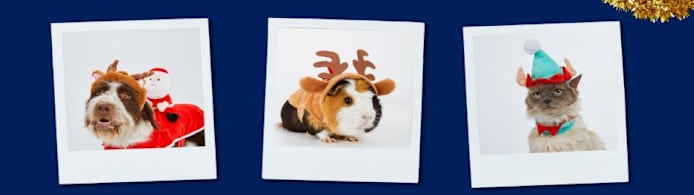
Holidays mean lots of photos - and of course your pet should be involved in pictures! Follow these tips to get a social media worthy shot of you and your pet.
How to Take Great Photos of Your Pet (Yes, Even the Wiggly Ones)
Great pictures of pets don't happen by accident — but they don't require a professional studio, either. Whether you're putting together the yearly family holiday card (matching outfits absolutely encouraged), capturing a quiet Tuesday moment, or just trying to bottle up that face before your pup outgrows it, the right approach makes all the difference between a blurry blur and a frame-worthy shot.
Your pet is every bit as much a part of the family as the humans in the picture. That means they deserve a spot front and center — and a photo session that feels calm and fun rather than stressful for everyone involved.
Tips for a Stress-Free Pet Photo Session
Not every pet is going to sit still and smile on cue. That's okay. These tips will help you work with your pet's personality instead of against it, so the experience stays enjoyable for both of you:
- Start when your pet is relaxed. Schedule the session after a walk, a play session, or mealtime — a tired, content pet is a much more cooperative subject than an amped-up one.
- Keep sessions short. A few focused minutes beats a long, frustrating marathon. If your pet is done, they're done — and pushing past that point rarely produces the shot you want.
- Use high-value rewards. Keep favorite treats or a beloved toy just out of frame to hold attention and reward calm behavior. Treats should make up no more than 10% of your pet's daily diet, so factor photo-session snacks into that total.
- Get down to their level. Shooting from your pet's eye level — not from above — produces more natural, engaging portraits. Get on the floor. It's worth it.
- Let them sniff the props first. Holiday sweaters, antler headbands, festive bandanas — introduce any costume or accessory before the camera comes out so it doesn't feel like a surprise.
- Use natural light when you can. A spot near a window with soft, indirect daylight is your best friend. Avoid direct flash, which can startle pets and cause harsh, unnatural-looking images.
- Have a helper. One person focuses the camera; another holds the treat, makes the noise, or gently positions a small pet. Two sets of hands change everything.
- Embrace the imperfect moment. Sometimes the mid-sneeze, the head-tilt, or the goofy tongue-out shot is the one everyone loves most. Shoot in bursts and sort later.
The goal is a photo that looks like your pet — happy, comfortable and completely themselves. That's the picture worth printing.
How to Take the Perfect Pet Photo: Step-by-Step
Getting a truly great photo of your pet takes a little patience, the right setup, and a few smart techniques — but the results are absolutely worth it. Whether you're capturing a cozy holiday moment or an everyday expression that melts your heart, following a clear process makes all the difference between a blurry outtake and a frame-worthy shot. Here's how to do it, from first setup to final click.
1. Choose the Right Time and Place
Timing is everything with pets. Photograph your dog or cat after a play session or walk, when he or she is naturally calmer and more likely to hold still. Pick a spot with good natural light — near a large window or outdoors in open shade works beautifully — and clear away visual clutter in the background so your pet is the clear focal point.
2. Get Down to Their Level
One of the most common mistakes pet parents make is shooting from standing height. Crouch, kneel, or even lie on the floor to meet your pet at eye level. This perspective creates an intimate, engaging image that feels like a genuine connection rather than a snapshot taken from above.
3. Use Burst Mode and Shoot More Than You Think You Need
Pets move fast and expressions change in a fraction of a second. Switch your phone or camera to burst mode (continuous shooting) so you capture a rapid sequence of frames with a single press. Plan on reviewing dozens of shots to find the two or three that are truly special — that's not failure, that's just how great pet photography works.
4. Focus on the Eyes
Sharp, bright eyes make a pet portrait come alive. Tap your phone screen directly on your pet's eye to lock focus there, or use your camera's eye-detection autofocus if it has one. If the eyes are in focus, the rest of the image will feel polished even if other elements are slightly soft.
5. Use Treats and Sounds to Direct Attention
Hold a small treat just above your lens to get your pet looking directly into the camera, or make a novel sound — a gentle squeak, a whistle, a soft kiss noise — to earn that alert, ears-forward expression. Keep treat rewards to a brief moment so your pet stays engaged rather than distracted. (Remember: treats should make up no more than 10% of your pet's daily diet, so keep posing sessions short and sweet.)
6. Mind the Light — Especially for Flash
Avoid using your camera's built-in flash directly at your pet. Flash fired straight on can cause red-eye or green-eye in photos and may startle some animals. Instead, rely on natural light or a softbox-style lamp positioned to the side. If you're shooting indoors in low light, increase your ISO setting or move closer to a window before reaching for the flash.
7. Capture Personality, Not Just Poses
The most memorable pet photos aren't always the perfectly posed ones — they're the ones that show who your pet really is. Photograph him mid-yawn, her chasing a toy, or the two of you sharing a quiet moment on the couch. Candid shots taken while your pet is relaxed and being himself often outshine any carefully staged portrait.
8. Review, Edit Lightly, and Celebrate the Outtakes
After your session, scroll through your burst sequences and pick your favorites. A few simple edits — adjusting brightness, boosting contrast slightly, or cropping to tighten the composition — can elevate a good shot into a great one. And don't delete all those outtakes immediately; sometimes the blurry, mid-sneeze, one-eye-open frame is the one that makes everyone laugh the hardest.
Quick-Reference Checklist: Before You Press the Shutter
| Step | What to Do |
|---|---|
| Timing | Shoot after exercise when your pet is calm |
| Location | Use natural light; clear the background |
| Camera angle | Get down to your pet's eye level |
| Focus | Tap or lock focus on the eyes |
| Shooting mode | Use burst mode to capture fast movement |
| Attention | Use a treat or novel sound just above the lens |
| Flash | Avoid direct flash; use natural or side lighting |
| Personality | Mix posed and candid shots for variety |
Keep it simple
Contrast and simple subject matter will help you choose the right backdrop for your holiday scene. If your pet is light colored, use a dark background, and vice-versa.
Get low
Get down on ground-level, such as taking one knee or lie on the floor with your camera. Then, have your pet pose near a window or a piece of furniture.
Get up close
Zoom in, crop tight, and use macro. If your pet has long, droopy ears or a fluffy tail, capture these unique traits in your photo.
Avoid flash
Get optimal, natural lighting by shooting outdoors or indoors near a large window.
Show off their personality
Try to capture moments of your pet playing with a toy, or sitting peacefully near the window.
Take selfies
If all else fails, you can always hold the camera up and angle it downward toward you and your pet. Treats can help!
Get Creative With Your Photos
Now that you’ve taken endless photos of your beloved pets, how can you show them all off? Here are a few ideas:
- Send holiday cards to friends and family
- Use them for gifts like canvas prints, photo books or personalized mugs
- Create a photo ornament with the current year
- Put together a scrapbook
- Share them on social media, and tag @petco and #petco so we can see your gorgeous efforts!
Remember: Taking holiday photos of your pet is all about making fun and memories. Be patient and enjoy the moment!
If aren't ready to flex your photography muscles yet, that's OK, let the professionals handle it! Plus, going for a family photo makes for a fun family bonding activity. Find a Petco near you to have your pet’s photo taken with Santa.
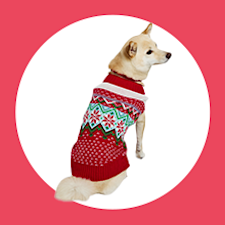
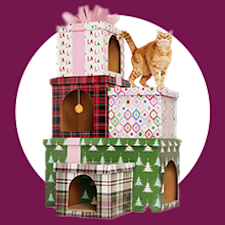
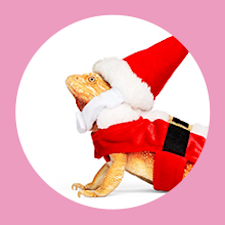
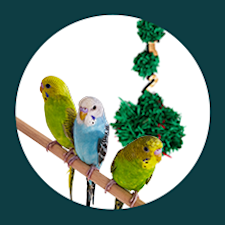
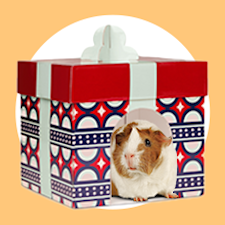
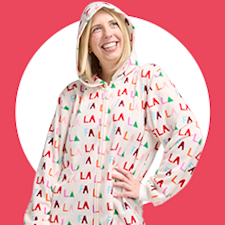
Choosing Holiday outfits & accessories for your photoshoot:
Frequently Asked Questions
What camera settings work best for taking pictures of pets? For sharp, blur-free pet photos, use a fast shutter speed (1/250 sec or faster for active animals), a wide aperture (f/2.8–f/4) to separate your pet from the background, and bump up your ISO only as needed to keep the exposure bright in lower light. Most modern smartphones handle these adjustments automatically — just tap your pet's face on the screen to lock focus before shooting.
How do I get my pet to sit still for a photo? Short, reward-based sessions work best. Ask a helper to stand just behind you and hold a treat or favorite toy at lens level — your pet's eyes will lock right on the camera. Keep sessions to five minutes or less, especially with cats and small pets, and always end on a positive note with praise and a reward. If your pet seems stressed or overwhelmed, give it a break and try again later.
Is flash photography harmful to pets' eyes? Direct flash can startle pets and cause temporary discomfort, and repeated close-range flash is best avoided as a precaution. Natural window light or a softbox positioned to the side gives you a warmer, more flattering result anyway — and a much calmer subject. If you must shoot indoors without natural light, use a flash diffuser and bounce the light off the ceiling rather than pointing it directly at your pet.
What is the best time of day to photograph pets outdoors? The "golden hours" — the first hour after sunrise and the last hour before sunset — give you soft, warm, directional light that flatters fur textures and avoids harsh shadows or squinting. Overcast days are also excellent for outdoor pet portraits because clouds act as a giant natural diffuser, producing even, shadow-free light across your pet's face.
How do I photograph dark-colored or black pets clearly? Dark pets absorb light, so expose for their coat rather than the background. Place your pet near a bright window or in open shade outdoors, use a light or neutral-toned backdrop for contrast, and slightly overexpose by +0.3 to +0.7 stops on your camera or phone. Avoid backlighting, which can make a dark coat disappear entirely. A catchlight — a small reflection of the light source in the eyes — brings the portrait to life, so position your light source slightly above and to one side.
When should I consult a veterinarian before a pet photo session? If your pet shows signs of anxiety — excessive panting, hiding, trembling or aggression — around new people, costumes or camera equipment, speak with your veterinarian before scheduling a formal photo session. Your vet can rule out underlying stress-related conditions and suggest appropriate calming strategies. Never force a pet into a costume or position it finds distressing just for a photo.
This article was created with assistance from AI tools and reviewed for accuracy by Petco's content team.


Don’t expect to sit there for an hour with your cat and take perfect photos, unless, of course, they enjoy the spotlight. Plan to keep your picture-taking sessions to five minutes at a time. You can always go longer if the photoshoot is going smoothly.
Bust out your pet’s favorite snack or toy to get their attention for a photo, then reward them after taking the picture. Positive reinforcement training is the most effective way to keep your dog, cat or other pet focused and happy.
You don’t want all of the pressure to be on one session, so try a few practice shoots to see how your pet will react. This is especially important if you want your pet to wear something in the photos, as they will likely need some time to get used to their new outfit.
If there is a lot of noise or other distractions while taking photos, it could cause your pet extra stress. If your pet’s attention is focused elsewhere, you may get frustrated and the entire photo shoot could become stressful rather than fun.
Remember that although we may treat our dogs and cats like humans, they are still animals. Have plenty of patience, and you’re bound to get the purr-fect photo—eventually.