


Two Easy Ways to Start Earning Rewards!
Become a member today! Members-only pricing and offers, personalized care notifications, Vital Care points back on every purchase and more!
 Become a credit card member today!
Earn 2X Pals Rewards points at Petco
when you use Petco Pay!APPLY NOWLearn More About Petco Pay Benefits
Yellow-headed Dwarf Gecko Care: Habitat, Food & Health Essentials
Published on July 1st, 2026
Updated on July 1st, 2026
Overview
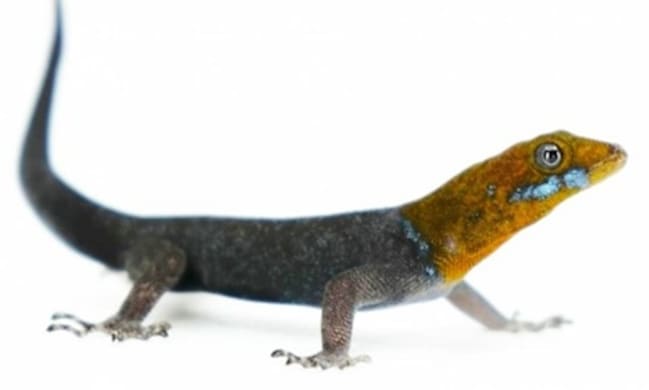
Gonatodes albogularis fuscus. The Yellow-headed Dwarf Gecko is small in size and enormous in personality — a diurnal, fast-moving climber that spends its days darting across branches, performing territorial head-bobs, and flashing its vivid yellow-orange throat at rivals and potential mates. Native to the warm parts of South and Central America, Jamacia and Cuba. this gecko belongs to a genus renowned for their activity levels and striking sexual dimorphism: males wear a bold yellow-orange chin against an olive-brown body, while females are typically patterned in brown and gray. Unlike most pet geckos that are nocturnal and rarely seen, Yellow-headed Dwarf Geckos are awake, visible, and engaging throughout the day — making them one of the most rewarding display animals in the hobby.
Typical Yellow-headed Dwarf Gecko appearance and behavior
• A tiny gecko by any standard — adults reach just 2.5–3 inches total length, making them one of the smallest gecko species in the hobby
• Males display a striking yellow to orange-yellow coloration on the chin and throat; the dorsum is olive to brownish with faint striping; females and juveniles are typically brown and gray
• Diurnal and active — Yellow-headed Dwarf Geckos are awake and visible during the day, making them excellent viewing companion
• Although this gecko does not possess lamellar toe pads, they move with rapid, darting confidence across most surfaces.
• Males perform head-bobbing and throat-display behaviors to assert territory and court females — frequent and entertaining to observe
• These geckos can be kept separate
Characteristics
| Care Difficulty | Intermediate |
|---|---|
| Average Life Span | up to 15+ years with proper care |
| Average Adult Size | 2.5–3 inches total length |
| Diet | Insectivore |
| Minimum Habitat Size | 8” × 8” × 12” |
Habitat
Habitat size
A minimum 8” × 8” × 12” tall enclosure is recommended for a single gecko or a taller. Screen or mesh sides support ventilation and climbing.
Building your habitat
• Substrate — Coco fiber, ABG bioactive mix, or a coco fiber/orchid bark blend — at least 2 inches deep and kept slightly moist to support ambient humidity. Substrate should not be waterlogged.
• Décor — Dense vertical planting is essential — live pothos, bromeliads, and ficus (or quality artificial equivalents) provide cover, climbing surfaces, and humidity retention. Cork bark tubes and flats, branches, and vines throughout the vertical space. Avoid large open floor areas, this species lives in dense cover. Live plants can assist with creating microclimates.
• Temperature — Maintain an ambient temperature of 75–85°F with a basking spot is optional but not required, if creating a basking area this should not exceed 90°F. Nighttime temperatures should not fall below 65°F.
• Humidity — Maintain 50–60% ambient humidity. Mist the enclosure once daily. Good ventilation is essential to allow for the habitat a few hours after misting— stagnant saturated air causes respiratory infection.
• Lighting — UVB lighting is required — this is a diurnal species. Use an Arcadia 6% or Zoo Med T5 HO 5.0 bulb on a 10–12-hour photoperiod. The basking spot should sit directly under the UVB source. Avoid placing the enclosure in direct sunlight.
Cleaning your Yellow-headed Dwarf Gecko’s habitat
Thoroughly clean and disinfect the habitat at least once a week:
• Place your Yellow-headed Dwarf Gecko in a secure, ventilated temporary container before beginning any cleaning.
• Scrub the enclosure and all décor with a diluted reptile-safe disinfectant (such as a 3% bleach solution), allowing a 10-minute contact time where possible.
• Rinse all surfaces thoroughly with clean water until no disinfectant residue remains.
• Dry the enclosure completely before returning your gecko — any residual moisture can disrupt the humidity gradient.
What Do Yellow-headed Dwarf Geckos Eat
Yellow-headed Dwarf Geckos are insectivores with fruit flies and crickets acting as a staple in their diet.
A well-balanced Yellow-headed Dwarf Gecko diet consists of:
• Appropriately sized fruit flies (Drosophila melanogaster for juveniles, D. hydei for adults), 1/4-inch crickets should be offered 3-4 times per week.
• Springtails and dwarf white isopods (if keeping a bioactive setup) — these cleanup crew species double as a constant live food source.
• They can also be offered small been beetles and extra small black soldier fly larva on occasion.
Fresh clean water via a shallow dish or daily light misting of enclosure walls is required to maintain hydration.
Things to remember when feeding your Yellow-headed Dwarf Gecko:
• Maintain a strong fruit fly culture for a consistent supply.
• Dust all live insects with calcium at every feeding; add a multivitamin supplement and swap to a calcium +D3 once a week.
• Never offer insects larger than the gecko’s head width, oversized prey causes stress and impaction risk.
• Remove uneaten insects from the enclosure within 24 hours.
• Juveniles should be fed daily, adults every other day.
Yellow-headed Dwarf Gecko care
• UVB lighting — this is a diurnal species, and they can benefit from UVB but be sure to provide lots of shaded areas for them to escape the UVB lighting as needed.
• Maintain 50–60% humidity with daily misting, but ensure good ventilation to prevent stagnant wet air
• Check all toes after every shed for retained skin — constricted toes can cause permanent damage
Where to buy a Yellow-headed Dwarf Gecko
Yellow-headed Dwarf Geckos are available for purchase at your local Petco location. Please call ahead to check availability.
Supplies
- Appropriately sized habitat
- Substrate
- Food and water dishes
- Décor
- Thermometer
- Humidity gauge
- Vitamin supplement
- Calcium supplement
- Red or blue bulb and lighting fixture
- Low level UVB lighting
Habitat mates
We recommend that Yellow-headed Dwarf Geckos be housed alone. Never house two male or two females together — territorial aggression is persistent and will result in serious injury. We don't recommend housing males and females together as it can cause physical exhaustion and calcium depletion, which can be fatal. Do not house with other gecko species.
Health
Signs of a healthy Yellow-headed Dwarf Gecko
• Active and visible during daylight hours
• Plump, rounded tail base — not pinched or sunken
• Clear, bright eyes with no retained shed
• All toes intact with no constriction marks
• Regular feeding with enthusiasm for prey
• Clean, complete sheds
Red flags (If you notice any of these signs, contact your veterinarian.)
• Sunken or pinched tail base (weight loss or starvation)
• Retained shed around toes or eyes
• Lethargy or continuous hiding during daylight hours
• Cloudy or sunken eyes
• Labored breathing or open-mouth breathing
• Weight loss over successive weeks despite regular feeding
Common Yellow-headed Dwarf Gecko health issues
| Health Issue | Symptoms or Causes | Suggested Action |
|---|---|---|
| Metabolic Bone Disease (MBD) | Soft jaw, limb tremors, lethargy, inability to climb — caused by calcium deficiency or insufficient UVB | Review and correct your supplementation schedule and UVB setup. |
| Retained Shed (Dysecdysis) | Stuck shed skin on toes, eyes, or tail; constricted-looking digits | Increase enclosure humidity and gently soak the affected area with warm water and a damp cotton swab. Consult your veterinarian. |
| Respiratory Infection | Wheezing, open-mouth breathing, mucus at nostrils, lethargy — often caused by stagnant humid air without ventilation, and or poor sanitation | Consult your veterinarian immediately; improve enclosure ventilation, sanitation and reduce misting frequency |
| Crypto / Parasitic Infection | Chronic weight loss, regurgitation, and declining condition despite adequate feeding | Consult your veterinarian for a fecal exam and/or other diagnostics to identify and correct the health concern |
| Toe Constriction | Swollen or darkened toes from retained shed wrapping tightly around digits | Soak in warm water and attempt gentle removal; veterinary amputation may be necessary if circulation is compromised, consult your veterinarian. |
Notes and sources
• Ask a Pet Care Center employee about Petco’s selection of products available for the care and happiness of your new pet. All products carry a 100% money-back guarantee.
• Because all reptiles are potential carriers of infectious diseases such as salmonella, always wash your hands before and after handling your reptile or habitat contents to help prevent the potential spread of disease.
• Pregnant women, children under the age of 5, senior citizens and people with weakened immune systems should contact their physicians before purchasing or caring for reptiles and should consider having a pet other than a reptile.
• Go to the Centers for Disease Control at cdc.gov/healthypets for more information about animals and disease.
• The information on this Care Sheet is not a substitute for veterinary care. If you need additional information, please contact your veterinarian as appropriate.
FAQs
Adults reach just 2.5–3 inches in total length, making them one of the smallest gecko species available in the hobby.
They are a diurnal species and benefit from UVB to metabolize calcium and help avoid Metabolic Bone Disease. Use an Arcadia 6% or Zoo Med T5 HO 5.0 bulb on a 10–12-hour photoperiod and provide shaded areas for the gecko to escape direct UVB lighting as needed.
We recommend that Yellow-headed Dwarf Geckos be housed alone. Never house two male or two females together — territorial aggression is persistent and will result in serious injury. We don't recommend housing males and females together as it can cause physical exhaustion and calcium depletion, which can be fatal.
Their primary staple is appropriately sized crickets supplemented with fruit flies, small been beetles and extra small black soldier fly larva.
50–60% ambient humidity. Mist the enclosure once daily. Good ventilation is essential to maintain health.
No. If a small basking area is provided, it should not exceed 90°F. Ambient temperature should be 75–85°F.
Males have a vivid yellow to orange-yellow throat and chin. Females and juveniles are cryptically patterned in brown and gray. Males also tend to be slightly slimmer-bodied than females.
With proper care, Yellow-headed Dwarf Geckos live up to 15+ years with proper care in captivity.
A minimum of 8” × 8” × 12” habitat for a single gecko.