


Two Easy Ways to Start Earning Rewards!
Become a member today! Members-only pricing and offers, personalized care notifications, Vital Care points back on every purchase and more!
 Become a credit card member today!
Earn 2X Pals Rewards points at Petco
when you use Petco Pay!APPLY NOWLearn More About Petco Pay Benefits
Lionfish Care: Tank Setup, Diet, & Safe Handling of Venomous Spines
Updated on July 20th, 2023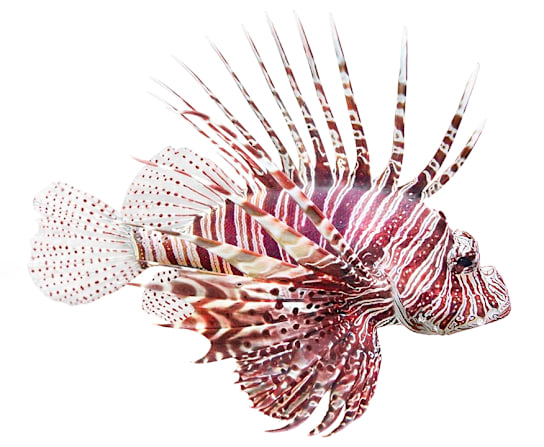
Scientific name: Dendrochrius zebra, Dendrochirus brachypterus, Pterois antennata, Pterois volitans, Pterois radiata, Dendrochirus biocellatus, Pterois mombasae
These skilled hunters have one of the most impressive fin formations in the aquatic world. Lionfish are solitary creatures and quite popular with aquarists. Be careful working around or handling lionfish, however, since their dorsal spines are venomous and can feel like a strong bee sting; although most people are not affected by lionfish stings, some people may be allergic to the venom. An invasive species, they disrupt ecosystems in certain geographical locations.
Learn how to take care of your Lionfish, recommended tank size, diet and tank mates. Find the right food, supplies and equipment at your neighborhood Petco.
Includes a variety of lionfish, including:
- Dwarf zebra lionfish
- Fuzzy dwarf lionfish
- Antennata lionfish
- Volitan lionfish
- Radiata lionfish
- Fu Manchu lionfish
- Mombasa lionfish
Typical appearance and behavior
- Mostly solitary, not a very active swimmer
- Lionfish are voracious eaters and attack their meal in one swift motion
- They can use their pectoral fins to corner their prey and prefer to hunt at night
- Although lionfish may eat other fish and invertebrates who fit into their large mouths, they are not typically considered an aggressive species
Characteristics
| Care Difficulty | Intermediate |
|---|---|
| Average Life Span | Up to 10 years with proper care, depending on species |
| Average Adult Size | 7-15+ inches long, depending on species |
| Diet | Carnivore |
| Minimum Habitat Size | 29+ gallons, depending on species |
| Water Temperature | 74-80°F |
| Specific gravity | 1.020-1.025 |
Habitat
Habitat size
A minimum 29-gallon aquarium is recommended for a juvenile dwarf lionfish, however, water conditions can change rapidly in smaller water volumes. Certain species, like the Volitan, can obtain an adult size of 15-plus inches, and it is recommended that they be housed in a minimum of 120 gallons when full grown.
Building your habitat
- Water health - Provide proper filtration to ensure optimal water quality to help maintain health. Slow to moderate water circulation, based on species, should be provided to mimic water currents found in the lionfish's natural habitat. Stable water quality (pH, ammonia, nitrate, nitrite) and water temperature are critical to the health of aquatic life. If you are unsure of your water quality, bring a sample to Petco for free testing. The addition of a protein skimmer can aid with maintaining great water quality and high dissolved oxygen levels. An aquatic heater should be used to stabilize water temperature, ensuring it does not fluctuate more than +/-2 degrees in a 24-hour period. The specific gravity should remain stable. Do not allow specific gravity to fluctuate more than +/-0.001 in a 24-hour period
- Décor - Provide rock and décor, creating caves for hiding. Depending on the species, provide plenty of open space for movement
Feeding
What to feed your lionfish
A well-balanced lionfish diet consists of:
- Frozen food (silversides, krill, squid) and freeze-dried krill
- May need to feed live food and transition over to frozen food or freeze-dried krill
- A varied diet will help ensure proper nutritional balance
Things to remember when feeding your lionfish:
- Feed one to two times daily
- If necessary, feed live fish to start and gradually intice them to consume other foods
- Thaw frozen food before feeding
Lionfish care
- Water care: Maintaining great water quality with regular water changes and adequate filtration is important to help keep your lionfish healthy
- Daily: Check filter, water temperature and other equipment
- Weekly: Test water quality at least once a week
- Weekly to monthly: Change 10 to 25% of the total volume of water every two to four weeks, or as needed; change filter media monthly
- Avoid overcrowded conditions as this is a major cause of stress and disease
- Be aware of the lionfish’s location within the aquarium when performing maintenance to avoid getting stung
Where to buy
Various lionfish are available for purchase at your local Petco location. If visiting your local location, please call ahead to check availability.
Supplies
- appropriate size aquarium
- appropriate food, dry and frozen
- décor
- water conditioner
- marine aquarium salt
- filter
- water test kit
- full spectrum lighting
- net
- thermometer
- protein skimmer
- marine substrate
- heater
- refractometer
Aquarium mates
Compatible with fish of similar or larger size, including:
- Grouper
- Large angelfish
- Foxface/rabbitfish
- Butterflyfish
- Tangs
Health
Signs of a healthy fish
- Clear eyes
- Healthy appetite
- Bright, even coloring
- Swims slowly
- Fins completely intact and undamaged
- Bright, even coloring
- Free of parasites or disease
Red flags (If you notice any of these signs, contact your local aquatic specialist or veterinarian.)
- Loss of color or appetite
- Spots or fungus on body or mouth
- Erratic swimming
- Labored breathing
- Cloudy eyes or pop-eye
- Weight loss
- Frayed fins
- Bloating
Common health issues
| Health Issue | Symptoms or Causes | Suggested Action |
|---|---|---|
| Health IssueFin rot | Symptoms or CausesFrayed or disintegrating fins; the base of the fins usually reddens. | Suggested ActionImprove water quality; consult your local aquatic specialist or aquatic veterinarian for treatment. |
| Health IssueMarine ich | Symptoms or CausesCysts on fins, gills and skin; labored breathing, excess skin mucus or pale skin. | Suggested ActionQuarantine fish immediately and use a commercial parasite remedy. Complete a water change; freshwater dips can dislodge the parasites. Consult your local aquatic specialist or aquatic veterinarian for treatment. |
| Health IssueBacterial infections | Symptoms or CausesCloudy eyes, open sores and/or reddening of the skin./td> | Suggested ActionImprove water quality; use a commercial antibacterial remedy as directed, consult your local aquatic specialist or aquatic veterinarian for treatment. |
| Health IssueViral infection (lymphocystis) | Symptoms or CausesWhite nodule growths on fins or body. | Suggested ActionImprove water quality; consult your local aquatic specialist or aquatic veterinarian for treatment. |
Notes and resources
Ask a Pet Care Center associate about Petco's selection of products available for the care and happiness of your new pet. All products carry a 100% money-back guarantee.
Because all aquatic life are potential carriers of infectious diseases, such as atypical mycobacterium and salmonella, always wash your hands before and after handling your aquatic life or habitat contents to help prevent the potential spread of diseasePregnant women, children under the age of 5, senior citizens and people with weakened immune systems should contact their physician before purchasing or caring for aquatic life and should consider not having aquatic life as a pet.
Go to cdc.gov/healthypets for more information about aquatic life and disease.
This care sheet can cover the needs of other species.
Note: The information on this Care Sheet is not a substitute for veterinary care. If you need additional information, please refer to the sources on the following page or contact your veterinarian as appropriate.
Developed with and approved by a qualified veterinarian.
Related Articles


FAQs
Lionfish will eat any fish or invertebrate that fits into their large mouth, so they should not be housed with smaller inhabitants in their aquarium. A varied diet of frozen food (silversides, krill, squid) and freeze-dried krill are recommended over a live food diet.
Lionfish are native to the South Pacific and Indian oceans, however, they have become an invasive species, living off the coasts of Florida, since the mid-1980s.
Lionfish have dorsal spines that are venomous and can feel like a strong bee sting; although most people are not affected by lionfish stings, some humans may be allergic to the venom.
The reaction to being stung by a lionfish varies depending on a person’s sensitivity to the venom, the size and species of lionfish and whether they were stung by one or more dorsal spine. Although death is rare, a lionfish sting can cause a variety of symptoms such as swelling, redness, pain, shortness of breath and numbness. Always monitor symptoms and contact a medical professional for assistance.
Since lionfish vary in size by species, a minimum of a 29-gallon aquarium can house a dwarf lionfish, however, a 120-plus-gallon aquarium is recommended for larger species.
Lionfish are compatible with a variety of similar-sized or larger fish such as grouper, large angelfish, foxface/rabbitfish, butterflyfish, tangs and other lionfish.
Yes, as long as they are of similar size and the aquarium is large enough, multiple lionfish can be housed together.