


Two Easy Ways to Start Earning Rewards!
Become a member today! Members-only pricing and offers, personalized care notifications, Vital Care points back on every purchase and more!
 Become a credit card member today!
Earn 2X Pals Rewards points at Petco
when you use Petco Pay!APPLY NOWLearn More About Petco Pay Benefits
Goldfish Care Guide: Tank Size, Food, Water Quality for Thriving Fish
Updated on July 20th, 2023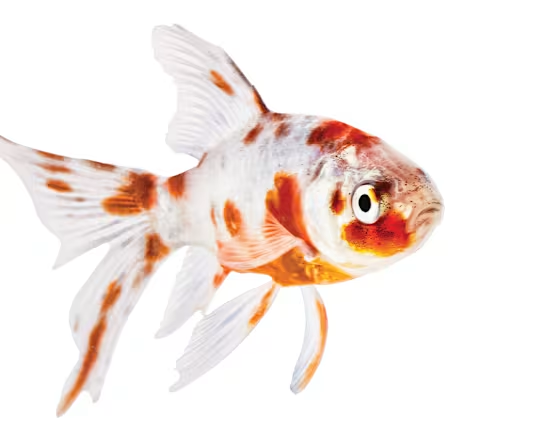
Scientific name Carassius auratus
Goldfish are one of the most recognizable and popular aquarium fish. These highly social species were the first fish species successfully bred in captivity on a large scale. Goldfish can grow quite large, and their beauty is impressive. Despite popular belief, goldfish do not "grow to the size of their tank."
Learn how to care for Goldfish, recommended diet and aquarium setup. Find the right food, supplies and equipment at your neighborhood Petco.
This care sheet covers a variety of goldfish species, including:
- Faintail
- Oranda
- Black Moor
- Ryukin
- Pearlscale
- Wakin
- Ranchu
- Tosakin
- Bubble eye
- Shubunkin
- Comet
Typical appearance and behavior
- Create more waste than other fish of comparable size and require strong filtration
- Color patterns on multicolored goldfish may change throughout lifetime
- A social species who may learn to recognize their pet parent over time
- Are slower swimmers who prefer calm, slow-moving water
- Over time may readily accept food from your hand
Characteristics
| Care Difficulty | Beginner |
|---|---|
| Average Life Span | Up to 30+ years with proper care |
| Average Adult Size | 5-18 inches long, depending on species |
| Diet | Omnivore |
| Minimum Habitat Size | 20+ gallons for juveniles |
| Water Temperature | 64-75°F |
Habitat
Habitat size
Keep in an appropriate size aquarium or pond based on the adult size of the species selected. A minimum of 20 gallons or larger is recommended for the health and wellbeing of juvenile goldfish. A general rule of thumb is 5 gallons per every 1 inch of an adult goldfish’s length.
Building your habitat
- Water health - Provide proper filtration to ensure optimal water quality to help maintain health. Slow water circulation should be provided to mimic water currents and high oxygen levels found in the goldfish’s natural habitat. Stable water quality (pH, ammonia, nitrate, nitrite) and water temperature are critical to the health of aquatic life. If you are unsure of your water quality, bring a sample to Petco for free testing. Ensure water temperature does not fluctuate more than +/-2 degrees direction in a 24-hour period.
- Décor- Many goldfish are clumsy swimmers. Provide rocks, plants and hiding places as well as plenty of open areas for swimming
- Goldfish prefer a cooler environment and are not recommended for tropical aquariums
Feeding
What to feed your goldfish
A well-balanced goldfish diet consists of:
- Flakes, pellets, frozen or freeze-dried foods
- Goldfish need more carbohydrates than other freshwater fish; feed them foods specifically formulated for goldfish
Things to remember when feeding your goldfish:
- Feed small amounts once a day, only as much as they can consume in 1 to 2 minutes
- Thaw frozen foods before feeding
- Goldfish are opportunistic feeders and will continue to eat if offered food. Overfeeding can be detrimental to their health and cause higher waste production
- Goldfish are voracious eaters. Feeding a sinking diet will help prevent excessive air consumption while eating
Goldfish care
- Water care: Maintaining great water quality with regular water changes and adequate filtration is important to help keep your goldfish healthy
- Daily: Check filter, water temperature and other equipment
- Weekly: Test water quality at least once a week
- Weekly to monthly: Change 10 to 25% of the total volume of water every two to four weeks, or as needed. Change filter media monthly.
- Avoid overcrowded conditions as this is a major cause of stress and disease
Where to buy
Various goldfish are available for purchase at Petco online and in store; availability varies by location. If visiting your local location, call ahead to check availability.
Supplies
- appropriate size aquarium
- appropriate food, dry and frozen
- décor
- water conditioner
- filter
- water test kit
- full spectrum lighting
- net
- thermometer
- freshwater substrate
- refractometer
- airstone
- air pump
- check valve
- freshwater salt
- airline tubing
Tank mates
Compatible with cold-water community fish who can tolerate lower temperatures, like white cloud minnows. Can be kept alone or in schools if the aquarium or pond is large enough.
Health
Signs of a healthy animal
- Clear eyes
- Healthy appetite
- Regular breathing
- Free of parasites or disease
Red flags (If you notice any of these signs, contact your veterinarian.)
- Loss of appetite
- Loss of color
- Spots or fungus on body or mouth
- Labored breathing
- Listlessness
- Cloudy eyes or pop-eye
- Elevates scales
- Frayed or discolored fins
- Erratic or trouble swimming
- Weight loss
- Bloating
Common health issues
| Health Issue | Symptoms or Causes | Suggested Action |
|---|---|---|
| Health IssueIch | Symptoms or CausesWhite spots appear on fins and body; fish rubs against hard objects or swims erratically. Rapid respiration. | Suggested ActionQuarantine fish immediately; add freshwater aquarium salt and use commercial ich remedy as directed. Consult your local aquatic specialist or aquatic veterinarian. |
| Health IssueBacterial infections | Symptoms or CausesCloudy eyes, open sores and/or reddening of the skin. | Suggested ActionImprove water quality; add aquarium salt; use a commercial antibacterial remedy as directed; consult your local aquatic specialist or aquatic veterinarian for treatment |
| Health IssueFungus | Symptoms or CausesWhite cottony growth and/or discoloration of the eyes. | Suggested ActionQuarantine fish; use a commercial antifungal remedy as directed. Consult your local aquatic specialist or aquatic veterinarian. |
| Health IssueFin rot | Symptoms or CausesFrayed or disintegrating fins; the base of the fins usually reddens. | Suggested ActionImprove water quality; consult your local aquatic specialist or aquatic veterinarian for treatment. |
FAQs
- How long do goldfish live? The average life span of goldfish is up to 15 years with some species of goldfish living up to 30+ years with proper care
- How big can goldfish get? A comet goldfish can reach an adult size of 18 inches.
- What do goldfish eat? Goldfish are omnivorous and should be provided with a variety of goldfish specific flakes, pellets, freeze-dried and frozen diets
- What size tank should I get for a goldfish? Goldfish produce a higher amount of waste than other fish species, and it’s best to provide no less than a 20-gallon aquarium for a juvenile goldfish
- How do I take care of a goldfish? Goldfish should be housed in a properly set up and maintained aquarium with filter and décor. They should be fed a nutritionally balanced diet daily
- What fish can live with goldfish? Goldfish are considered a cold-water species and are best housed with other cold-water species such as white cloud minnows
- How often do you feed goldfish? Goldfish should be fed small amounts once a day, only as much as they can consume in 1 to 2 minutes
- Where do goldfish come from? Goldfish are native to East Asia
- How long can goldfish go without food? Goldfish can survive without food for 1 to2 weeks. but to ensure optimal health they should be fed small amounts once a day, only as much as they can consume in 1 to 2 minutes
- What do goldfish eggs look like? Goldfish eggs resemble small, clear bubbles and can range in color from white to yellow
- How many goldfish can you house per gallon in the same aquarium? A general rule of thumb is 5 gallons per every 1 inch of an adult goldfish’s length
- Can betta fish live with goldfish? Goldfish and bettas have different habitat requirements and are best not housed in the same aquarium
- Can goldfish live in a bowl? Goldfish can reach adult sizes of 5 to 18 inches and should be housed in a 20-gallon (for juveniles) or larger aquarium based on the species selected
- What can goldfish eat? Goldfish are omnivorous and should be provided with a variety of goldfish specific flakes, pellets, freeze-dried and frozen diets
- Koi
- White Cloud Minnow
Notes and resources
Ask a Pet Care Center associate about Petco's selection of products available for the care and happiness of your new pet. All products carry a 100% money-back guarantee.
Because all aquatic life are potential carriers of infectious diseases such as atypical mycobacterium and salmonella, always wash your hands before and after handling your aquatic life and/or habitat contents to help prevent the potential spread of diseases.
Pregnant women, children under the age of 5, senior citizens and people with weakened immune systems should contact their physician before purchasing and/or caring for aquatic life and should consider not having aquatic life as a pet.
Go to the Centers for Disease Control at cdc.gov/healthypets for more information about aquatic life and disease.
The information on this Care Sheet is not a substitute for veterinary care. If you need additional information, contact your veterinarian as appropriate.
Related Articles


