Two Easy Ways to Start Earning Rewards!
Earn 2X Pals Rewards points at Petco
when you use Petco Pay!
Get It Today
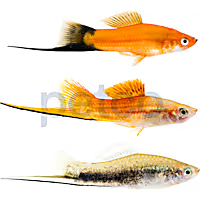
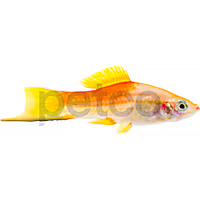
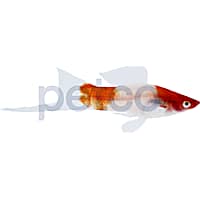
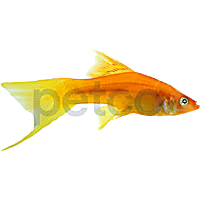
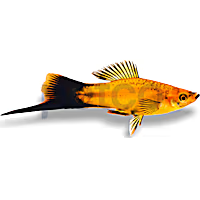
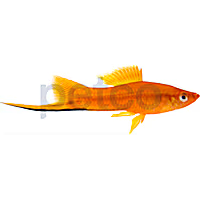
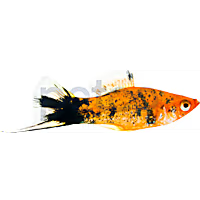
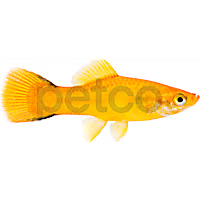
Swordtails get their name from the males who have an extended lower tail fin that looks like a sword coming from their tail. Females do not have this extension.
Swordtails are community fish that can be housed with other peaceful, community species. They can also be housed with other swordtails and do best in groups of three or more.
These active fish that do best in small groups should be housed in a 20 gallon or larger tank to be suitable for their adult size.
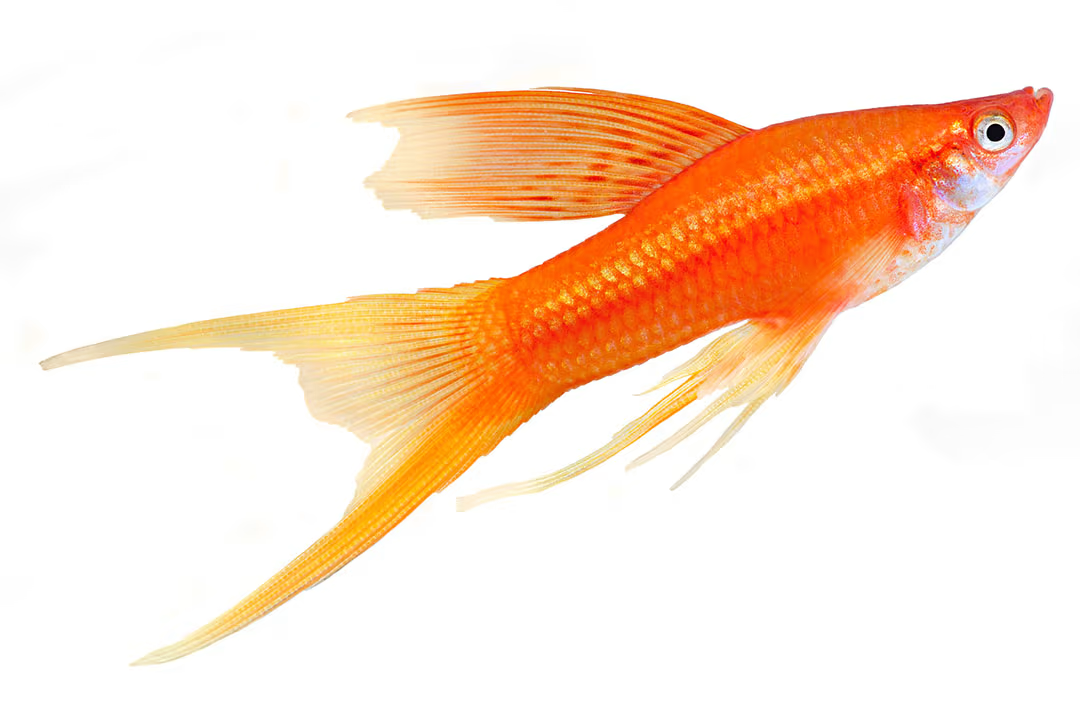
Learn how to care for Swordtail fish, recommended diet & aquarium setup. Find the right food, supplies & equipment at your neighborhood Petco.
Updated on November 13th, 2025
Learn how to care for semi-aggressive fish, recommended diet & aquarium setup. Find the right food, supplies & equipment at your neighborhood Petco.
Updated on November 13th, 2025
Learn how to care for freshwater community fish, recommended diet & aquarium setup. Find the right food, supplies & equipment at your neighborhood Petco.
Updated on November 13th, 2025
Learn how to care for a tang fish, recommended diet and aquarium setup. Find the right food, supplies and equipment at your neighborhood Petco.
Updated on November 13th, 2025
Learn how to safely handle your aquatic life to avoid toxin & bacterial exposure. Find aquatic life care supplies at your neighborhood Petco pet care center.
Updated on November 13th, 2025
Before you buy any fish, you will need to set up the tank. A basic set up includes: a tank, filter, hood/light, heater, gravel and some decor. The tank should run without fish for at least 4 to 6 weeks. This gives it time to cycle. The Nitrogen Cycle is critical to the health of the tank and any fish you will be keeping. During this time, beneficial bacterial will populate the filter and substrate (gravel). These bacteria will be responsible for breaking down fish wastes and other wastes (uneaten food, dead plants, etc.). You will need a home test kit to monitor water chemistry (ammonia, nitrites, nitrates, pH) or you will have to submit water samples for testing. Most pet stores will do this for free or for a small fee. At first, you will see high levels of ammonia and nitrites. Over time, as bacteria grow, these levels will drop. When ammonia and nitrites are at 0 ppm and nitrates are below 20 ppm, you can consider adding fish. Regular (every 1 or 2 weeks) partial water changes as we
Updated on August 12th, 2025
Guppies or Neons are excellent "starter" fish. Care is simple and they are inexpensive. A standard 10 gallon tank is recommended to start. Most people don' t realize the amount of "work" needed to maintain a tank. Filter maintenance, monitoring water chemistry, water changes, monitoring fish health and providing a balanced diet are just a few items that need regular attention to keep a tank thriving. Even though fish aren't as cuddly as cats and dogs, they do have their own personalities and even respond to their owners, especially at feeding time! Studies have shown that simply watching fish in a tank can lead to a reduction in both heart rate and blood pressure. It is quite relaxing.
Updated on August 12th, 2025
Keep her separated and maintain pristine water quality to aid in recovery. You can add some StressCoat and 1 teaspoon of plain aquarium salt (not table or Epsom salt) per gallon of water. Treat with salt for 14 days maximum then reassess fin condition. Once she has healed, return her to the tank. Try to keep them in groups of 4 or more.
Updated on August 12th, 2025
Thank you for the picture - I am unable to tell if the tail is just turning transparent, or if portions of it are missing. If it is truly just a color change, and there are no other problems with C.G. or the other fish, it may just be that he is going to become a different color. If the tail has missing portions, that is more likely to be caused by an infectious problem (such as bacteria, fungi, parasites). I would recommend evaluating your water quality parameters, as you eluded to in your question. Then I would monitor the tail, and if there are portions missing, I would recommend having him evaluated by a veterinarian. They can take samples of the area, as well as from the skin and gills to evaluate for parasites and other organisms.
Updated on August 12th, 2025
Anytime you transport a fish, it can be stressful. Loud noises, vibrations and no filtration can cause stress. Check the water chemistry using a liquid home test kit or submit a water sample for testing. The local Petco may do this for free or for a small fee. Aim for an absence (0 ppm) of ammonia and nitrites with nitrates at 20 ppm or less. Perform a partial water change if indicated. Use only conditioned water that is temperature matched to prevent further stress or shock.
Updated on August 12th, 2025