Two Easy Ways to Start Earning Rewards!
Earn 2X Pals Rewards points at Petco
when you use Petco Pay!
Get It Today
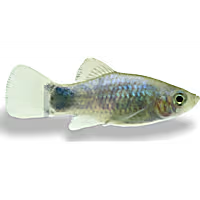
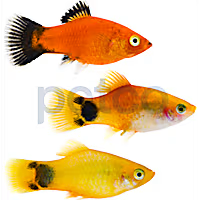
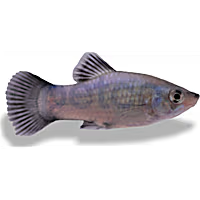
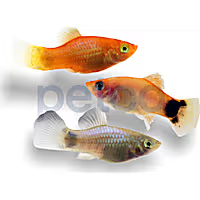
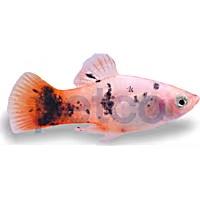
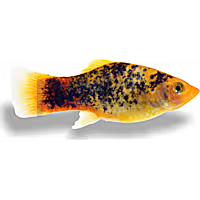
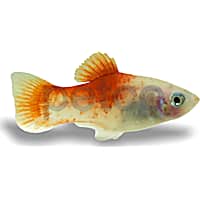
Platies are an excellent beginner level fish and can be housed in a 10 gallon or larger aquarium.
Platies are a community fish that can be housed with other community fish such as other platies, danios, mollies, swordtails and tetras.
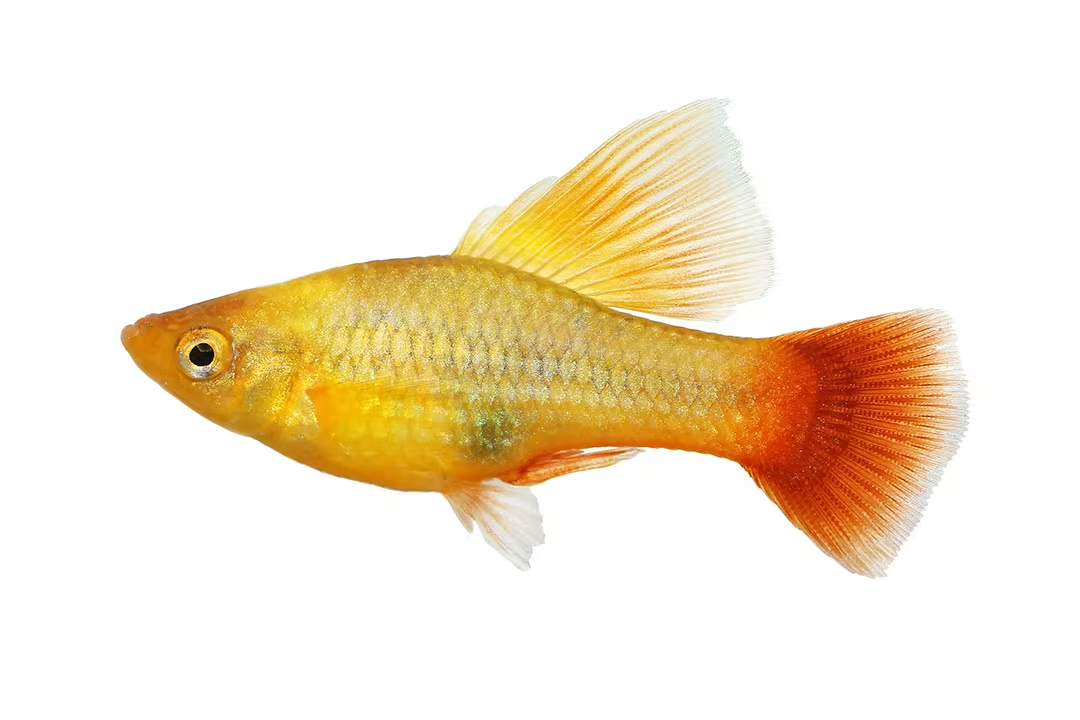
Learn how to care for Platy fish, recommended diet & aquarium setup. Find the right food, supplies & equipment at your neighborhood Petco.
Updated on April 9th, 2026
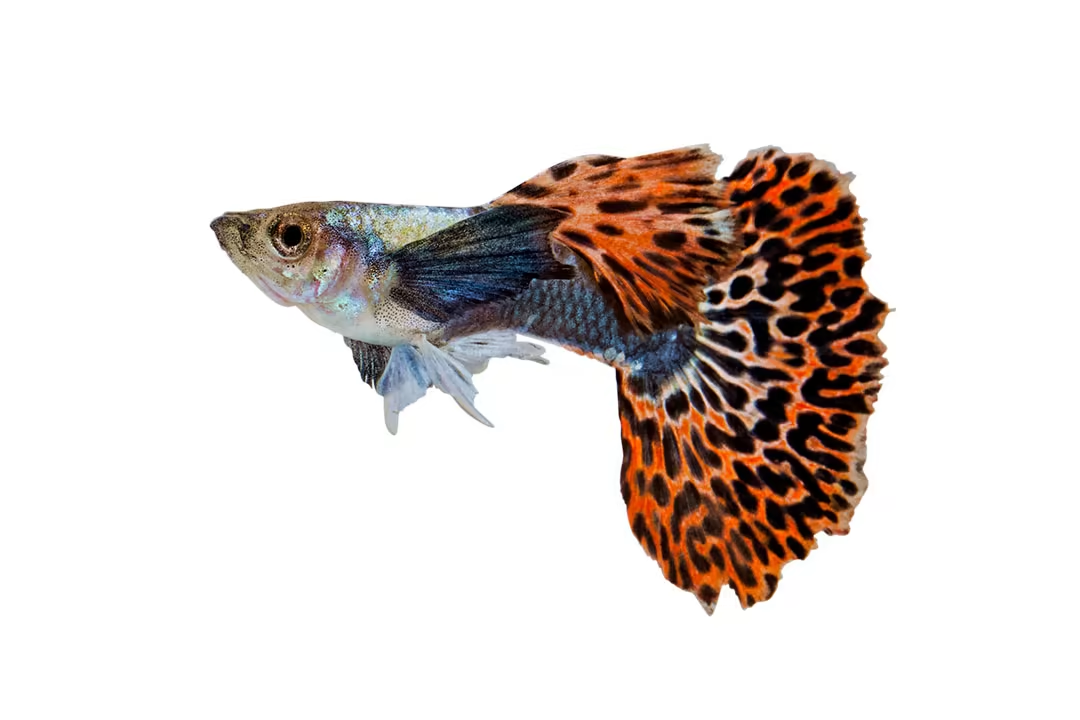
Learn how to care for freshwater livebearers, recommended diet & aquarium setup. Find the right food, supplies & equipment at your neighborhood Petco.
Updated on April 9th, 2026

Tanks with live plants can be excellent additions to your home, bringing a touch of nature indoors. Learn how to take care of aquatic plants.
Updated on November 6th, 2025
Learn how to care for freshwater community fish, recommended diet & aquarium setup. Find the right food, supplies & equipment at your neighborhood Petco.
Updated on April 9th, 2026
Learn how to care for semi-aggressive fish, recommended diet & aquarium setup. Find the right food, supplies & equipment at your neighborhood Petco.
Updated on April 9th, 2026
Both species are excellent "beginner" fish and quite easy to care for. Your 20 gallon tank is a good size for about 6 to 8 fish of this species. 10 would be close to overcrowding the tank. Once your tank is properly cycled, you can add your fish. They are omnivorous and will readily eat flake, pellets, freeze dried and live foods. Chemistry should be monitored regularly and kept as follows: ammonia 0ppm, nitrites 0ppm, nitrates 20ppm or less, pH about 7, water temperature between 76 F and 78 F. Provide moderate cover (hiding places). These fish are live bearers, so if you have male and female then expect fry (baby fish) at some point. If not separated, fry will likely be eaten by adults.
If the tank was not properly cycled before she went in, the water qualityu may be affecting her. Check the water parameters first. Temperature should range bewteen 68 F and 78.8 F (20C to 26C). Using a home test kit, ammonia and nitrites should read 0 ppm. Nitrates should be 40 ppm or less. Platys do best in a pH of 7 to 8.3. Adjust parameters as needed and see if it makes a difference in her behavior. Offer a variety of appropriate pelleted and flaked food as well as freeze dried to see if she has a preference. Platys are livebearers with a gestation of around 28 days. She will become noticeably bigger as her date approaches. If she is pregenant and has fry, you will need to separate her or give the fry plenty of cover in the tank. If not, she will eat them. The stress of a new tank and water may also be a factor. Hopefully, with some adjustments and different foods, she will perk up.
Chances are if your female platy was kept in an aquarium with male platys the likelihood of her being pregnant is very high. The general rule for keeping both male & female live-bearers in the same tank is a ratio of 2-4 females per male. The reason for this (which you seem to be experiencing) is that the male will become very persistent and chase the females around. Keeping more than 1 female will help alleviate some stress in your aquarium. Both the male and female platy will try to eat the young fry once they are born so you may want to confine the female to a “floating nursery” until they are born. Once the fry are born, remove the female and place her back in the aquarium. From there you can keep the fry in nursery (or move them to another aquarium) until they are large enough not to be eaten.
It doesn't look like Ich in the images provided. Ich will appear as multiple white dots the size of salt grains on the fish. The fish will "flash" or dart about the tank and rub on objects due to itching. The fish may have an infection or the loss of scales may be due to trauma from other fish. Consider separating the affected fish into a separate tank to recover. If this is not possible, maintain pristine water quality in the main tank and consider a broad spectrum antibiotic. You can find one in the aquarium section of the local Petco. Follow label directions carefully and remove the carbon filter insert during treatment if indicated. You are likely at the maximum number of fish in the tank. As they grow, they shouldn't get bigger than 2 - 2.5 inches, and reach adulthood you may need a larger tank or you may need to separate them.
On average, a platy female can spawn 20-50 fry (baby fish). The first spawning may be less. If she still appears bloated or round, she may still have fry to spawn. If no more appear after a day or two and she is back to "normal" size, then she can be returned to the main tank. The fry should remain in a grow out tank or they will likely be eaten.